

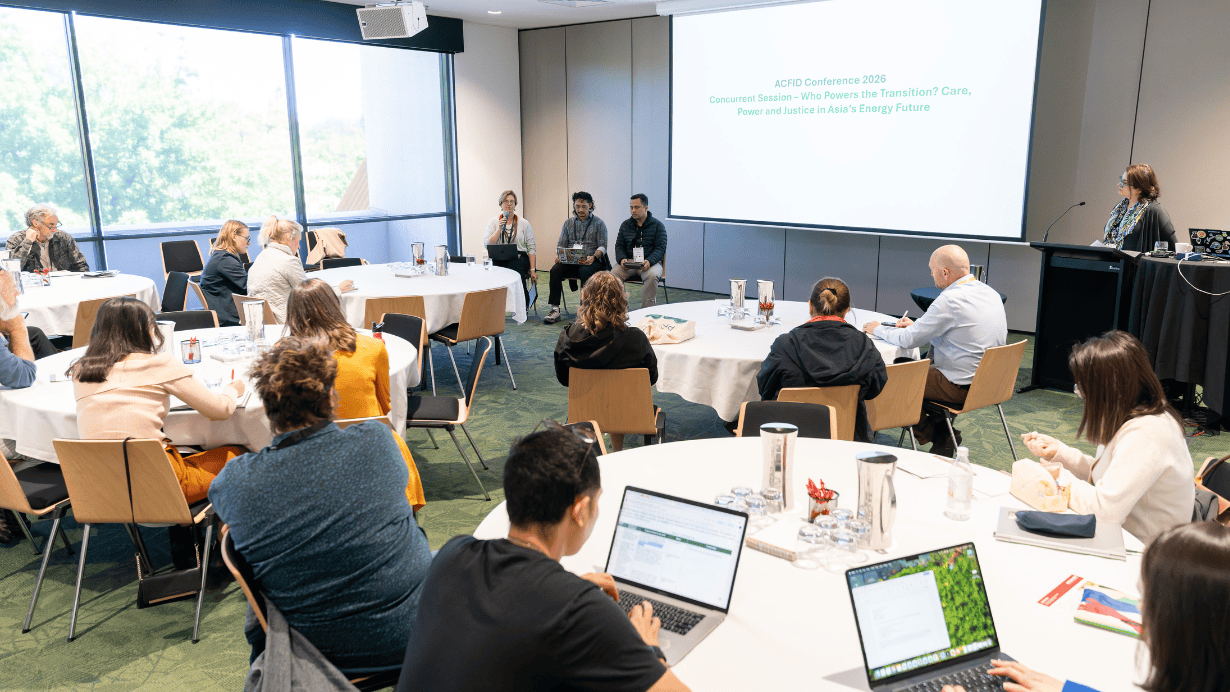

Through WE FOR JET, Yayasan Penabulu brought experiences from Indonesian communities to ACFID Conference 2026, highlighting how power relations, unpaid care work, and women’s leadership shape the pursuit of a just energy transition in Asia.
Canberra, Australia | 14 October 2026 — As countries around the world accelerate the shift towards cleaner energy, a fundamental question remains: who gets to shape the transition?
Who decides what communities need from their energy systems? Whose knowledge informs decisions about energy investments and technologies? And as renewable energy expands, who ultimately benefits from the changes taking place?
These questions were at the heart of “Who Powers the Transition? Care, Power and Justice in Asia’s Energy Future,” a session held during the ACFID National Conference 2026 in Canberra, Australia, from 12 to 14 October 2026.
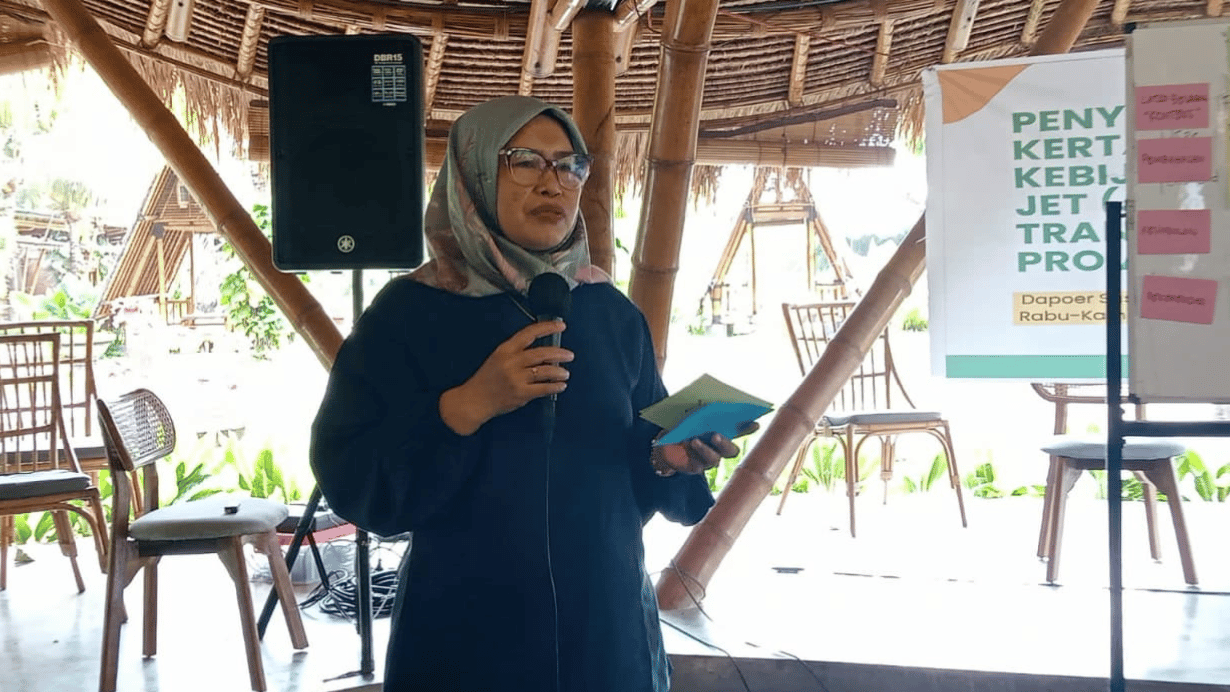
Yayasan Penabulu participated through its Women and Vulnerable Groups Leading a Transformative and Just Energy Transition (WE FOR JET) programme, bringing insights from its work with women and communities in West Nusa Tenggara (NTB) and East Nusa Tenggara (NTT), Indonesia.
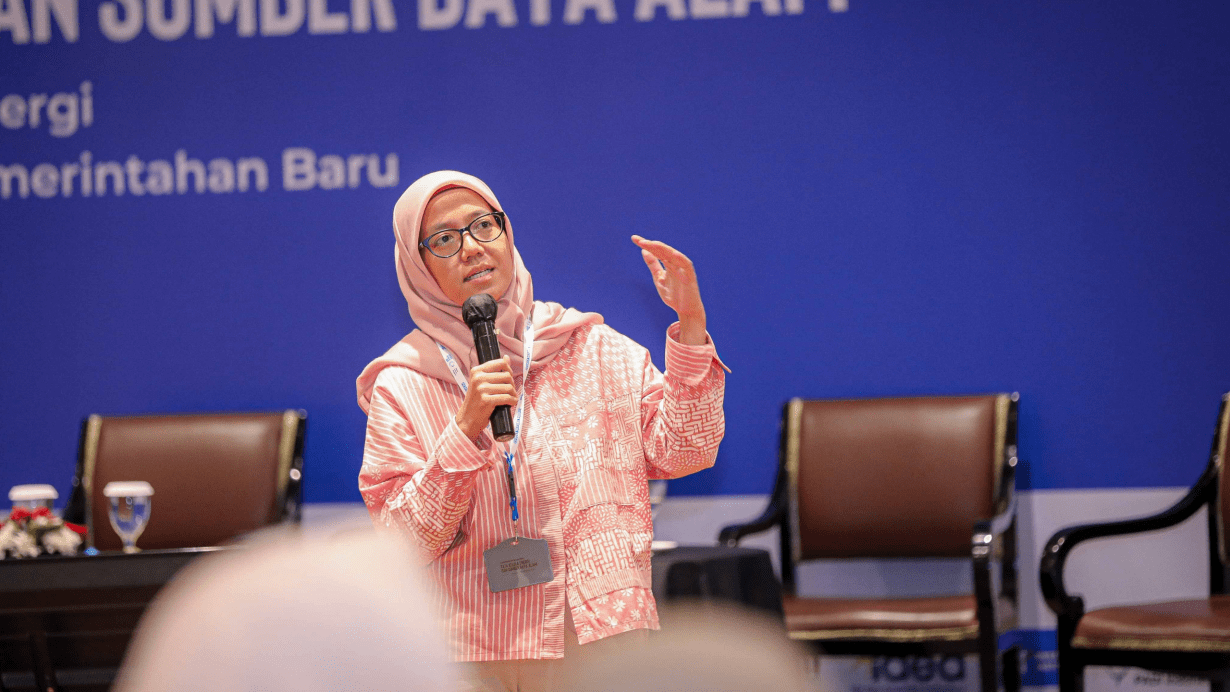
Representing Yayasan Penabulu, Deden Ramadani joined fellow speakers Anila Schroers from Oxfam Australia, Joel Chester Pagulayan from Oxfam Pilipinas, and Melissa Bungcaras from the UTS Institute for Sustainable Futures.
Co-organised by the UTS Institute for Sustainable Futures, Oxfam Australia, and Yayasan Penabulu, the session drew on action research conducted in Indonesia and the Philippines. Together, the speakers explored how care responsibilities, social inequalities, women’s leadership, and decision-making power influence the direction and outcomes of the energy transition.
Who Gets to Shape the Energy Transition?
Renewable energy offers significant opportunities for a more sustainable future. Yet the transition does not take place in isolation from existing social and economic inequalities.
Decisions about energy technologies, financing mechanisms, and infrastructure management are often shaped by institutions and actors with greater access to resources, information, and political influence. Meanwhile, those whose daily lives are most directly affected by energy challenges may have limited opportunities to define their needs or influence priorities.
This is particularly relevant to the experiences of communities engaged in WE FOR JET across NTB and NTT.
Working alongside civil society organisations and local communities, the programme seeks to strengthen the participation of women, persons with disabilities, and other vulnerable groups in renewable energy initiatives and local decision-making processes.
These experiences highlight an important distinction: being included in a decision-making process is not necessarily the same as having the power to influence its outcomes.
Women’s attendance at village meetings, for example, represents only one aspect of meaningful participation. Equally important is whether they can express their perspectives, propose priorities, influence resource allocation, and participate in decisions that affect their communities.
The unequal distribution of unpaid domestic and care responsibilities must also be addressed. Without changes in how these responsibilities are shared, women may continue to face significant barriers to participating actively in public discussions and community leadership.
Similar challenges arise in community-based energy initiatives. Local power structures and social norms can influence who receives information, who is recognised as a leader, and who holds authority over resources and decisions.
Strengthening community leadership, therefore, also requires recognising and addressing inequalities within communities themselves.
Recognising Care Work in Energy Planning
One of the central themes explored during the ACFID discussion was the relationship between energy and unpaid care work.
Caring for children and family members, preparing meals, collecting water, and managing household responsibilities all require considerable time and effort. Across many communities, women continue to carry a disproportionate share of these responsibilities, often without adequate economic recognition or compensation.
These responsibilities shape how women use energy, how much time they have available, and their opportunities to participate in economic activities and public life.
For women operating home-based enterprises, access to affordable and appropriate energy can make a significant difference to production processes, time management, and business sustainability.
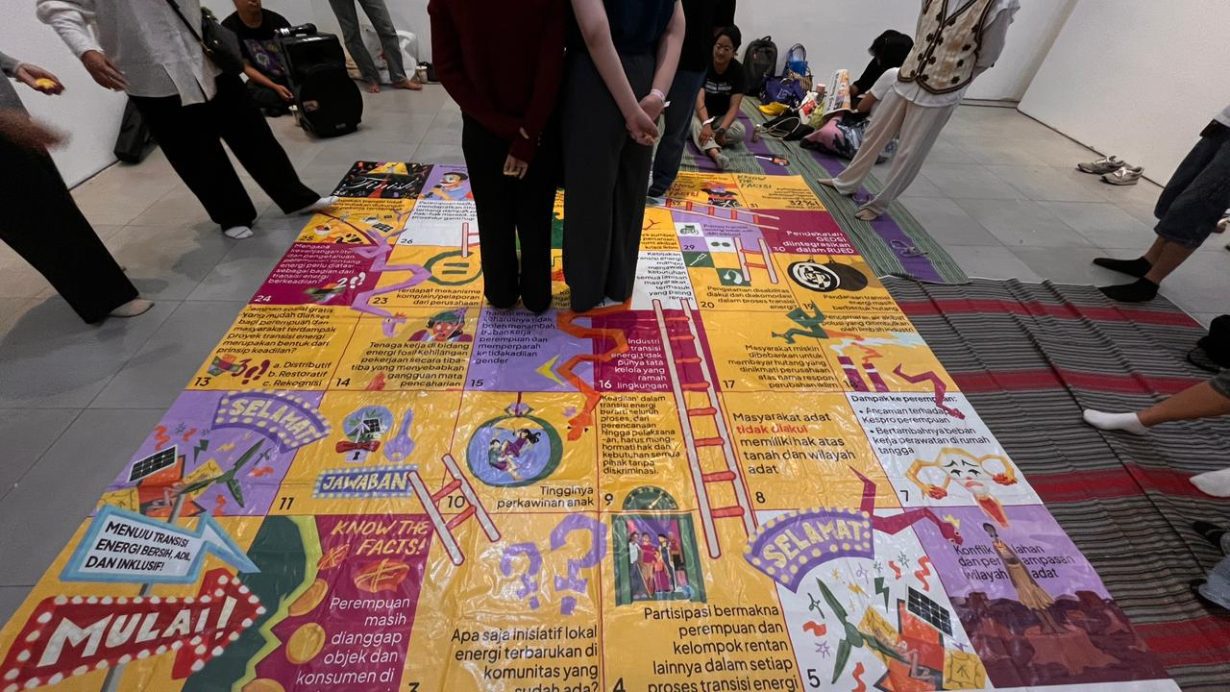
Through WE FOR JET, community initiatives in NTB and NTT have explored ways to connect renewable energy solutions with women’s livelihoods, including agricultural processing and community-based enterprises.
These experiences demonstrate that energy needs cannot be understood solely through technological efficiency or infrastructure availability. They are closely connected to household responsibilities, economic opportunities, and the everyday realities of different community members.
A technology that appears efficient from a technical perspective may not necessarily respond to the needs of people facing constraints related to time, mobility, affordability, or access to resources.
Recognising unpaid care work allows energy planning to consider a broader range of factors, including where technologies are located, who can access them, how much they cost, and whether they reduce or potentially increase domestic workloads.
It also raises a broader question about the purpose of energy development: whether new technologies simply provide additional energy or genuinely improve people’s ability to manage their time, sustain their livelihoods, and participate in community life.
Moving Beyond Participation Towards Meaningful Influence
Translating commitments to Gender Equality, Disability and Social Inclusion (GEDSI) into meaningful changes in decision-making remains an important challenge.
Increasing the number of women and persons with disabilities participating in activities is a necessary step. However, experiences from community-level initiatives show that participation continues to be shaped by social expectations, gender roles, and existing leadership structures.
Through WE FOR JET, efforts to strengthen the capacities of women and vulnerable groups are accompanied by opportunities to expand their leadership and influence.
Community engagement, renewable energy-based enterprise development, and participation in local planning and decision-making forums form part of this process.
Central to these efforts is the recognition that communities possess valuable knowledge about what an energy transition should look like in practice.
Women who manage household energy needs, small business owners dealing with rising production costs, and persons with disabilities experiencing accessibility barriers all bring perspectives that are essential to designing inclusive energy solutions.
Yet these perspectives can be overlooked when planning processes prioritise technical and economic considerations over lived experience.
Making space for community voices means more than inviting people to consultations. It means ensuring that their knowledge can influence technology choices, resource management, and the distribution of benefits.
Achieving this requires development organisations, governments, and other stakeholders to reconsider how they engage with communities and whose expertise they recognise in the process.
Connecting Local Experiences with Global Conversations
The ACFID National Conference 2026, held under the theme “Mobilising the Collective: Reshaping Systems for a Just Future,” brought together development practitioners, researchers, and civil society organisations to explore how collective action can contribute to more equitable and inclusive systems.
For WE FOR JET, the conference provided an opportunity to bring perspectives from Indonesian communities into a broader international discussion about the future of energy in Asia.
Insights from Indonesia and the Philippines highlighted how questions of power, care responsibilities, and women’s leadership emerge across different energy transition contexts.
The action research presented during the session helped connect community experiences with wider reflections on development approaches, policy decisions, and institutional practices.
For Yayasan Penabulu, this exchange was particularly valuable in demonstrating how energy decisions affect everyday lives and how women are gradually creating greater space to lead change within their communities.
At the same time, cross-country learning offered an opportunity to reflect on approaches to community engagement, institutional strengthening, and the ways development programmes understand and measure change.
The discussion also reinforced the importance of looking beyond participation figures in monitoring, evaluation, and learning.
Changes in confidence, leadership, the ability to influence decisions, and control over resources are equally important dimensions of progress. Understanding these changes helps provide a more complete picture of how the energy transition affects communities and whether its benefits are being distributed equitably.
Putting Justice at the Centre of the Energy Future
The shift towards renewable energy involves decisions that will shape communities for years to come, from infrastructure development and technology investments to resource governance and the distribution of economic opportunities.
These decisions influence who gains access to new opportunities, who has a voice in shaping them, and who continues to face barriers.
Experiences from WE FOR JET demonstrate that strengthening the leadership of women and vulnerable groups requires sustained engagement. Opportunities for meaningful participation must be created, access to information expanded, and decision-making structures made more responsive to community knowledge and aspirations.
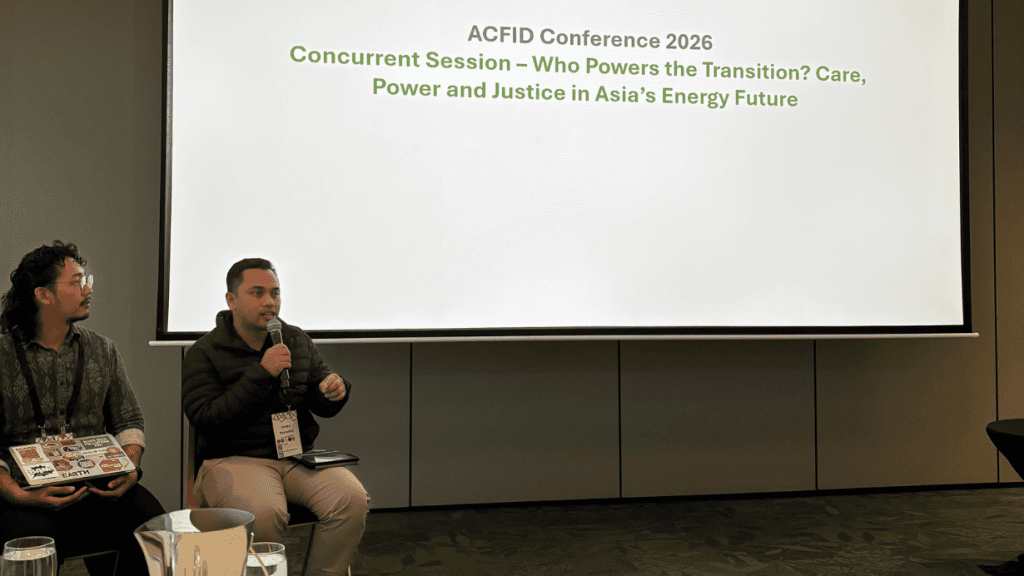
Through ACFID National Conference 2026, Yayasan Penabulu, together with Oxfam Australia, Oxfam Pilipinas, and the UTS Institute for Sustainable Futures, brought these questions into a wider conversation about Asia’s energy future.
The experiences shared from Indonesia and the Philippines offered an important reminder: energy justice is not only about access to cleaner technologies. It is also about who controls resources, who has opportunities to lead, and how the benefits and burdens of change are shared.
As the energy transition accelerates, questions of power become increasingly urgent. Communities that have long faced barriers to energy access have knowledge, experiences, and aspirations that deserve to shape the decisions affecting their future.
A truly just energy transition will depend not only on changing how energy is produced, but also on transforming how decisions are made, whose knowledge is valued, and who has the power to lead change.