



UNRBHR Forum 2026: Examining Power in the Energy Transition
Bangkok, 15 September 2026 — What does it really mean for a renewable energy initiative to be community-based? And when communities are involved, who actually has the space to shape decisions, influence the process, and benefit from the transition?
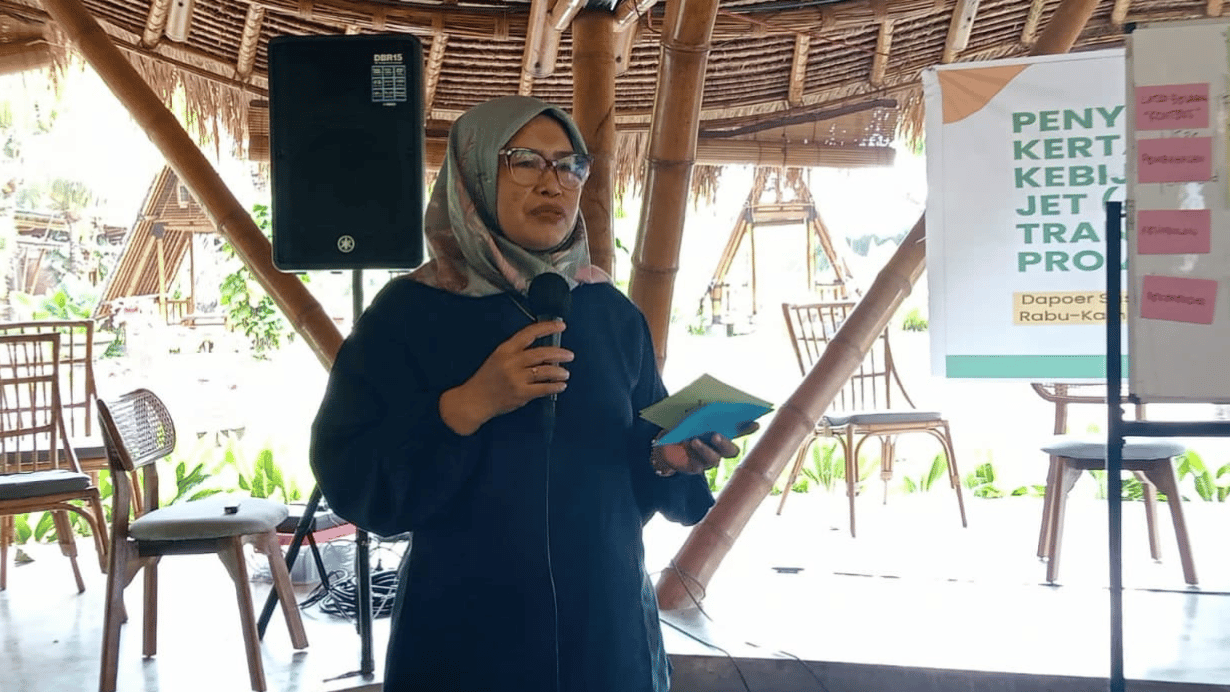
These were among the questions raised by Deden Ramadani, Project Manager of WE FOR JET, during the session “Who Holds the Power? Advancing a Rights-Based and Community-led Just Transition Across Asia-Pacific” at the UN Responsible Business and Human Rights Forum in Bangkok.
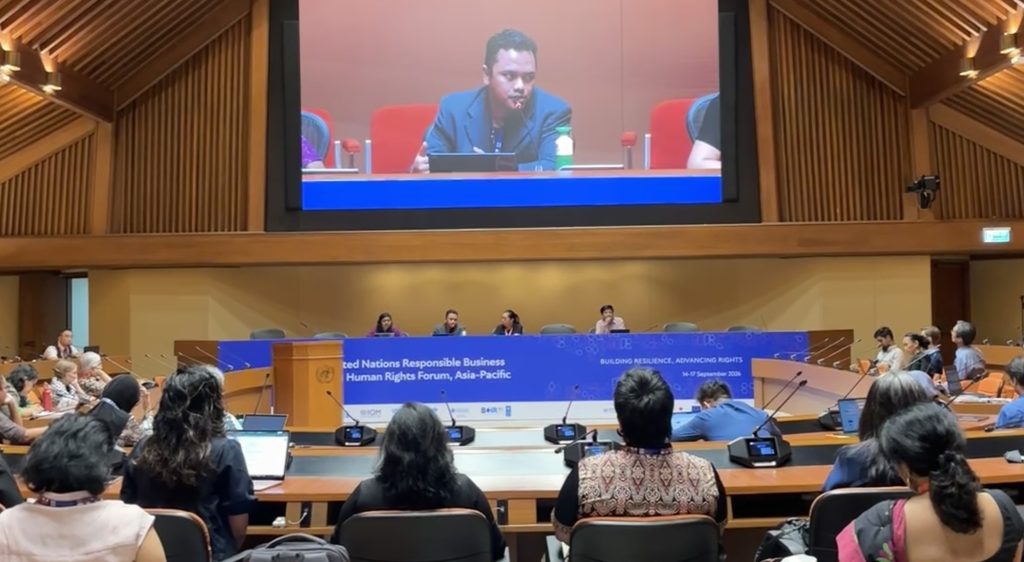
Drawing on lessons from WE FOR JET in Indonesia, Deden highlighted that community participation can take many forms. Communities may be involved mainly as beneficiaries or users of renewable energy solutions. They may participate through consultations, training, or implementation. In other cases, communities may have stronger ownership and influence over how initiatives are designed, governed, and sustained.
Yet stronger community involvement does not automatically resolve questions of power.
Communities are not homogeneous. Within the same community, people have different experiences, social positions, needs, and levels of access to decision-making spaces. This means the question cannot stop at whether an initiative is “community-led”. It also needs to consider who within the community is leading, who is represented, and whose voices may still be missing.
Participation does not automatically lead to influence
One of the key lessons emerging from WE FOR JET is that meaningful participation is easy to talk about, but much harder to make real.
Women may be present in community meetings and decision-making spaces, while unpaid care and domestic work continue to shape the time, mobility, and opportunities they have to engage and take on leadership roles.
For persons with disabilities, the barriers can look different. Accessibility, access to information, communication methods, and the way participation processes are designed can all affect whether people are genuinely able to engage and influence decisions.
These experiences have encouraged WE FOR JET to look more closely at the conditions around participation itself.
Through its work, WE FOR JET considers factors such as care responsibilities, accessibility, access to information, social norms, and representation. The focus is not simply on creating spaces for participation, but also on understanding what needs to be in place for people to engage meaningfully in those spaces.
This shifts the way participation is understood. The question becomes less about who attended a meeting or activity and more about whether people have opportunities to move from participation towards influence, decision-making, leadership, and meaningful power.
Looking at the energy transition through the lens of power
For WE FOR JET, advancing a just energy transition requires looking beyond the renewable energy solution itself.
Energy technologies can provide an important entry point, but a just transition also depends on whether communities can define their own priorities, strengthen their agency, and shape their energy future.
Without attention to existing social inequalities, renewable energy initiatives can also risk adding new responsibilities without addressing the barriers communities already face. For women in particular, this may create additional responsibilities on top of existing unpaid care and domestic work.
Questions around a just energy transition are therefore also questions about power: Who makes the decisions? Whose knowledge is recognised? Who benefits from the transition? And who has the power to shape its future?
The session brought together Prabindra Shakya of AIPNEE, Vaishnavi Varadarajan of International Accountability Project, and Deden Ramadani of WE FOR JET/Penabulu Foundation, with Robie Halip of Right Energy Partnership with Indigenous Peoples moderating the discussion, alongside colleagues from the UN Human Rights Council and River & Rights.
For WE FOR JET, the discussion provided an opportunity to bring lessons from Indonesia into a wider Asia-Pacific conversation on rights-based and community-led energy transitions. It also reinforced a question that remains central to the programme’s work: as the energy transition moves forward, how can communities have greater voice, ownership, and power to shape their own energy future?