

The energy transition is not only about technology, clean electricity, or ambitious targets for the future. At the community level, it is also about people: who is involved, who is heard, and who has the opportunity to lead change.
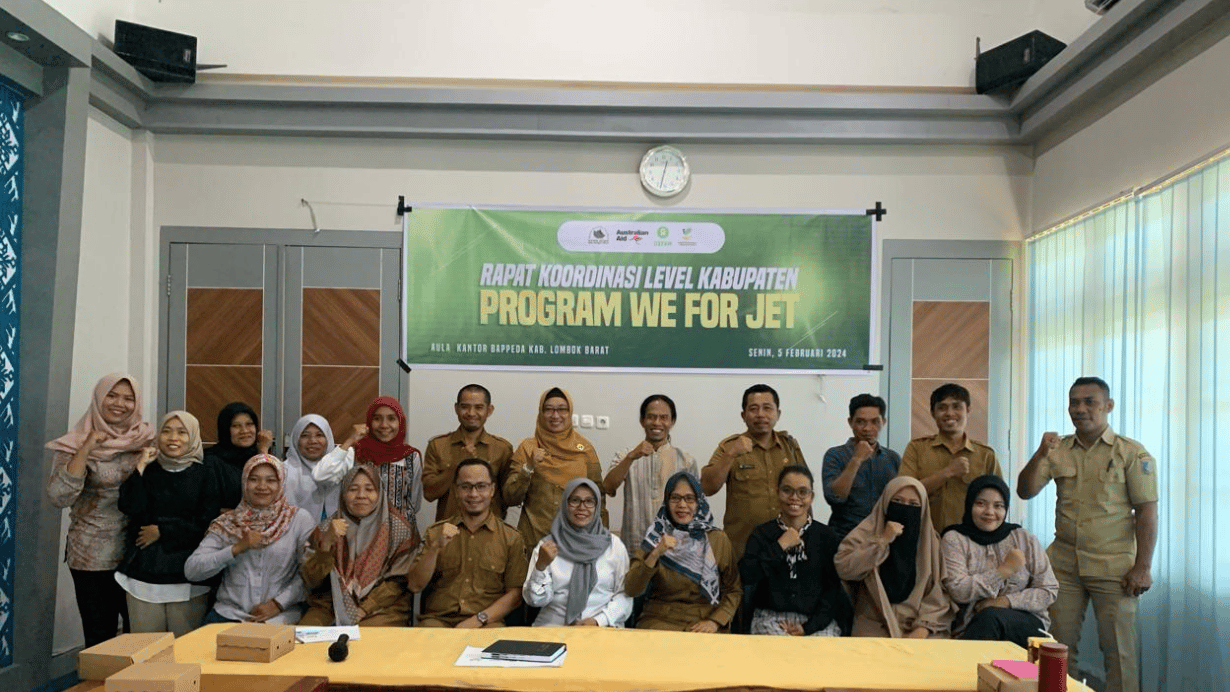
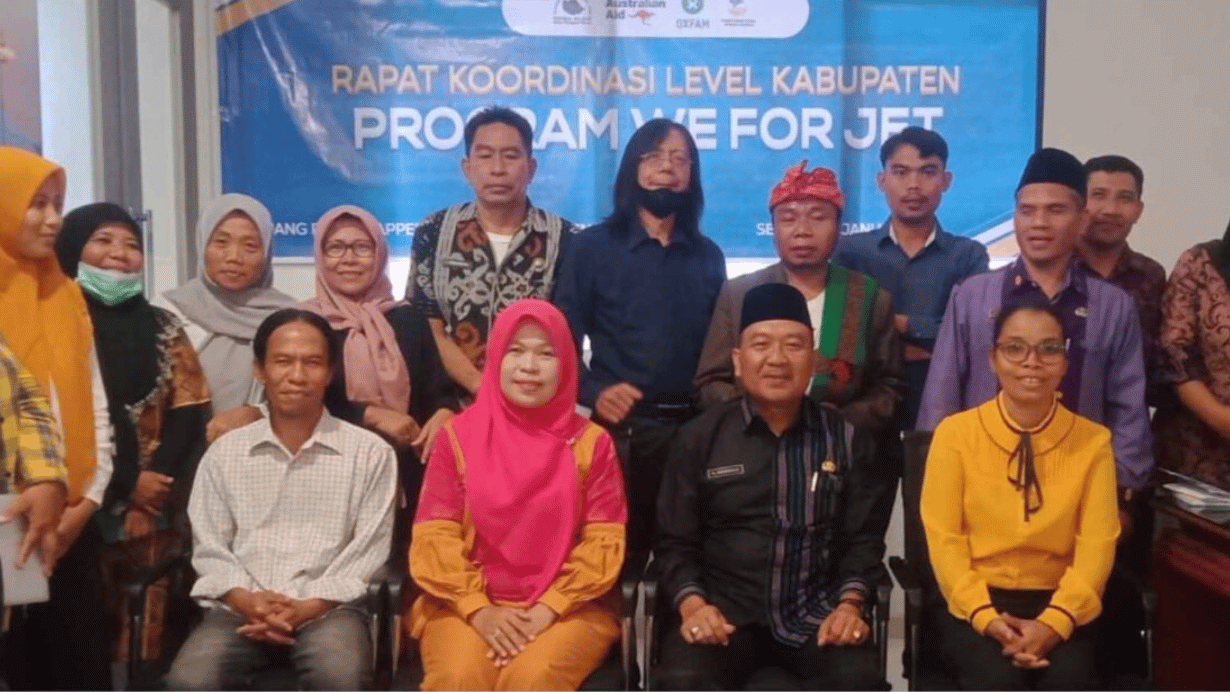
This is the spirit carried by Gema Alam through the WE for JET program in Central Lombok District. On Tuesday, 30 January 2024, Gema Alam presented the initial progress of the program to the Central Lombok District Government at the Bapperinda Meeting Room.
During the meeting, Muhammad Juaini, Program Manager of WE for JET, explained that Gema Alam is conducting preliminary research to collect data that can support the acceleration of the energy transition. While the broader energy transition agenda looks toward the future, including the 2030 target, Gema Alam believes that the journey must begin with the most fundamental step: strengthening community capacity, especially among groups that are often left behind.
Interestingly, although the program focuses on energy transition, Gema Alam began the process by exploring the conditions of persons with disabilities, women, and the results of Participatory Rural Appraisal (PRA) in its partner villages. This initial research was conducted over six months, from July 2023 to January 2024, in two villages representing the upstream and downstream areas of Central Lombok: Lantan Village in North Batukliang Subdistrict and Pandan Indah Village in West Praya Subdistrict.
This approach shows that a just energy transition cannot be built from a technical perspective alone. It must begin with a comprehensive understanding of the social conditions of communities, including their needs, challenges, potential, and the voices of marginalized groups.
“It is not unrelated. This is precisely where the uniqueness of the program lies. We can say that the energy transition program is very likely to succeed in the future if it is carried out by our brothers and sisters with disabilities and PRA groups,” Juaini said.
The WE for JET program is designed to run for five years. During this period, Gema Alam aims to ensure that women and persons with disabilities are not only beneficiaries, but also key actors in the energy transition process. To support this goal, several initial steps have been taken through capacity strengthening and community organizing.
Activities carried out include a Training of Trainers on disability inclusion for 21 participants, GEDSI training involving 21 women and persons with disabilities, organizing training for 12 community organizers, and PRA training involving various village stakeholders. Participants included village government representatives, Village Consultative Body members, Family Welfare Movement members, integrated health post cadres, persons with disabilities, women, and other community actors.
Through this process, communities are not only introduced to renewable energy. They are also encouraged to understand the energy transition as part of human rights fulfillment, social justice, and protection for affected groups. A just energy transition means ensuring that women, persons with disabilities, and marginalized groups have space to speak, participate in planning, access benefits, and receive adequate social protection.
“This program envisions women’s groups and persons with disabilities being able to take part in renewable energy movements,” Juaini continued.
He emphasized that Gema Alam has intentionally not focused immediately on the technical aspects of the energy transition. Before discussing technology and implementation in depth, the program first prepares the people who will become part of the change.
“In principle, the reason we have not yet focused on discussing the energy transition is because we are preparing the human resources first. In this case, we are starting with the most marginalized groups, namely women and persons with disabilities,” he explained.
This approach is important because the success of the energy transition depends heavily on community ownership. Renewable energy technology will be more sustainable when communities understand it, accept it, manage it, and feel that they are part of the change. Without community participation, especially from the groups most affected, the energy transition risks becoming an agenda that is disconnected from people’s real needs.
The Central Lombok District Government welcomed the initiative. HL Wiraningsun, Assistant I of the Central Lombok Regional Secretariat and Acting Head of the Central Lombok Social Affairs Office, expressed appreciation for the program implemented by Gema Alam.
He hoped that the initial data collected by Gema Alam through the WE for JET program could be shared with the local government. The data is expected to serve as a technical reference to support more inclusive development efforts in Central Lombok.
“Although this is still at an early stage, this program is extraordinary and can already be felt in Central Lombok,” he said.
From Central Lombok, WE for JET shows that a just energy transition must begin at the grassroots. It is not only about preparing technology, but also about preparing people, strengthening women’s leadership, opening space for persons with disabilities, and ensuring that clean energy development truly works for everyone.
This article is adapted from “Rencana Transisi Energi, Gema Alam Sisir Disabilitas,” published by gerbangindonesia.co.id. The full article can be accessed at: https://gerbangindonesia.co.id/2024/01/30/rencana-transisi-energi-gema-alam-sisir-disabilitas/