


West Nusa Tenggara is moving toward a cleaner and more sustainable energy future. The Provincial Government of NTB has set a renewable energy mix target of 23 percent by 2025, as well as a Net Zero Emissions target by 2050. The latest data from 2023 shows that NTB has already reached 22.43 percent, marking an important step in its energy transition journey.
However, the energy transition cannot be measured only through numbers, targets, and technical achievements. An equally important question must be asked: is this transition just for everyone?
This is where women’s leadership and the participation of marginalized groups become essential. A just energy transition must ensure that women, persons with disabilities, and communities that have long been excluded are not only treated as beneficiaries, but are also involved in decision-making processes.
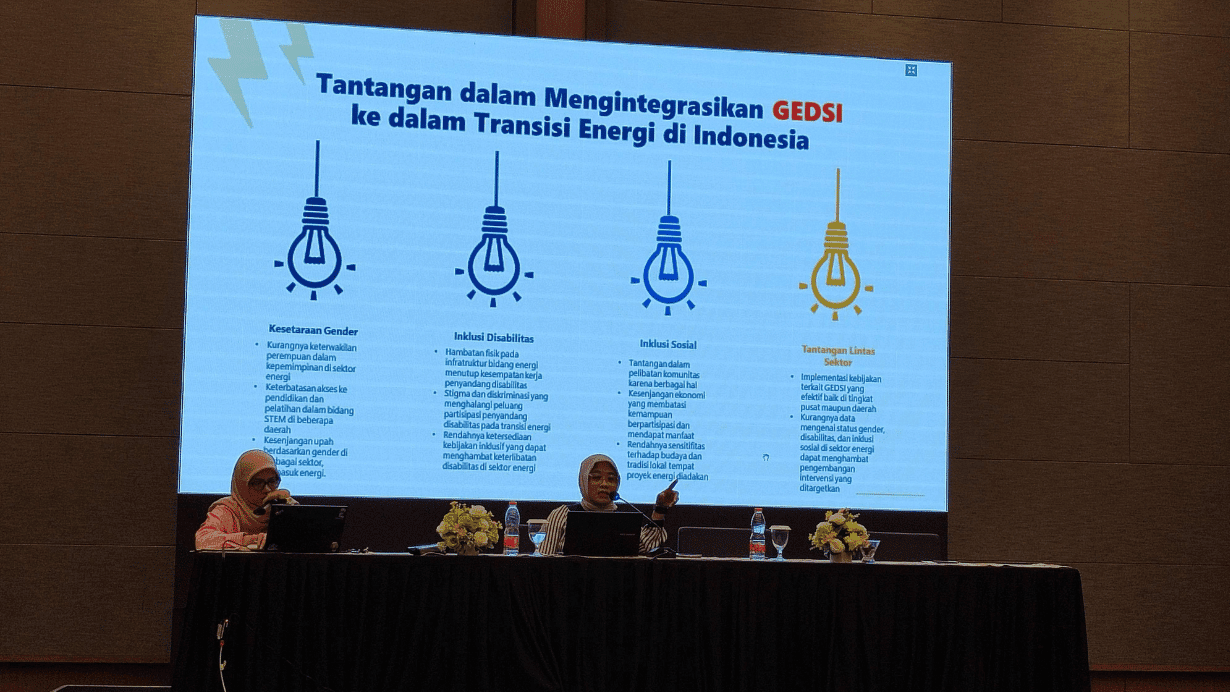
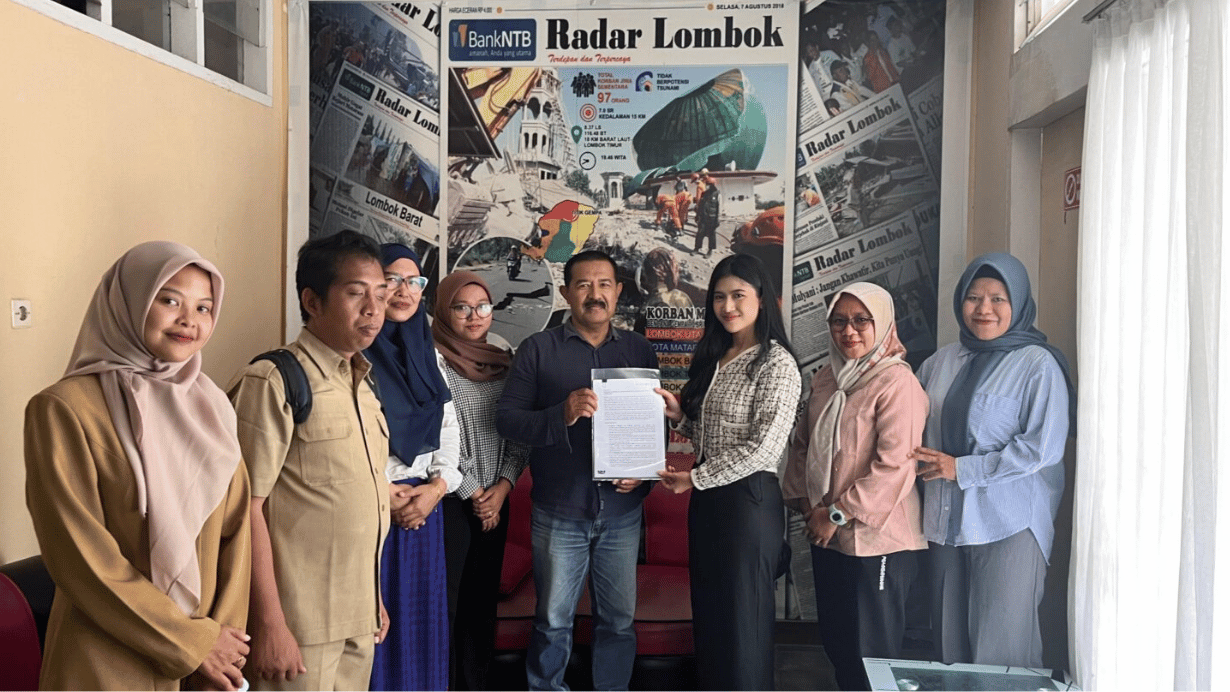
This message was shared by Nurjanah, WE FOR JET Project Coordinator in NTB Province, during a media visit to the Radar Lombok editorial office on Tuesday, 22 October 2024. According to Nurjanah, integrating Gender Equality, Disability, and Social Inclusion, or GEDSI, into energy policy and program implementation is a key factor in ensuring that the energy transition is inclusive.
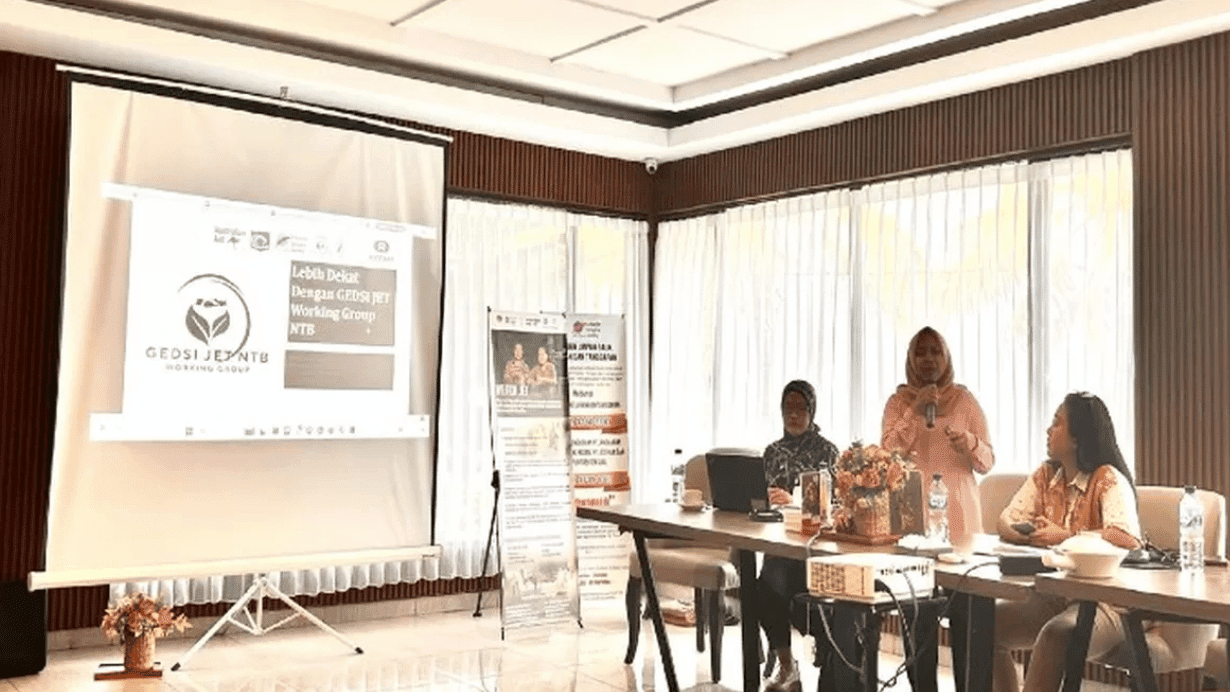
The NTB GEDSI JET Working Group, through its newly released policy paper, emphasizes that the energy transition is not only about shifting from fossil fuels to renewable energy. More than that, it is a social transformation process that must pay attention to justice, access, participation, and protection for all groups in society.
The policy paper highlights the importance of applying GEDSI principles in regulations, governance, financing, and the implementation of energy programs in NTB. Through this approach, women, persons with disabilities, and other marginalized groups can have more equal space to participate, express their needs, and benefit from renewable energy development.
To strengthen a just energy transition in NTB, the NTB GEDSI JET Working Group has presented five key recommendations to the Provincial Government of NTB.
First, strengthen GEDSI-oriented policies and regulations. The Provincial Government of NTB is encouraged to ensure that regional energy policies, including Regional Regulation No. 3 of 2019 on Regional Energy Policy and Governor Regulation No. 13 of 2024 on Green Energy Development, truly provide equal participation space for all stakeholders.
“These policies must ensure equal participation from all stakeholders, especially women and persons with disabilities, in all aspects of renewable energy development, from planning to energy access,” Nurjanah explained.
Second, increase investment in renewable energy infrastructure. NTB has strong potential for renewable energy development. However, this potential must be supported by inclusive investment that reaches communities with limited access to energy. A collaborative investment model involving local government, the private sector, civil society organizations, and local communities is important to ensure that the benefits of clean energy are felt more widely.
Third, strengthen public capacity and awareness. The energy transition requires public support. For this reason, inclusive, accessible, and far-reaching public campaigns need to be expanded. A pentahelix approach, involving government, the private sector, civil society, academia, and the media, can be an effective way to build shared understanding of the importance of a just energy transition.
“In this way, awareness of the importance of the energy transition can be shared more evenly,” Nurjanah said.
Fourth, develop innovative financing solutions that are accessible to marginalized groups. Energy transition financing schemes must be designed so they do not only benefit groups that already have access and resources. The NTB GEDSI JET Working Group proposes financing mechanisms that involve the private sector, local government, and international donors. Mechanisms such as natural resource revenue sharing, corporate social responsibility funds, and donor partnerships can be directed to support energy programs that take GEDSI aspects into account.
Fifth, strengthen community empowerment at the local level. One proposed initiative is the establishment of Energy Transition Paralegal Posts at the village level. These posts are expected to become spaces where women and persons with disabilities can understand their rights, voice their aspirations, and take part in decision-making processes related to energy in their communities.
“With these posts, women are expected to play a greater role in guiding more inclusive energy policies,” Nurjanah explained.
These steps show that a just energy transition requires more than technology. It also requires inclusive governance. When women and marginalized groups are given space to participate, energy policies can become more closely connected to the real needs of communities.
NTB has a strong opportunity to become a model province that not only pursues renewable energy and Net Zero Emissions targets, but also ensures that the process is fair. By strengthening women’s leadership, opening space for persons with disabilities, and involving marginalized communities, the energy transition can become a pathway toward broader social transformation.
In the end, clean energy is not only about the future of the environment. It is also about a future that is more equal, inclusive, and just for all.
“This initiative will not only strengthen NTB’s position in achieving its NZE target, but also create sustainable social transformation that empowers women and other marginalized groups in facing the challenges of climate change and future energy needs,” Nurjanah concluded.
This article is adapted from “Kepemimpinan Perempuan Penting dalam Transisi Energi Berkeadilan di NTB,” published by radarlombok.co.id. Read the full article here: https://radarlombok.co.id/kepemimpinan-perempuan-penting-dalam-transisi-energi-berkeadilan-di-ntb.html