


West Nusa Tenggara has an important foundation to become one of Indonesia’s leading provinces in the energy transition. Since 2015, NTB has developed a strong energy policy framework, including various regulations that support green energy development.
However, the energy transition cannot exist only in policy documents. The greater challenge lies in how these policies are translated into practices that are fair, inclusive, and responsive to groups that are most at risk of being left behind.
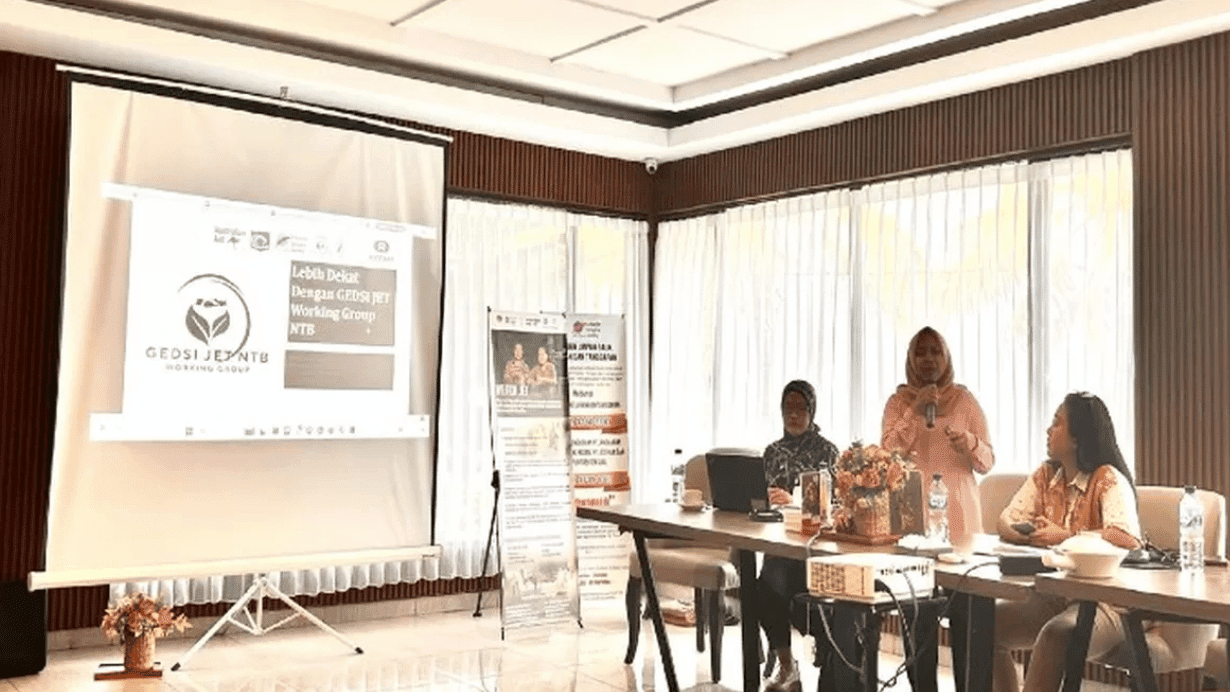
This issue has become a key concern for the GEDSI JET Working Group NTB. Ida Wahyudah, a representative of the working group, explained that GEDSI principles, which stand for Gender, Disability, and Social Inclusion, have already been accommodated in the Governor Regulation on Green Energy. However, implementation on the ground still faces obstacles due to the absence of specific technical guidelines.
“As a result, many parties, including local government agencies, do not yet fully understand how to implement GEDSI concepts in renewable energy programs,” said Ida,
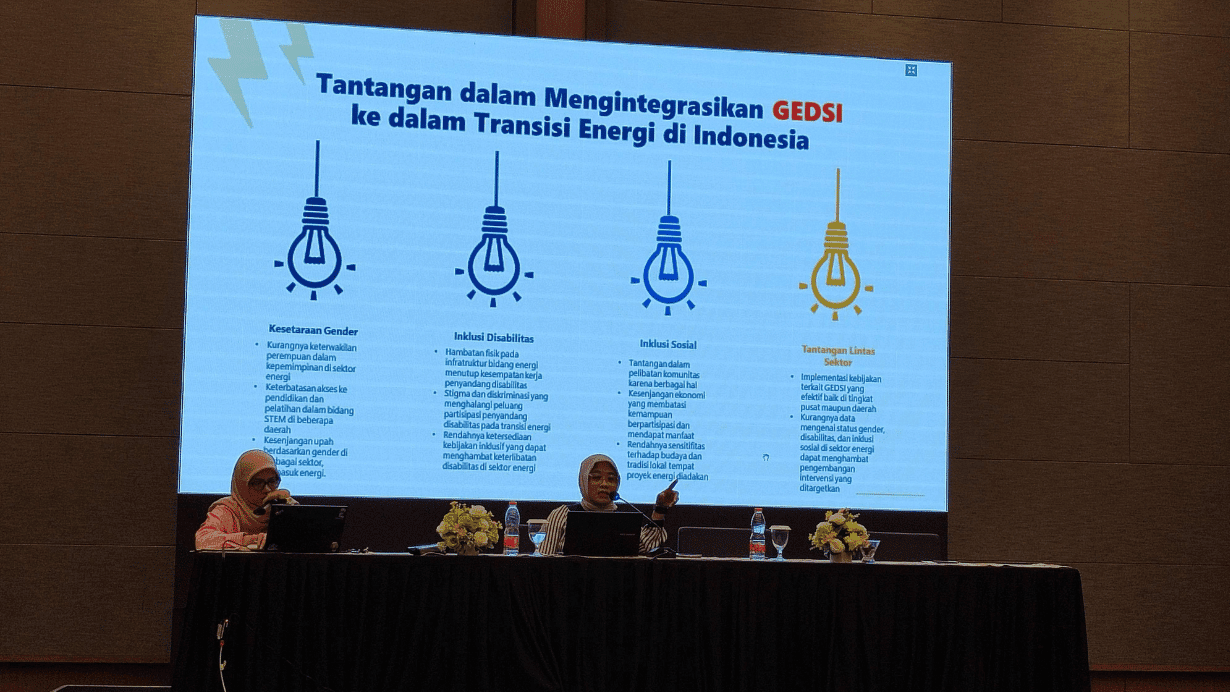
This situation shows that GEDSI integration requires more than recognition in regulation. Local government, government agencies, program implementers, and other stakeholders need a shared understanding of how inclusion should be applied in planning, implementation, budgeting, monitoring, and evaluation of energy programs.
For the GEDSI JET Working Group NTB, community participation is key. The energy transition must create meaningful participation spaces for women, persons with disabilities, Indigenous Peoples, and other marginalized groups. They should not only be treated as beneficiaries. They must also be involved in decision-making processes that affect their lives, living spaces, and future.
Without the participation of marginalized groups, the energy transition risks becoming a technical agenda that is disconnected from people’s real needs. Renewable energy is indeed important for the future of the environment and the economy. However, its sustainability will remain fragile if it is not built on a foundation of social justice.
In addition to the lack of technical guidelines, NTB also faces challenges related to limited human resource capacity. Ida noted that many staff members within local government agencies still do not have sufficient knowledge of GEDSI or how to apply it in the context of renewable energy.
Limited data and information are also major barriers. To design targeted energy transition programs, the government and other stakeholders need comprehensive data. This data should show who has access to energy, who remains underserved, who is most affected, and which groups require specific support.
Without strong data, energy programs risk missing the most urgent problems. In fact, programs intended to expand energy access may widen inequality if they are not designed with a GEDSI perspective from the beginning.
For this reason, collaboration is essential. The government needs to provide clear technical guidelines, strengthen the capacity of local government agencies, and organize training for relevant stakeholders. Communities, especially marginalized groups, must be actively involved in decision-making processes. Meanwhile, the private sector can serve as a strategic partner in providing technology, innovation, and financing.
With its strong energy potential and policy commitment, NTB has a major opportunity to become a pioneer of a just and sustainable energy transition in Indonesia. However, this opportunity can only be realized if GEDSI principles do not stop as terminology in regulations.
GEDSI must be reflected in how programs are designed, how budgets are allocated, how technologies are selected, how communities are involved, and how benefits are distributed. A successful energy transition is not only one that changes energy sources. It is also one that ensures no group is left behind.
As Ida emphasized, the success of the energy transition in NTB depends heavily on collective efforts to address existing challenges. With strong collaboration, NTB can prove that green energy is not only environmentally clean, but also just for all.
This article is adapted from “Tantangan Integrasi GEDSI dalam Transisi Energi di NTB,” published by RRI. Read the full article here: https://rri.co.id/mataram/regional/1199468/faq.html