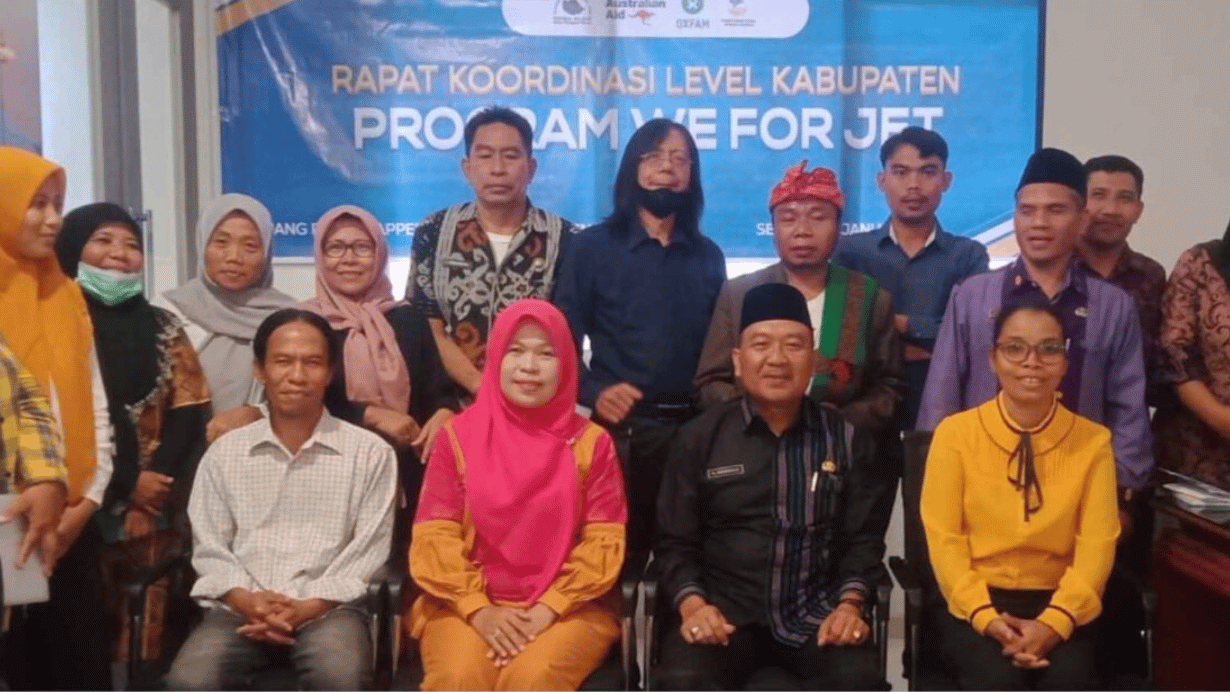


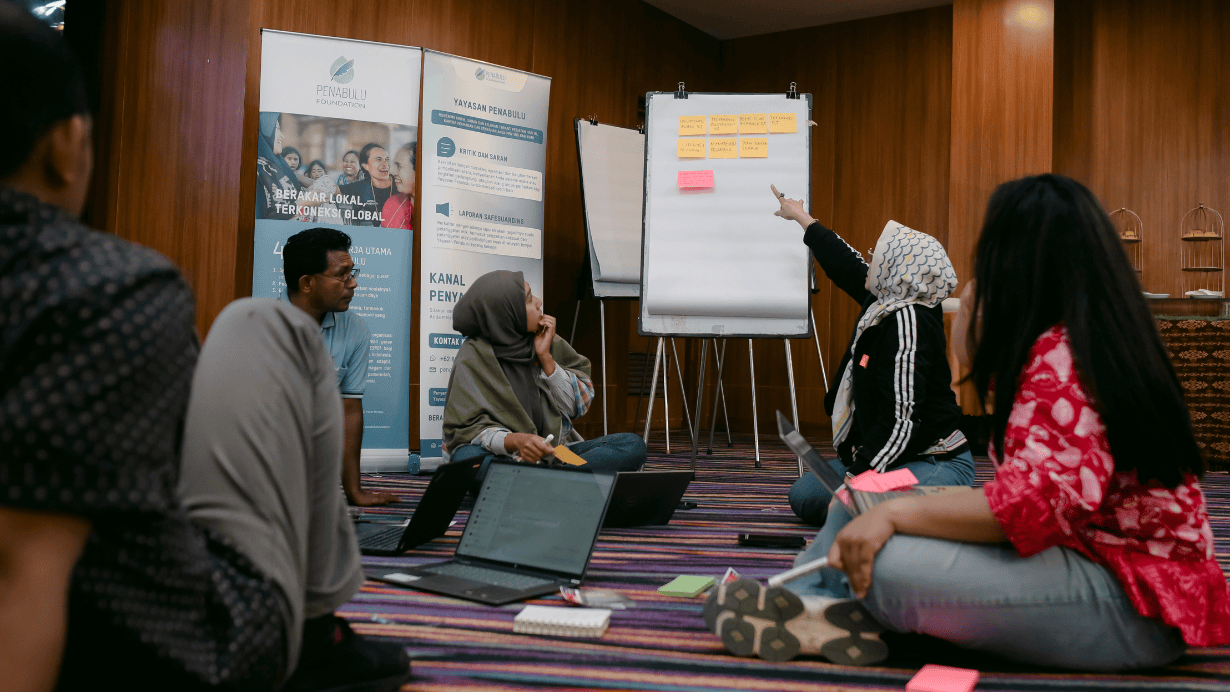

Kupang became a meeting point for WE FOR JET partners in September 2026. After three years of program implementation, this year’s gathering brought forward a simple but important question: what should we do differently and better in the fourth year?
This question shaped the WE FOR JET Year 4 Kick-Off Meeting, which brought together Yayasan Penabulu, Oxfam Australia, CIS Timor, Gema Alam NTB, YPPS, Publish What You Pay Indonesia, Asosiasi LBH APIK Indonesia, and the GEDSI JET Working Group NTB. The meeting also created space for partners who had mostly been coordinating through online meetings, emails, and WhatsApp to reconnect in person, reflect on the program’s journey, and agree on shared priorities for the year ahead.
WE FOR JET enters its fourth year with a substantial body of experience. The previous three years have generated achievements, challenges, practical lessons, and approaches that have emerged from work at community, subnational, and national levels. The kick-off therefore focused on looking back at what has worked, identifying areas that still need strengthening, and building clearer connections between work at the community, local government, provincial, and national levels.
“The key question for the fourth year is: what can we do differently and better based on what we have learned together?”
— Wawan Suyatmiko, Yayasan Penabulu
For Oxfam Australia, this kind of reflection is important so that accumulated experience does not remain merely a record of achievements. It needs to become a foundation for improving implementation quality and opening opportunities for stronger collaboration.
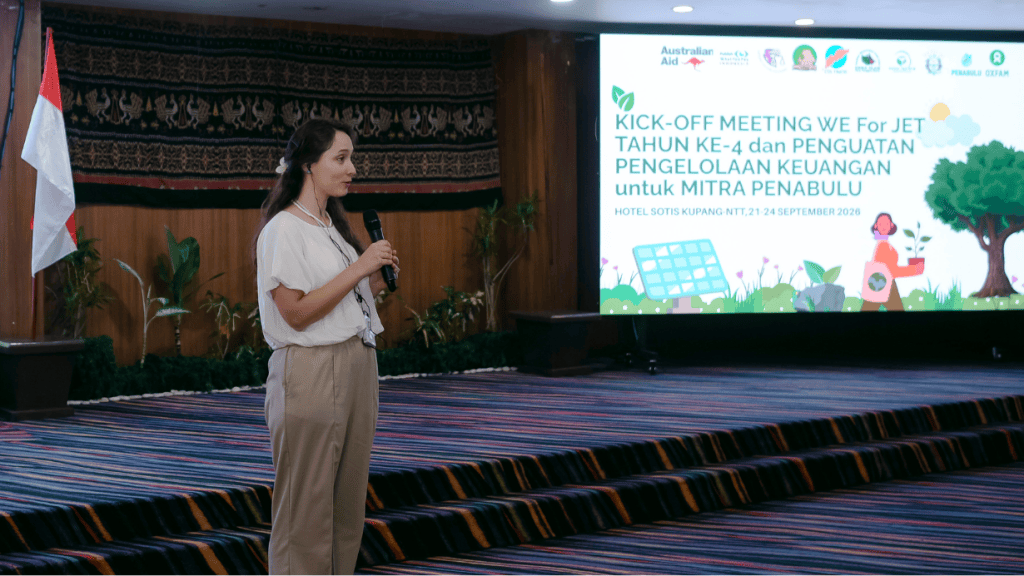
“This kick-off is a very good opportunity to learn from what we have experienced and learned in previous years, and to see how we can work better and build new collaborations moving forward.”
— Danya Salinas Guzman, Oxfam Australia
From Achievements to Broader Impact
Reflection on Year 3 showed important progress across the WE FOR JET journey. The program has increasingly engaged women and vulnerable groups, renewable energy practices have continued to develop across project areas, and community experiences are being brought more often into policy discussions.
In Year 4, this direction will be strengthened further. Partner workplans include more than 57 activities across the program’s four result areas. The program aims to engage 2,888 people, with around 66 percent women and 8 percent persons with disabilities. These figures also underline the importance of paying attention to the quality and meaningfulness of participation throughout implementation.
Discussions during the kick-off showed that Year 4 is moving further toward replication, scaling impact, productive use of renewable energy, and strengthening the influence of community voices in policy and institutional spaces.
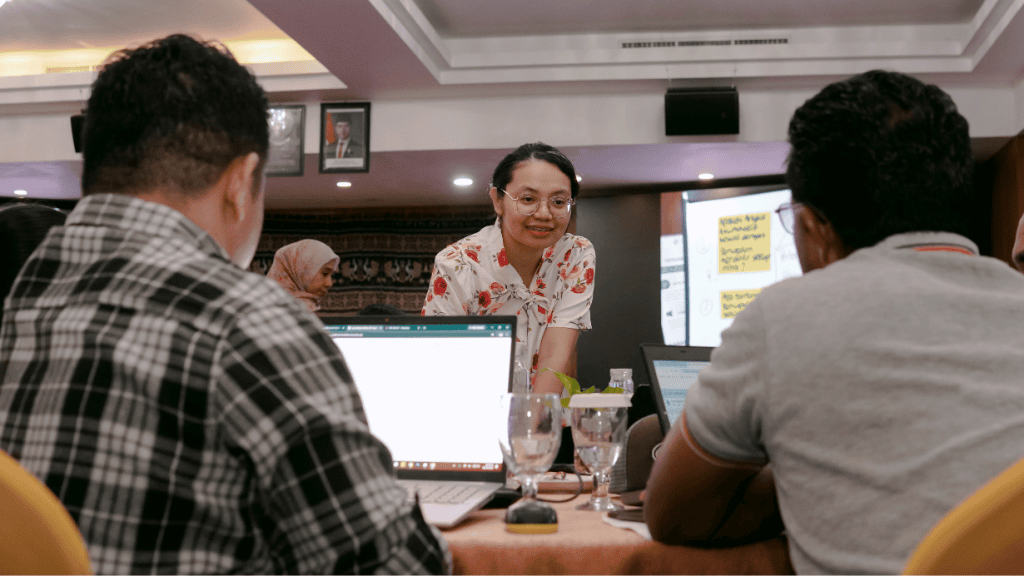
One of the key themes was the productive use of renewable energy. Experiences with biogas, briquettes, and other community-based renewable energy solutions are increasingly being discussed in relation to women’s economic activities, business sustainability, and access to energy sources that are relevant to everyday needs.
At community level, these benefits are also being understood through changes that are closer to women’s daily lives: reduced workloads, greater economic opportunities, and stronger confidence to speak about their own experiences.
“In the fourth year, we want community stories of change to become more comprehensive. Women and community champions need to be increasingly confident in voicing the changes they experience, including how renewable energy affects their economy and their time.”
— Ningsih Bunga, CIS Timor
At the same time, partners highlighted the importance of connecting these experiences with broader energy policy agendas. Discussions on RUED, RUEN, community-based energy financing, and subnational fiscal space reflected a shared need to link lessons from villages with decision-making processes at district, provincial, and national levels.
Connecting Knowledge, Communication, and Advocacy
One of the lessons from previous years is that a significant amount of knowledge has been generated through the work of individual partners, but it has not always been connected into a shared body of learning. Stories of change, data, good practices, and challenges remain spread across different organizations and locations.
To respond to this, Year 4 will strengthen three cross-partner task forces focusing on knowledge and data management, communication, and advocacy. These task forces are intended to create working spaces across organizations so that information from the field can be processed, interpreted collectively, and used to strengthen public communication and advocacy.
Discussions on knowledge management also emphasized that data should go beyond documentation and reporting. The larger challenge is the ability to identify patterns, synthesize learning, generate new insights, and turn experience into knowledge that can support collective action.
Knowledge ownership was another important issue. Knowledge about renewable energy practices, women’s leadership, and community-level change grows from people’s own experiences. Documentation and learning processes therefore need to create space for that knowledge to remain accessible, useful, and owned by the communities that generated it.
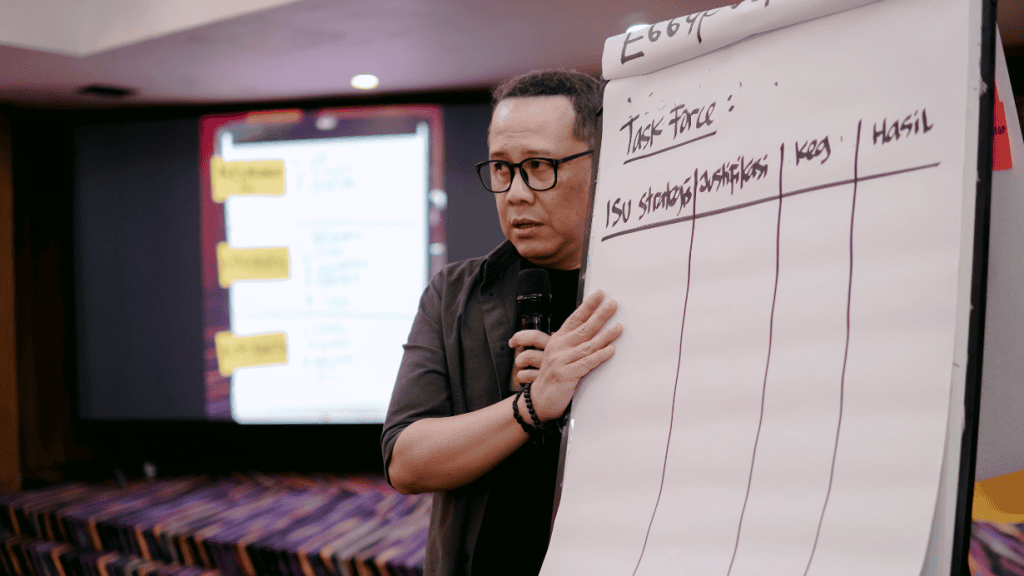
The same principle applies to communication. Stories about women and vulnerable groups need to reflect their own perspectives as actors of change. Program impact often appears through gradual shifts: household roles becoming more balanced, women gaining greater space in decision-making, incomes increasing, or men becoming more involved in supporting gender equality. These changes may be gradual, but they are central to understanding what a just energy transition looks like in everyday life.
Learning with Communities
The kick-off also took participants beyond the meeting room. A field visit to Batakte, Kupang Regency, provided an opportunity to see community-based renewable energy practices directly, including the use of biogas.
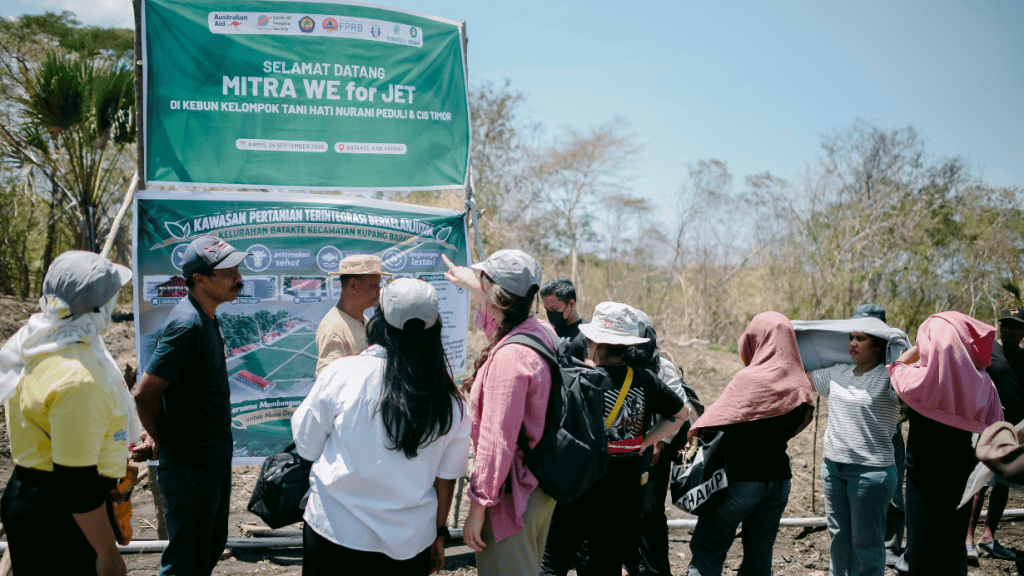
The visit was designed as a space for mutual learning. Participants came to listen to community experiences while also bringing lessons from their own project areas. The underlying idea was simple: learning should move in both directions, allowing experience from one location to inform work in another.
The discussion then continued with local government actors, opening conversations on how community-based renewable energy practices can receive stronger policy support, financing, and alignment with broader local development agendas.
Sustaining Change Beyond the Project
One of the important conversations during the kick-off focused on sustainability. The question was not limited to what could be achieved while the project is active, but also what could continue once project support ends.
At community level, the experience of the past three years provides grounds for optimism. A number of practices are beginning to be sustained because communities see their direct value and because supporting resources are locally available.
“We are quite confident that these practices will continue at community level because people have already experienced the benefits, and the resources needed to support them are available in their own environment.”
— Melkior Koli Baran, YPPS
Sustainability also depends on maintaining relationships with government, civil society organizations, women’s groups, financial institutions, and other actors within the wider energy transition ecosystem. Stronger connections with these actors can create more opportunities for practices that have already taken root to continue and expand after the project period.
Strengthening Connections Across Levels
The WE FOR JET journey takes place across several levels at the same time. In villages, women and community groups are developing renewable energy practices and strengthening their role in economic activities and decision-making. At subnational level, civil society organizations are engaging government and wider networks to bring GEDSI perspectives into energy planning. At national level, these experiences contribute to broader discussions about the direction of Indonesia’s energy transition.
The challenge for Year 4 is to ensure that these different levels become increasingly connected.
Discussions during the kick-off repeatedly highlighted the importance of strengthening the links between national and subnational work. Community experience needs pathways into policy spaces, while national policy developments need to be translated into approaches that are relevant to local realities. Cross-organizational collaboration will therefore remain one of the foundations of WE FOR JET’s work in the coming year.
The WE FOR JET Year 4 Kick-Off ultimately became a space to look at the program’s journey from a wider perspective. There are achievements worth celebrating, areas that still need improvement, and a wealth of knowledge that can be exchanged across partners and locations.
Year 4 brings WE FOR JET into its next phase: strengthening practices that have already emerged, connecting knowledge across regions, and bringing the voices of women and vulnerable groups closer to the spaces that shape the direction of the energy transition.
From Kupang, WE FOR JET enters its fourth year with three years of experience as its foundation, collaboration across organizations as its strength, and sustainability as a direction to be continuously pursued.