


The period from July 2024 to June 2025 marked an important year for WE FOR JET. This was not only because the program directly reached 2,192 people, but also because this figure reflects changes that are beginning to be felt across households, communities, villages, civil society coalitions, and energy policy spaces at both local and national levels.
Energy transition is often discussed through large numbers: energy mix targets, power plants, investments, or emissions. However, in many villages across West Nusa Tenggara and East Nusa Tenggara, energy transition has a face that is much closer to everyday life. It appears when women are no longer positioned only as energy users, but begin leading renewable energy groups. It becomes visible when villages allocate budgets for biogas, solar-powered water pumps, energy-efficient stoves, and solar drying houses. It is also felt when domestic work, long considered women’s responsibility, begins to be discussed again with men, traditional leaders, religious leaders, village governments, and communities.
From July 2024 to June 2025, WE FOR JET, together with five partners, namely PWYP, Penabulu, Gema Alam, CIS Timor, and YPPS, directly reached 2,192 people. Of this number, 57.58 percent were women and 3 percent were persons with disabilities. More specifically, the program reached 1,090 women, 38 women with disabilities, 1,038 men, 26 men with disabilities, 7 boys, and 18 girls. Beyond direct participants, the program also engaged 147 civil society organizations, 10 organizations of persons with disabilities, 16 women’s organizations, 27 local and national media outlets, 30 universities, 24 private sector actors, and generated 53 local and national media coverages.
These figures matter because they show that a just energy transition does not move only through technology, but also through shifts in power relations. From villages to policy forums, women and vulnerable groups are beginning to enter spaces that were previously far beyond their reach.
Women Begin Leading Change in Villages
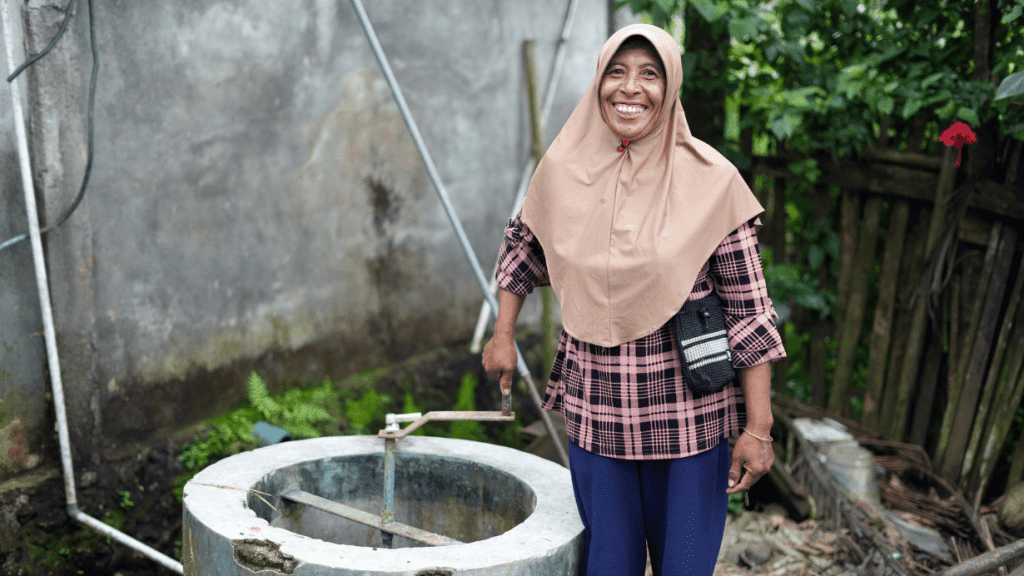
Photo by: Aimee Han/Oxfam
One of the strongest impacts can be seen in the growing leadership of women in decision-making. Around 290 women in 18 villages across NTB and NTT showed progress in leadership, public participation, village planning, and renewable energy initiatives. This change did not happen overnight. It was built through training, mentoring, community discussions, and participatory facilitation that also involved men and community leaders to challenge the social norms that have long limited women’s roles.
The impact is beginning to appear in community structures. Women now lead 19 renewable energy community groups. They are not only present in meetings, but also influence village budget plans, advocate for infrastructure needs, and take part in the planning and maintenance of energy systems. In the village context, this is a major change. Women who were previously more often seen as beneficiaries are now becoming actors who shape the direction of solutions.
This change has also resulted in concrete support from village governments. In 2025, community advocacy successfully secured more than Rp138 million in village fund allocations for renewable energy solutions, including energy-efficient stoves, renewable energy materials, rooftop solar, biogas, and solar-powered water pumps. In addition, there was a private sector commitment to support 48 rooftop solar units.
This means that the program’s results did not stop at capacity strengthening. They began to turn into budget decisions, institutional commitments, and infrastructure that communities can directly experience.
Renewable Energy Begins Responding to Economic and Care Work Needs
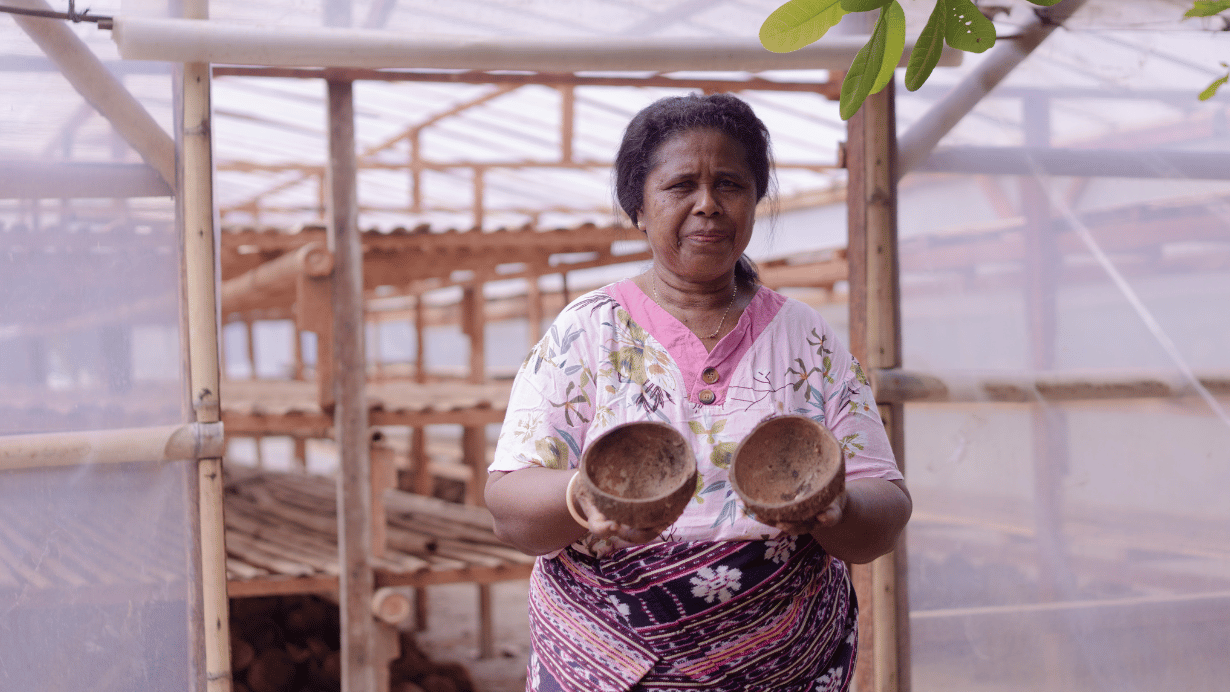
At the community level, 19 communities in NTB and NTT have adopted renewable energy solutions tailored to local resources. These solutions include biogas, solar-powered water pumps, solar drying houses for white copra, briquettes made from coconut waste, and energy-efficient stoves. The impact is not only on energy access, but also on cost reduction, increased income, and reduced domestic workload.
Several households reported energy cost savings of up to 40 percent compared to their previous expenses. In several communities, renewable energy also opened new economic opportunities through the sale of clean energy-based products and services. This shows that energy transition can become an entry point for strengthening livelihoods, especially when the technology is rooted in local needs and potential.
In terms of skills, renewable energy technology training in NTB involved 199 participants and contributed to the installation and maintenance of energy systems that are now operating. In East Flores, NTT, three training sessions on coconut waste utilization innovation involving 119 participants produced three functional prototypes that are now entering the production stage and creating local job opportunities. In addition, five renewable energy infrastructure projects are now fully operational and managed by 15 men and 48 women.
Economic impact was also strengthened through community finance models. Two capacity-strengthening sessions on business management and microfinance reached 386 participants. Through Saving and Internal Lending Communities, or SILC, communities successfully mobilized more than Rp100 million in savings. These funds have become more accessible capital for renewable energy maintenance, business development, and community welfare needs.
The annual report also recorded that SILC groups in NTT now have 102 members with total savings of Rp66,446,000. This shows that renewable energy strengthening is moving alongside community economic strengthening, particularly for women who have long had limited access to capital and financial services.
From Communities to Policy: Citizens’ Voices Begin Entering the System
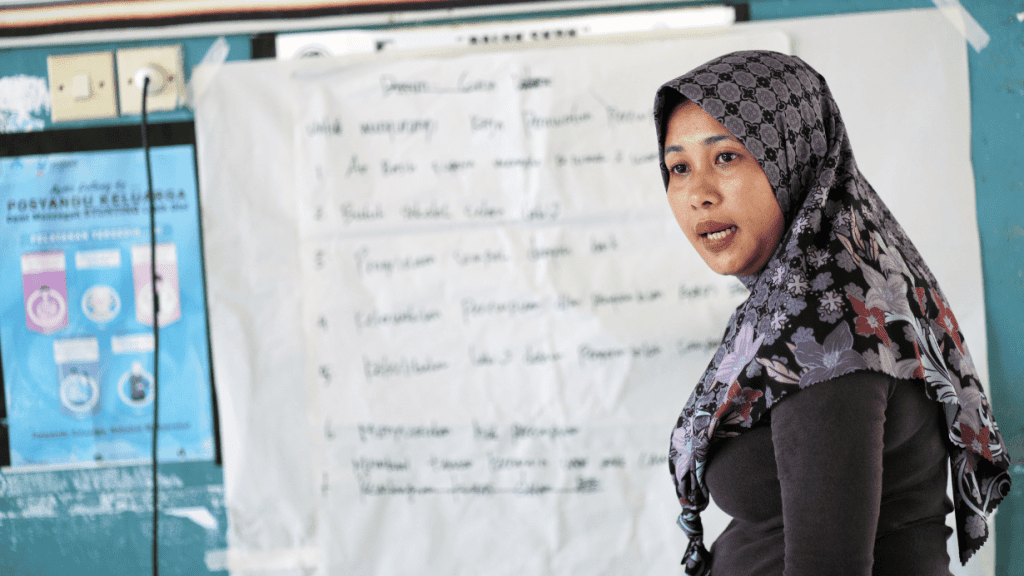
Photo by: Aimee Han/Oxfam
WE FOR JET also demonstrated impact at a broader level, particularly in the ability of civil society to influence the narrative and policies of energy transition. Throughout the implementation period, the program strengthened the work of four civil society coalitions: the GEDSI JET Working Group in NTB, the Climate Change Working Group in NTT, Womans for JET, and the national Just Energy Transition Coalition. These coalitions became a bridge between citizens’ experiences at the grassroots level and energy policy spaces.
Digital campaigns at national and provincial levels generated around 22,663 interactions, including 709 social media likes, 183 YouTube views, and 21,019 reel views on partner accounts. These figures show that the issue of just energy transition is beginning to move beyond technocratic spaces and enter a wider public sphere.
In NTB, the GEDSI JET Working Group formalized a partnership with RRI NTB to broadcast live discussions on GEDSI and energy transition. This step is important because public media provides space for local communities to share their experiences, needs, and views on renewable energy. In the same region, advocacy also contributed to funding allocation from the NTB Provincial Energy and Mineral Resources Agency for three biogas units worth Rp15 million each in Taman Ayu Village.
In NTT, the Climate Change Working Group, or Pokja PI, with support from WE FOR JET, successfully encouraged the integration of the Regional Energy Plan, or RUED, into the NTT Provincial Medium-Term Development Plan for 2026 to 2030. This positioned renewable energy as a strategic development priority and opened opportunities for implementation across regional government agencies.
Energy Policy Begins Opening Up to GEDSI Perspectives
At the national and subnational policy levels, WE FOR JET’s impact can be seen in the growing recognition of the importance of gender, disability, and social inclusion perspectives in energy planning. At the national level, a member of the National Energy Council, Dina Nurul Fitria, committed to considering GEDSI aspects in the revision of the National Energy Plan, or RUEN. Meanwhile, Catherine K. Winata, Co-coordinator of the Just Working Group at the JETP Secretariat, also recognized the importance of integrating GEDSI into the energy transition process.
At the provincial level, policymakers in NTB and NTT showed commitment to adopting and referring to the RUED policy analysis developed under the WE FOR JET framework. This analysis was used to strengthen the 2025 to 2034 RUED and the Climate Change Adaptation Action Plan in the energy sector.
In addition, three FGDs involving 1 private sector actor, 28 civil society organizations, 6 organizations of persons with disabilities, 12 government institutions, 4 media outlets, and 2 universities produced a study document on the implementation of GEDSI-based energy policy in NTB and NTT within the RUEN and RUED framework. This document has been submitted to local governments in NTB and NTT, as well as to the national government, as policy recommendations.
This shows one important thing: evidence from communities can move into policy materials. The experiences of women, persons with disabilities, village communities, and vulnerable groups no longer remain only as local stories, but are beginning to enter policy documents, forums, and commitments.
Impact That Is Becoming Measurable
In summary, WE FOR JET’s impact from July 2024 to June 2025 can be seen in five main changes.
First, reach and inclusion increased. The program reached 2,192 direct participants, the majority of whom were women, while also involving persons with disabilities, women’s organizations, organizations of persons with disabilities, CSOs, media, universities, and the private sector.
Second, women’s leadership grew stronger. Around 290 women in 18 villages showed progress in decision-making, and women now lead 19 renewable energy groups.
Third, local financing commitments began to take shape. More than Rp138 million in village fund allocations was secured for renewable energy solutions, complemented by a private sector commitment for 48 rooftop solar units and support for three biogas units worth Rp15 million each from the NTB Energy and Mineral Resources Agency.
Fourth, economic benefits began to be felt. A total of 19 communities adopted renewable energy solutions, several households reported energy cost savings of up to 40 percent, five renewable energy infrastructures became fully operational, and SILC mobilized more than Rp100 million in community savings.
Fifth, advocacy began influencing systems. Campaigns and coalition work generated more than 22,663 digital interactions, opened a media partnership with RRI NTB, encouraged the integration of RUED into the NTT Provincial Medium-Term Development Plan for 2026 to 2030, and strengthened policy inputs into RUEN, RUED, and the national energy transition process.
An Energy Transition That Starts with Those Most Affected
WE FOR JET shows that a just energy transition cannot be achieved simply by introducing technology. It must change who is heard, who makes decisions, who manages the benefits, and who has access to resources.
In one year of implementation, 2,192 people were not just participation figures. They were women who began speaking in village forums. They were persons with disabilities who began to be included in energy discussions. They were communities managing biogas, solar-powered water pumps, briquettes, and solar drying houses. They were civil society organizations bringing citizens’ voices into policy spaces. They were evidence that energy transition can become more just when it begins from people’s everyday lives.
Through data, local financing, coalition work, and community leadership, WE FOR JET shows that renewable energy is not only about changing energy sources. It is also about building new forms of power, opening new spaces, and ensuring that women and vulnerable groups are not left behind in Indonesia’s energy future.