

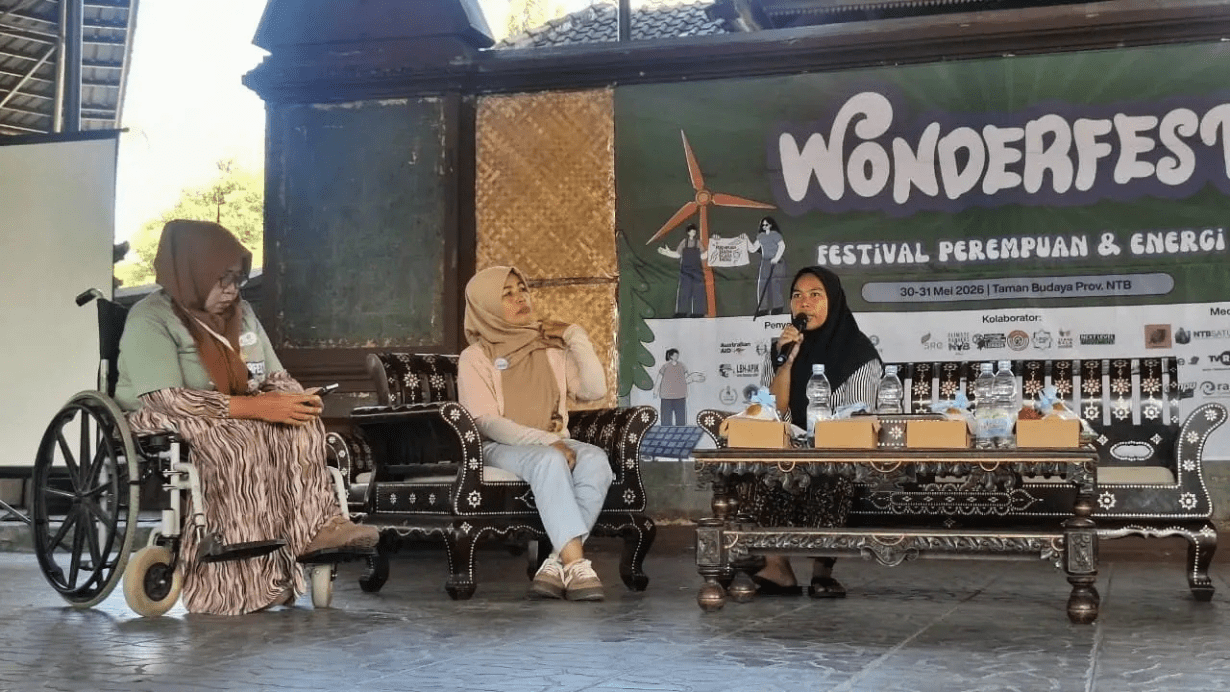

Mataram, West Nusa Tenggara — The energy transition is about more than replacing fossil fuels with renewable energy. In West Nusa Tenggara (NTB), it is also about ensuring that the benefits of clean energy are shared equitably, reaching women, persons with disabilities, rural communities, and other groups that have often been excluded from development processes.
This vision was at the center of WONDER Fest 2026: Women and Energy Festival Towards Net Zero Emissions 2050, held on 30–31 May 2026 at Taman Budaya NTB in Mataram. The festival brought together government representatives, academics, civil society organizations, communities, businesses, and women’s groups to exchange experiences and strengthen collaboration in advancing a more inclusive and equitable energy transition.
From Cultural Performances to Policy Dialogue
The festival opened with a theatrical performance by women from SEKRA (SETARA School) of Gema Alam NTB. Through stories rooted in everyday life, the performance illustrated how rural women are taking the lead in promoting clean energy solutions such as biogas, composting, and solar power within their communities.
The performance served as a reminder that women are not simply energy consumers—they are innovators, organizers, and leaders who are developing practical energy solutions at the local level.
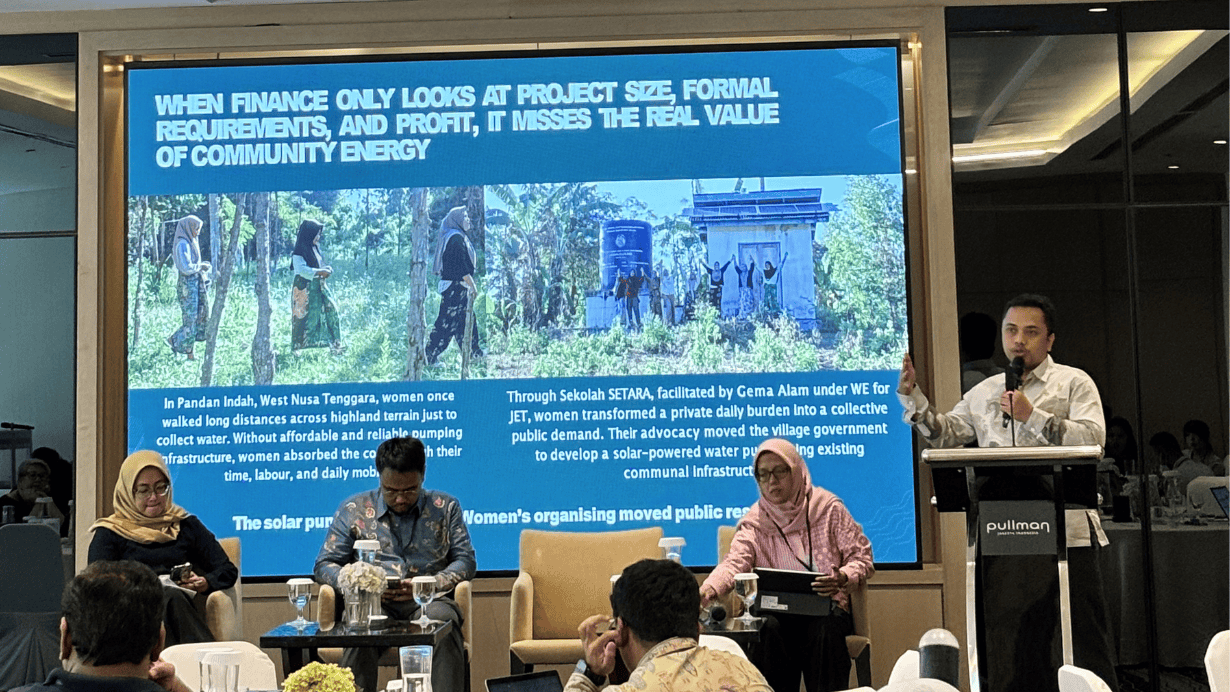
This message was echoed throughout the festival in interactive sessions such as BINERGY (Energy Talks), Tutur Puan (Women’s Stories), and Ngelasah, which brought together grassroots women, policymakers, academics, and energy practitioners to share experiences and explore pathways toward a more inclusive energy future.
Putting Justice at the Heart of the Energy Transition
Sardi Winata, Associate Director of Yayasan Penabulu, emphasized that the success of the energy transition should not be measured solely by technological progress or investment.
“The energy transition is not only about technology, investment, and policy—it is also about social justice.”
He noted that women must have greater opportunities to participate in decision-making because their knowledge and lived experiences are essential in managing energy both at the household and community levels.
According to Sardi, NTB is well positioned to become a model for an inclusive energy transition, with a growing number of community-based renewable energy initiatives supported through collaboration among government institutions, civil society, and local communities.
NTB’s Path Toward Net Zero Emissions 2050
The Provincial Government of West Nusa Tenggara continues to accelerate the development of renewable energy as part of its commitment to achieving Net Zero Emissions by 2050. The province has significant renewable energy potential, including solar, biomass, micro-hydropower, wind, and geothermal resources.
Niken Arumdati, Secretary of the NTB Energy and Mineral Resources Office (ESDM), explained that renewable energy currently accounts for approximately 25 percent of the province’s energy mix. While this represents important progress, fossil fuels continue to supply a substantial share of energy demand, highlighting the need to further accelerate the transition.
Current initiatives include installing solar photovoltaic systems on public facilities, expanding solar power plants, developing micro-hydropower projects, and promoting biomass technologies for electricity generation.
The provincial government is also strengthening partnerships with universities and research institutions to encourage innovation and expand community access to renewable energy technologies.
Learning from Communities: Biogas as a Local Solution
One of the most inspiring examples presented during the festival came from Tetebatu Selatan in East Lombok.
Yuldi Astuti from SEKRA Gema Alam shared how her community has successfully adopted biogas as an alternative energy source. The system proved especially valuable during periods of LPG shortages.
“When LPG became scarce, families with biogas systems were still able to cook.”
More than a technological innovation, the biogas initiative was built through community cooperation, local contributions, and shared ownership. The experience demonstrates that energy resilience can begin at the local level when communities have access to knowledge, appropriate technology, and opportunities to participate.
Women’s Leadership for an Inclusive Energy Future
During the Tutur Puan session, women community leaders shared stories of advancing clean energy initiatives, strengthening household livelihoods, and advocating for more equitable access to opportunities for marginalized groups.
Across these discussions, one message remained clear: a just energy transition cannot be achieved without the meaningful participation and leadership of women and communities that have historically been underrepresented in development processes.
This commitment is further reinforced by NTB Governor Regulation No. 13 of 2024 on Green Energy, which provides a stronger policy framework for integrating gender equality, disability inclusion, and social inclusion into regional energy planning and implementation.
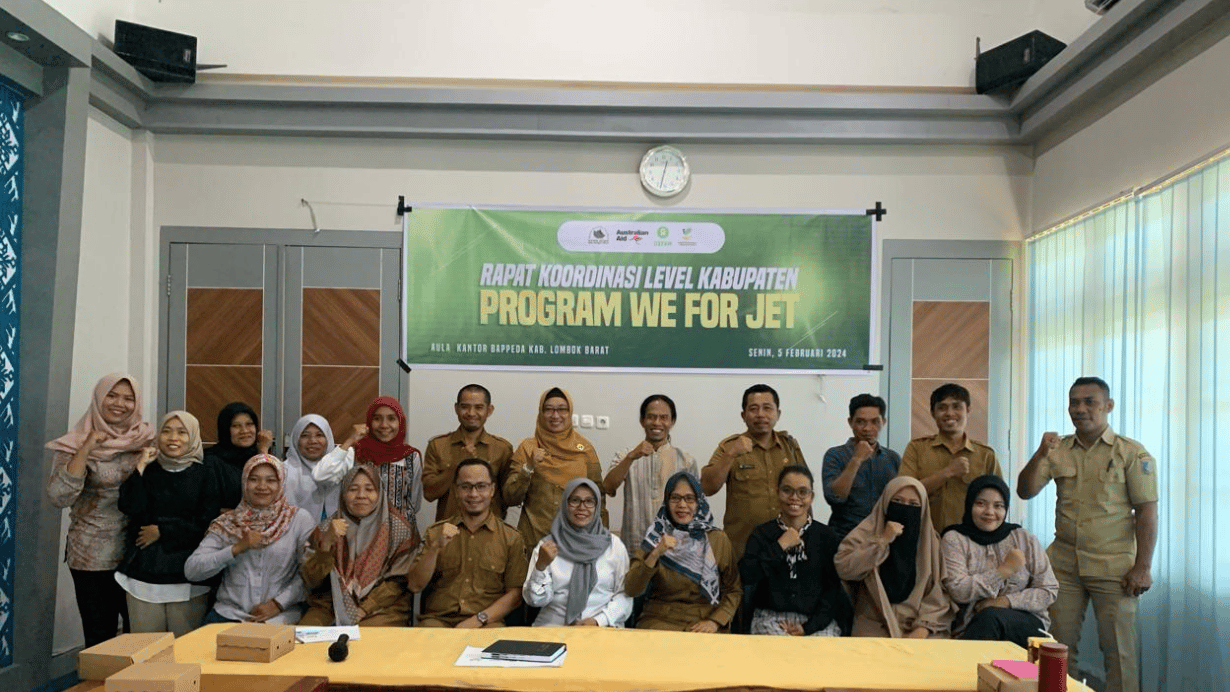
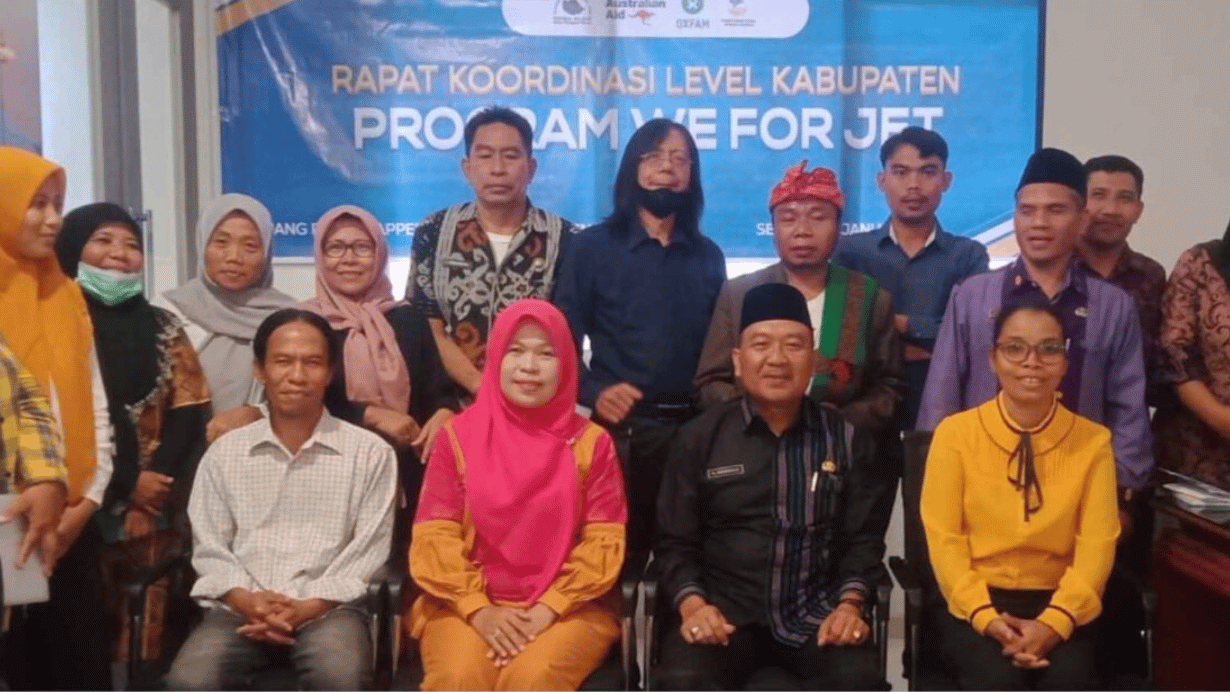
Through collaboration among government institutions, civil society, communities, academia, and the private sector, West Nusa Tenggara continues to demonstrate that the energy transition is about more than cleaner technologies. It is about creating a future that is more equitable, more inclusive, and more resilient for everyone.
Ultimately, the most powerful source of energy does not come solely from solar panels, biogas systems, or power plants—it comes from people who are willing to work together to create lasting change.
This article is adapted and further developed from reporting published by RRI Mataram, “Energy Justice Lights the Path Toward the Energy Transition in West Nusa Tenggara.”