

Standing in the corner of her kitchen, Jetriana Tefa slowly raises her mobile phone, searching for an internet signal. Once a connection appears, she quickly uploads photos of her homemade banana and sweet potato chips to social media.
She holds the phone perfectly still for several minutes.
Then, the signal disappears.
The upload fails.
Moving only a few steps from where she stands, she tries again—and eventually succeeds.
“We call it GSM,” she laughs.
In Nenas Village, South Central Timor (TTS), GSM has a different meaning. Rather than referring to a mobile network, villagers jokingly say it stands for Geser Sedikit Mati—”move just a little and the signal disappears.”
For women entrepreneurs living at the foot of Mount Mutis, even uploading a single photo requires patience and persistence.
Sometimes they must climb nearby hills simply to find enough signal to connect to the internet.
But once their products appear online, the effort is worthwhile.
Their handcrafted goods—and the stories behind them—can now reach customers far beyond their remote mountain communities.
Entrepreneurship Beyond Connectivity Challenges
Nenas Village lies approximately 150 kilometres from Kupang, a journey that takes nearly five hours along steep, rocky roads, many of which remain unpaved.
Electricity is equally limited.
Most households rely on small solar panels that provide enough power for only a few light bulbs. Because the village lies within the buffer zone of Mutis Timau National Park, expanding road and electricity infrastructure remains particularly challenging.
For Jetriana, social media has become a lifeline.
Selling products online is far more affordable than travelling long distances to urban markets, where transportation costs are high and road conditions unpredictable.
Orders continue to arrive despite frequent delays in responding caused by unreliable internet access.
Her customers understand.
Through her Facebook account, Jhetty Land, she markets a range of locally produced snacks, including banana chips, cassava chips, sweet potato chips, roasted corn, and roasted peanuts.
But she is selling more than food.
She is sharing the story of Mutis.
Each product reflects the richness of the local landscape—bananas that grow throughout the year, colourful sweet potatoes, and traditional Timorese corn cultivated without chemical fertilizers.
Instead, families rely on organic compost made from dried leaves and livestock manure, allowing nature to nurture the crops until harvest.
Traditional Kitchens Powered by Renewable Energy
The story continues inside the ume kbubu, the traditional Timorese kitchen.
With its distinctive rounded roof covered in layers of grass that extend almost to the ground, the ume kbubu naturally regulates temperature while serving as the centre of family life.
Today, another innovation has found its place there.
Instead of cooking with LPG or firewood, many of the products are fried using biogas generated from cattle manure.
Behind the kitchen sits a biodigester where livestock waste is fermented to produce methane, providing a clean and renewable source of cooking fuel.
The result is a production process that combines traditional knowledge with renewable energy, creating healthier working conditions while reducing environmental impacts.
From Remote Villages to National Markets
About 16 kilometres from Nenas, another women’s group in Mutis Village is demonstrating similar innovation.
Led by Matelda Emi Banu, the group harvests wild forest honey, marketed under the name Fresh Organic Honey.
Unlike commercially farmed honey, their products are collected directly from natural forest hives.
The honey is carefully filtered indoors under limited lighting provided by small solar-powered lamps to ensure its purity before packaging.
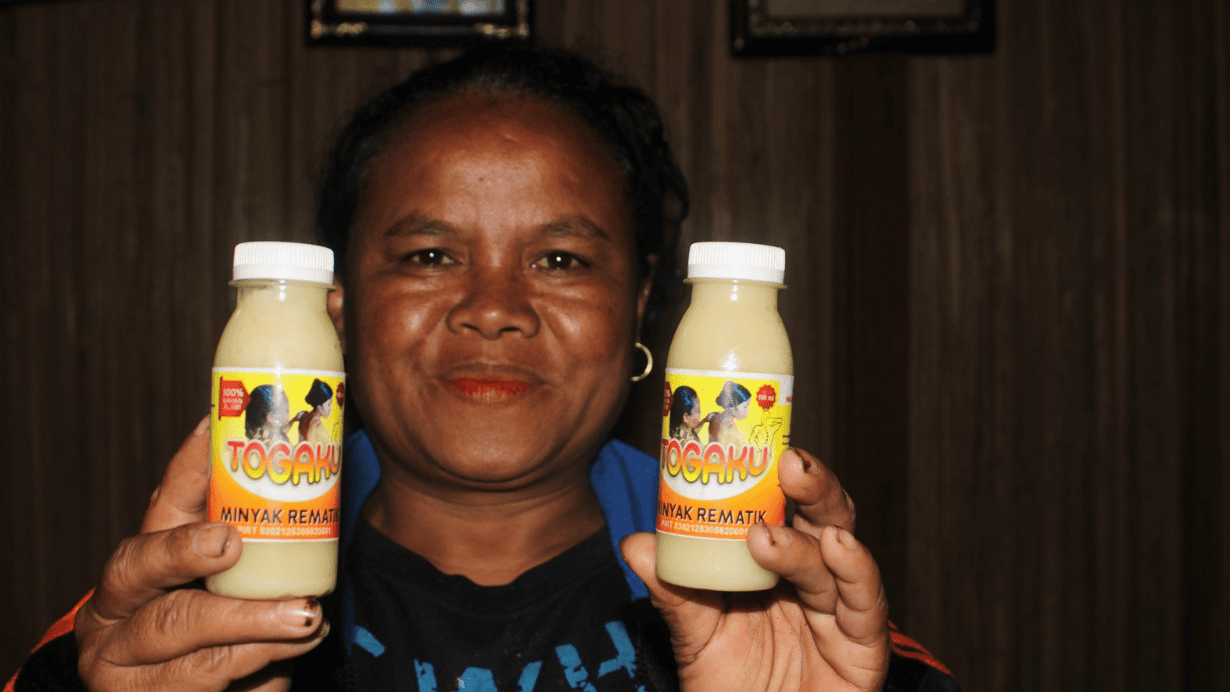
The women also produce traditional herbal massage oil, branded Togaku, made from roots, stems, and leaves gathered sustainably from surrounding forests.
Together, these products represent the rich biodiversity and traditional knowledge of the Mutis landscape.
Their journey has now extended well beyond the village.
During the same period, Yesi Niufeki, one of Jetriana’s colleagues, travelled to Jakarta to showcase products from Nenas and Mutis villages at a national exhibition.
“We are incredibly grateful,” Jetriana said. “Products made by women living in remote villages—with no paved roads, limited electricity, and almost no internet—are now being recognized. We will continue producing high-quality, organic products that are good for people’s health.”
Building Stronger Women-Led Enterprises
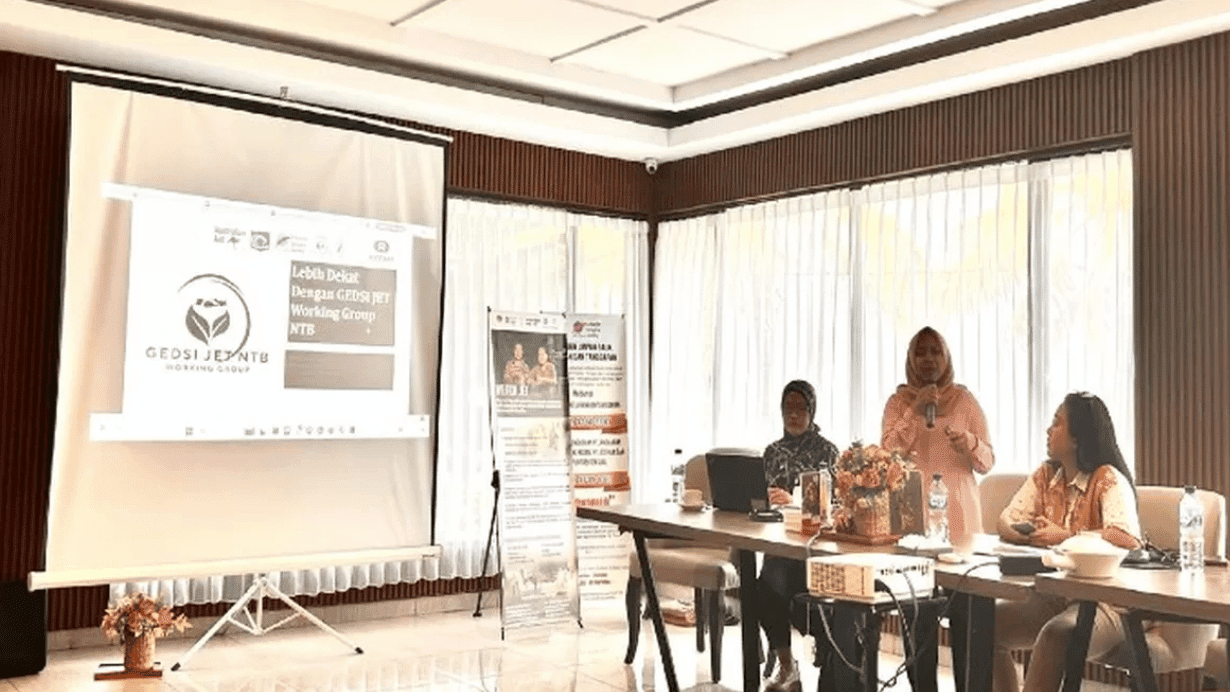
Both Jetriana’s group in Nenas and Matelda’s group in Mutis are supported by the Circle of Imagine Society (CIS) Timor through the WE FOR JET programme.
The initiative provides much more than production training.
Women receive mentoring on entrepreneurship, product development, business management, bookkeeping, marketing, and leadership.
According to Haris A. C. H. Oematan, Director of CIS Timor, both villages have significant potential to develop community-based micro and small enterprises.
The programme also works closely with village governments and church leaders to strengthen local ownership and community support.
Recognizing that financial management is often a challenge for new businesses, CIS Timor helps women’s groups establish transparent bookkeeping systems that build trust and accountability among members.
The organization also supports improvements in product quality, food safety, packaging, branding, and licensing, including obtaining Home Industry Food Production (PIRT) certification.
To expand market access, CIS Timor promotes digital marketing strategies through social media and e-commerce while helping compensate for limited internet access by showcasing products at regional and national exhibitions.
The organization also connects women’s groups with financial institutions, facilitating access to People’s Business Credit (KUR) schemes that provide unsecured loans for small enterprises.
In addition, CIS Timor continues to advocate for greater corporate social responsibility (CSR) support from state-owned enterprises to strengthen local entrepreneurship through financing, capacity building, and business development.
Reaching a New Level
Step by step, the women entrepreneurs of Nenas and Mutis are building businesses rooted in local knowledge, renewable energy, and community resilience.
Despite living in villages with limited infrastructure, unreliable internet, and challenging market access, they continue to innovate, adapt, and grow.
Their products are no longer known only within their communities.
They are reaching customers across Indonesia, appearing in national exhibitions, and demonstrating that women-led enterprises from some of the country’s most remote villages can compete on a much larger stage.
For the women of Mount Mutis, every successful upload, every product sold, and every new customer represents more than business success—it marks another step toward a future where local knowledge, sustainable livelihoods, and women’s leadership are recognized far beyond their mountain homes.