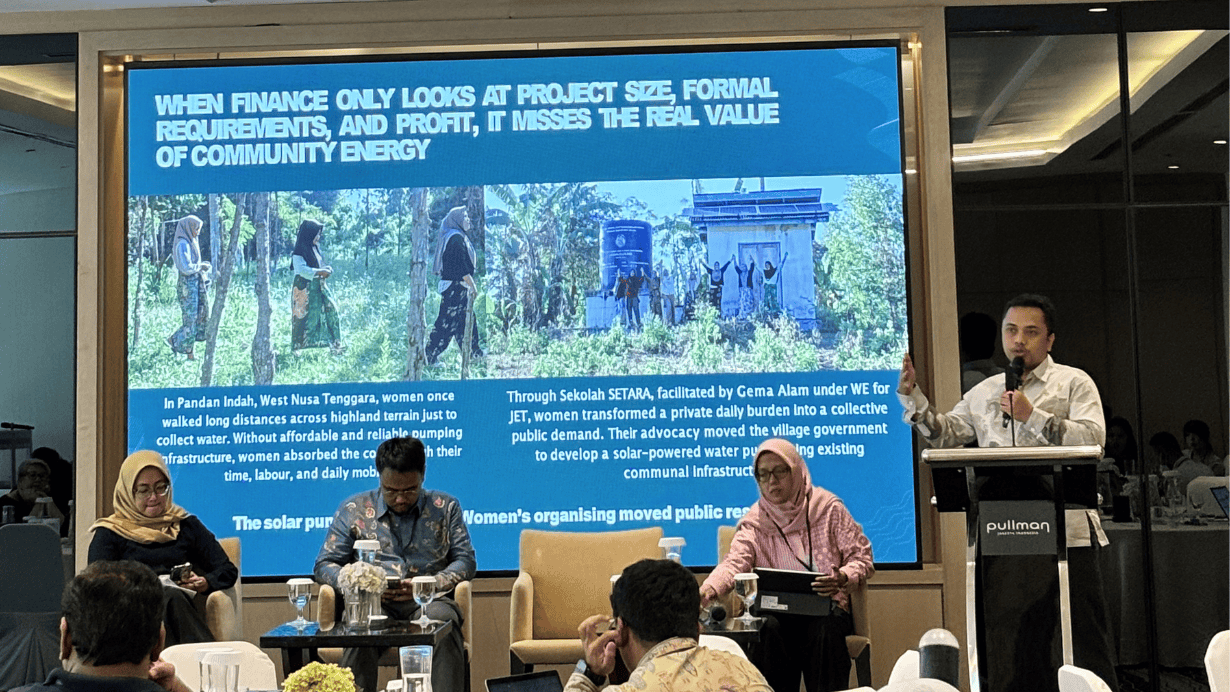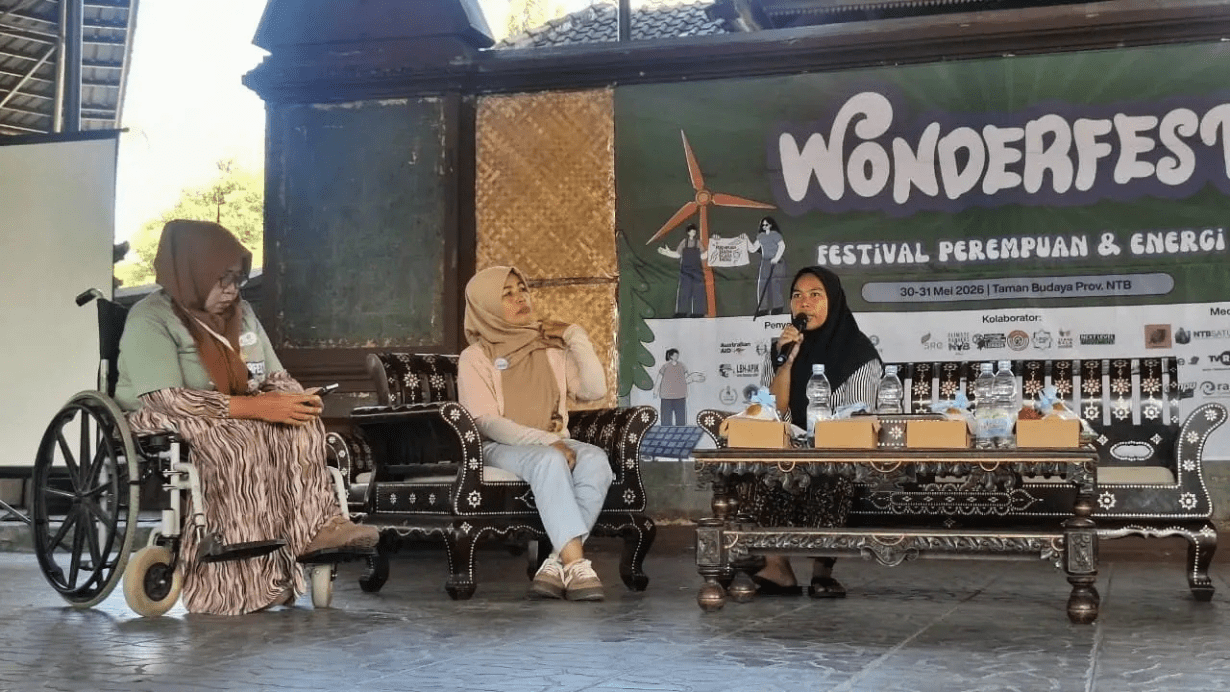


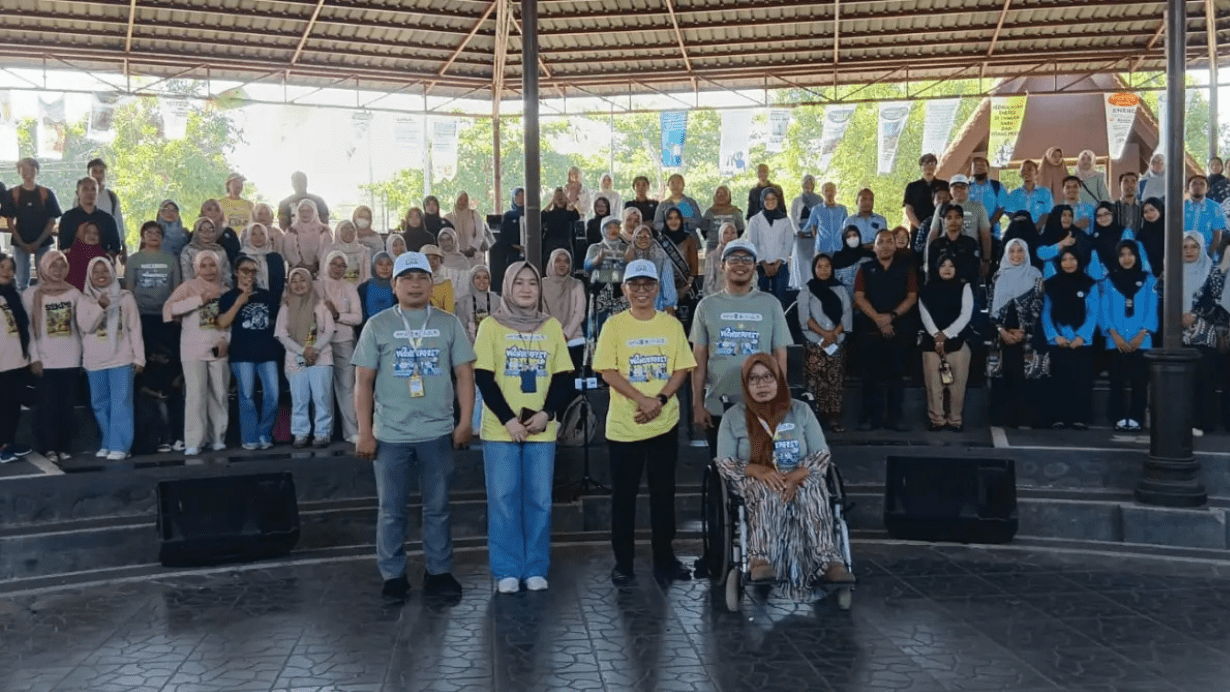

Mataram, West Nusa Tenggara — As the climate crisis intensifies and the transition to clean energy becomes increasingly urgent, women across West Nusa Tenggara (NTB) are demonstrating that they are not merely beneficiaries of development—they are leaders driving change within their communities.
This spirit was at the heart of WONDER Fest 2026 (Women Lead Energy, Women Dare to Speak for Energy Justice), held on 30–31 May 2026 at Taman Budaya NTB in Mataram. The two-day festival brought together communities, government institutions, academics, businesses, media representatives, and civil society organizations to explore one central question: How can the energy transition be truly just, inclusive, and community-driven?
Across Indonesia and around the world, women remain underrepresented in energy-sector decision-making, despite often bearing the greatest impacts of limited energy access and climate change. Addressing this imbalance requires creating meaningful opportunities for women to lead, influence policies, and shape the future of sustainable energy.
Organized through the WE FOR JET initiative and the GEDSI JET Forum NTB, WONDER Fest served as a collaborative platform where diverse stakeholders could exchange ideas, showcase local innovations, strengthen partnerships, and advance gender-responsive approaches to energy transition.
Celebrating Women’s Knowledge and Leadership
According to Baiq Dewi Anjani, Chair of the GEDSI JET Working Group NTB, the festival was designed to amplify the voices and lived experiences of grassroots women who have long been developing practical solutions within their own communities.
“WONDER Fest 2026 is more than a formal gathering. It is a space where grassroots women can share their local knowledge, innovations, and experiences in managing energy resources and shaping community resilience.”
The festival featured a series of interactive activities under the theme Women’s Energy Circle, including:
- Tutur Puan, a storytelling and monologue session highlighting women’s experiences in the energy transition;
- BINERGY, an informal dialogue series encouraging open conversations on energy justice; and
- Ngelasah, a public discussion forum connecting participants with practitioners, researchers, and energy experts.
The program also included Mendadak Cinema, a film screening showcasing stories of women’s leadership, climate action, and energy justice, followed by collective reflections with participants.
Showcasing Community-Based Energy Solutions
A key attraction of WONDER Fest was its exhibition of renewable energy technologies developed and implemented by local communities.
Visitors explored community-managed biogas systems, solar panel innovations designed by students from SMKN 1 Lingsar, and environmentally friendly biomass briquettes as sustainable energy alternatives.
These innovations demonstrated that a just energy transition is not solely driven by large-scale infrastructure or advanced technologies. Equally important are locally developed solutions that respond to community needs, improve livelihoods, and strengthen resilience.
Creating an Inclusive Space for Everyone
Inclusivity was a defining feature of the festival. WONDER Fest created dedicated spaces for groups that are often excluded from development processes.
At the Inclusion Corner, organizations representing persons with disabilities—including LPQI, HWDI, and PERTUNI—shared perspectives on making energy policies and programmes more accessible and inclusive. Meanwhile, the Feminist Corner offered a space for reading, discussion, and dialogue on women’s leadership, gender equality, and social justice.
The active participation of environmental organizations, students, youth groups, entrepreneurs, and community organizations reinforced the message that a successful energy transition requires collaboration across sectors, generations, and communities.
Building an Energy Transition That Leaves No One Behind
WONDER Fest 2026 highlighted that a just energy transition extends beyond reducing emissions or expanding renewable energy infrastructure. It also requires ensuring that women, persons with disabilities, Indigenous Peoples, and other marginalized groups have meaningful opportunities to participate in decision-making, shape development pathways, and benefit equitably from the transition.
From village-scale biogas initiatives to community solar innovations, from public dialogue to cultural performances, the festival delivered a powerful message: when women lead, the energy transition becomes not only greener, but also more equitable, inclusive, and sustainable.
The growing movement across West Nusa Tenggara demonstrates that the future of clean energy can only be achieved through collective action—one that empowers communities and ensures that no one is left behind.
This article is adapted and further developed from reporting originally published by Lombok Post.