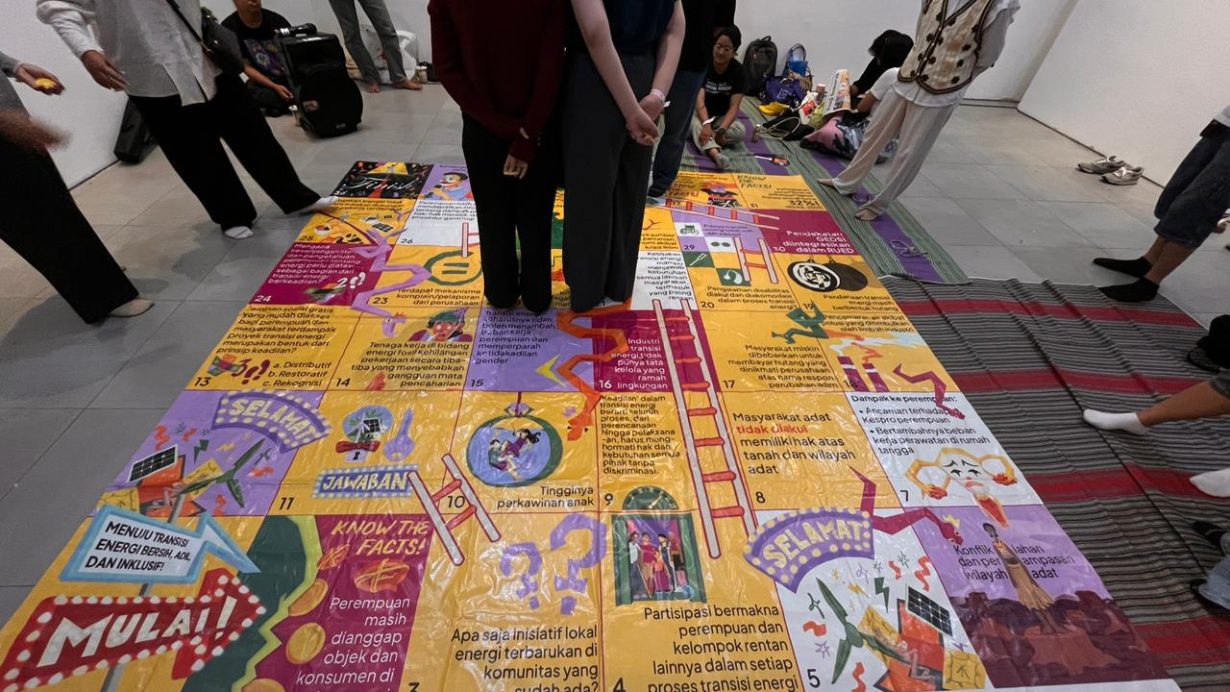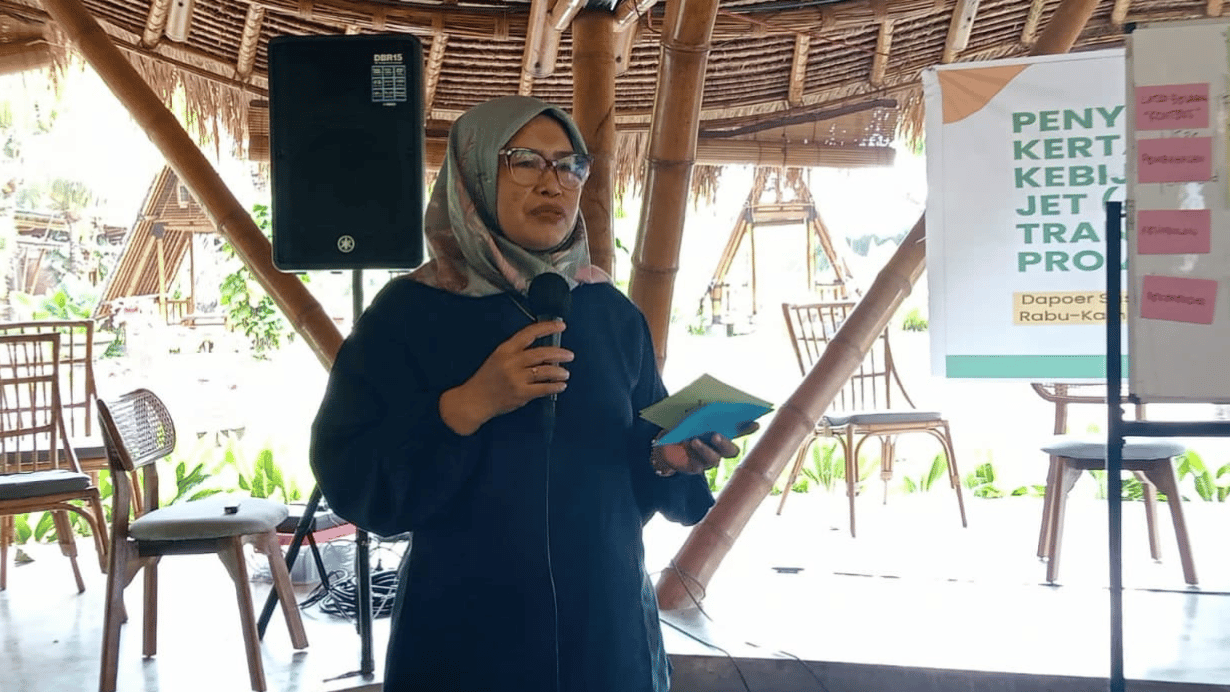


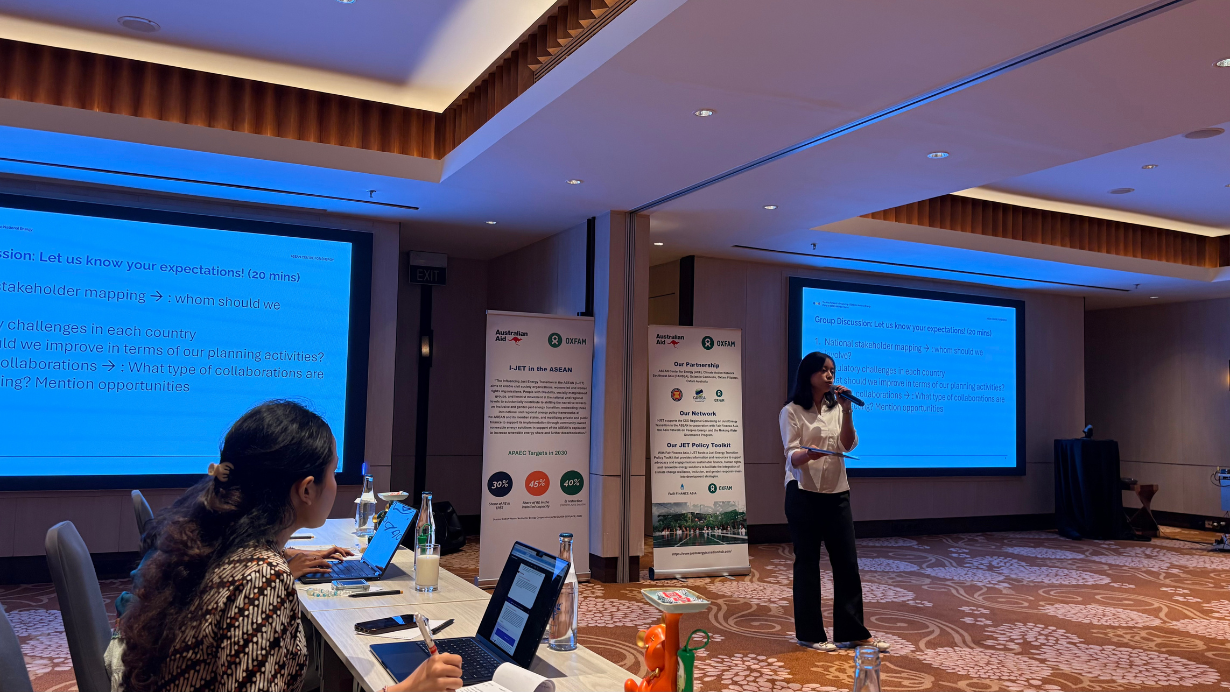

Bali, May 2026 – Achieving a just energy transition requires collaboration across countries, sectors, and stakeholders. Challenges such as unequal access to energy, the limited participation of women and vulnerable groups in decision-making, and the need for more inclusive financing are shared concerns across ASEAN. With this spirit of collaboration, WE FOR JET (Women and Vulnerable Groups Lead a Transformative Just Energy Transition) participated in the Influencing Just Energy Transition in ASEAN (I-JET) End-Year 4 General Assembly, held in Bali from 12–14 May 2026. The annual gathering brought together I-JET implementing partners, Oxfam Australia, Oxfam country teams, civil society organizations, regional institutions, and development partners from across ASEAN to reflect on the project’s progress, exchange lessons learned, and strengthen collaboration in preparation for the final year of implementation.
This year’s General Assembly was attended by representatives from Indonesia, Cambodia, the Philippines, and regional ASEAN networks, including the ASEAN Centre for Energy (ACE) and the Climate Action Network Southeast Asia (CANSEA), alongside civil society organizations working on energy transition, climate action, human rights, and gender equality. Beyond reviewing Year 4 achievements, the forum served as a strategic platform to strengthen regional collaboration for an inclusive energy transition, particularly following the adoption of the ASEAN Plan of Action for Energy Cooperation (APAEC) 2026–2030, which recognizes the importance of a just and inclusive energy transition.
As one of the invited partners, WE FOR JET had the opportunity to present its implementation experience in Indonesia. During the presentation session, Deden, Project Manager of WE FOR JET at Penabulu Foundation, shared how the project has been advancing women’s leadership and the participation of vulnerable groups as key actors in driving a just energy transition. His presentation demonstrated that WE FOR JET goes beyond expanding access to renewable energy by fostering systemic social and institutional change, ensuring that women and vulnerable communities are not only beneficiaries of the transition but also active leaders shaping its direction.
Deden explained that WE FOR JET is built on a community-centered approach. Every intervention begins with understanding local realities, identifying gender and social barriers, and analyzing the root causes that limit the participation of women and vulnerable groups in the energy transition. Based on these findings, the project develops community-based renewable energy solutions, strengthens the capacity of civil society organizations, builds multi-stakeholder collaboration, and advocates for the integration of Gender Equality, Disability, and Social Inclusion (GEDSI) into energy policies at both subnational and national levels. This integrated approach distinguishes WE FOR JET from many energy transition initiatives that focus primarily on technological solutions.
Participants were introduced to several examples of transformative changes that have emerged through the project. One inspiring story came from Southwest Sumba, where, for the first time, a woman was elected as the Chairperson of the Village-Owned Enterprise (BUMDes). This milestone illustrates how an inclusive energy transition can contribute to shifting social norms and expanding women’s leadership in local governance. The achievement was the result of long-term community engagement, capacity strengthening, and efforts to build public confidence in women’s leadership.
WE FOR JET also showcased its experience in developing a community biogas initiative in Taman Ayu Village, West Nusa Tenggara. Through an inclusive process involving women’s groups, community leaders, local government, and faith-based organizations, the initiative demonstrated that renewable energy technologies become more sustainable when communities are actively engaged from the outset. The project successfully encouraged the Provincial Government of West Nusa Tenggara to allocate approximately IDR 45 million to develop three community biogas units. At the same time, collaboration with Fatayat NU helped strengthen public acceptance by facilitating discussions on the halal aspects of biogas utilization. Beyond providing clean energy, the initiative has reduced household energy costs, eased women’s domestic workload, and created new opportunities for productive livelihoods.
On the policy front, Deden highlighted WE FOR JET’s efforts to strengthen collaboration through the Climate Change Working Group (Pokja PI) in East Nusa Tenggara. The platform brings together civil society organizations, government institutions, academics, and other stakeholders to ensure that community perspectives—particularly those of women and vulnerable groups—are reflected in regional energy planning. One of the project’s notable achievements has been its contribution to integrating GEDSI indicators into discussions on the Regional Energy Plan (RUED) of East Nusa Tenggara Province, demonstrating how community-driven initiatives can influence public policy and institutional change.
The discussion following the presentation revealed that many of the challenges faced in Indonesia are shared across ASEAN. Participants highlighted common issues such as the underrepresentation of women in energy decision-making, limited access to financing for community-based renewable energy initiatives, insufficient integration of GEDSI data into energy planning, and the long-term sustainability of community-owned energy solutions. These exchanges reinforced the relevance of WE FOR JET’s experience as a practical model that can contribute to regional learning and inspire similar approaches in other ASEAN countries.
More importantly, WE FOR JET’s participation in the I-JET General Assembly created new opportunities to strengthen collaboration within the regional I-JET network. The forum opened pathways for knowledge exchange, cross-country learning, and joint advocacy to ensure that Gender Equality, Disability, and Social Inclusion (GEDSI) become integral components of energy transition policies and practices across ASEAN.
“A just energy transition is not only about changing technologies—it is about changing who gets to participate in shaping the future. Our experience through WE FOR JET shows that when women and vulnerable groups are given the opportunity to lead, the impact extends far beyond communities and can influence public policy. Through the I-JET General Assembly, we see a valuable opportunity to bring these lessons to the ASEAN level and strengthen regional advocacy for GEDSI in the energy transition,” said Deden, Project Manager of WE FOR JET at Penabulu Foundation.
WE FOR JET’s participation in the I-JET General Assembly 2026 marks an important milestone in expanding regional partnerships for a more inclusive energy transition. The lessons learned from communities across Indonesia are now contributing to broader regional conversations on the future of energy transition in ASEAN. Through stronger collaboration with the I-JET network, WE FOR JET hopes to help advance policies and practices that place women and vulnerable groups at the center of a just, inclusive, and sustainable energy transition across the region.