



A genuine energy transition is not measured by the size of investment alone, but by how open, fair, and transparent it is to those whose voices are most often unheard.
Last week, the world marked Open Government Week 2026, coinciding with 15 years of the global Open Government Partnership (OGP) journey. For some, this may sound like a technical government agenda far removed from everyday life. Yet at its core, the idea is simple and deeply relevant to all of us: open government means allowing citizens to know where government policies are heading, how they are being implemented, and how people can take part in shaping decisions that affect their lives.
Over the past 15 years, this commitment has continued to grow and expand. In Indonesia, it has taken shape through the National Action Plan for Open Government Indonesia, known in Indonesian as Rencana Aksi Nasional Open Government Indonesia (RAN OGI). The latest plan, RAN OGI VIII for 2026–2027, includes 19 strategic commitments. Among these, energy, the environment, and natural resources occupy an important place as pillars for safeguarding green finance transparency and ensuring meaningful public participation.
This is where open government stops being an administrative slogan and begins to touch the most fundamental issue of all: justice.
Clean Energy, But Just for Whom?
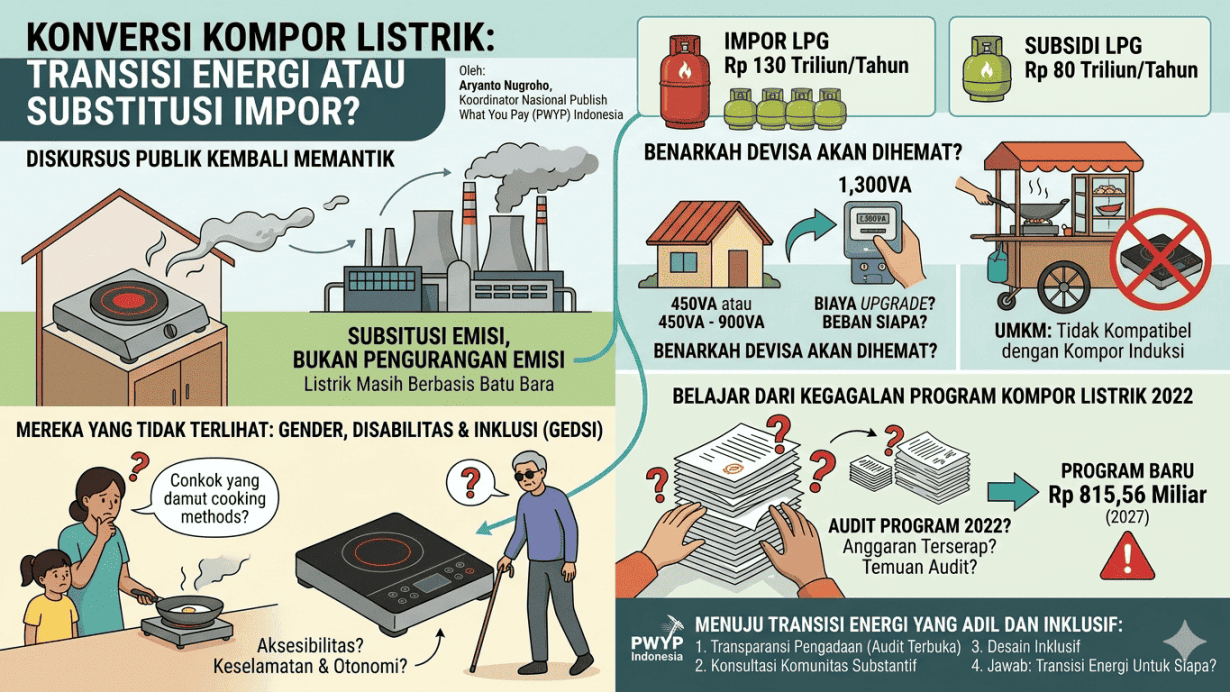
Indonesia is moving toward its Net Zero Emissions target by 2060. The country is blessed with abundant renewable energy potential, and this ambition deserves support. But we must not ignore the reality on the ground: access to clean energy remains unequal, especially for remote communities and vulnerable groups.
That is why the energy transition cannot be understood merely as a matter of advanced technology or large-scale investment figures. More than that, the energy transition is a social and ecological justice agenda. It raises questions that are too often overlooked: who bears the burden, and who enjoys the benefits?
These questions require us to see grassroots communities not as objects of development, but as rights holders: people with the right to information, the right to participation, and the right to shape the future of their own territories.
Learning from Communities in NTT and NTB
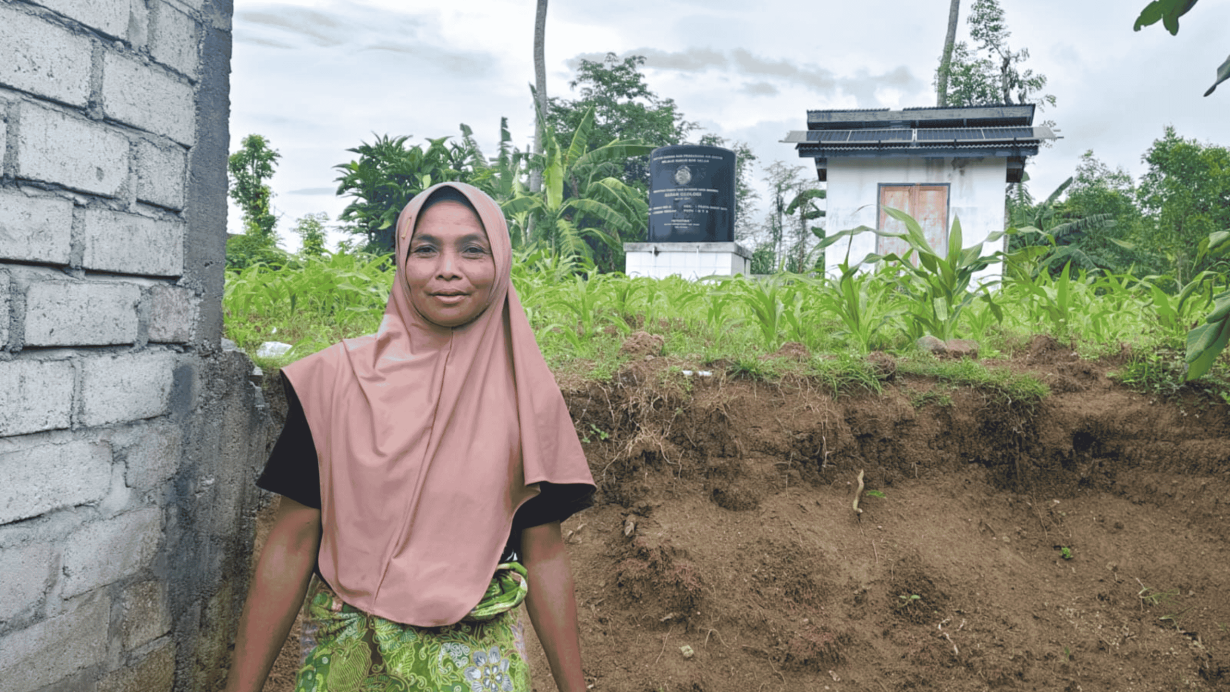
This is not just theory. The experiences of communities in East Nusa Tenggara, known in Indonesia as Nusa Tenggara Timur (NTT), and West Nusa Tenggara, known as Nusa Tenggara Barat (NTB), have shown this clearly. There, local communities, especially women and vulnerable groups, are not passive beneficiaries. They are key actors capable of leading the energy transition at the local level.
There are micro, small, and medium enterprise innovations powered by renewable energy. In Indonesia, these are commonly referred to as UMKM, short for Usaha Mikro, Kecil, dan Menengah. There is also the resilience of women’s leadership in villages, along with practical pentahelix collaboration models, which bring together government, civil society, academia, the private sector, and communities.
Unfortunately, these valuable initiatives are often not fully recognized in macro-level policy. Good practices that have been proven on the ground rarely move upward to become references for national policy. Yet inclusive policy should be built precisely from these experiences, from the bottom up, not the other way around.
This is why the principle of GEDSI, which stands for Gender Equality, Disability, and Social Inclusion, is not merely a decorative phrase in policy documents. It is non-negotiable. Amid the noise of the global energy transition narrative, no group should be left behind: not women, not children, not Indigenous Peoples, and not persons with disabilities. The principle is clear: no one left behind.
Substantive Openness, Not Mere Formality
This is where the open government agenda and the energy justice agenda meet. A just energy transition is impossible without transparency. Communities have the right to know where transition finance is flowing, who manages it, and who benefits from it.
Green finance that lacks transparency will only reproduce old injustices in a new form. Large amounts of funding may flow in the name of clean energy, but the old pattern remains: the powerful decide, while the vulnerable bear the consequences. Only through substantive transparency, not mere formality on paper, can policies become valid, democratic, and responsive to people’s real needs.
Fifteen Years, and a Reminder
We have spent fifteen years committing to openness. But experience teaches us one difficult lesson: commitments on paper do not automatically turn into justice on the ground.
Recognition of rural women’s leadership, community initiatives, and the voices of vulnerable groups cannot stop at warm forums filled with applause. It must be translated into policy documents, budget allocations, and development success indicators. A forum loses its meaning if it stops at listening and fails to change the way policies are made.
Open Government Week should serve as a reminder, not merely an annual ceremony. Open government only has meaning when it is put into practice and proven to bring concrete impact to people’s lives. Indonesia’s energy transition will not be tested by how large its investments are, but by how fairly it treats those who have long been the least heard.
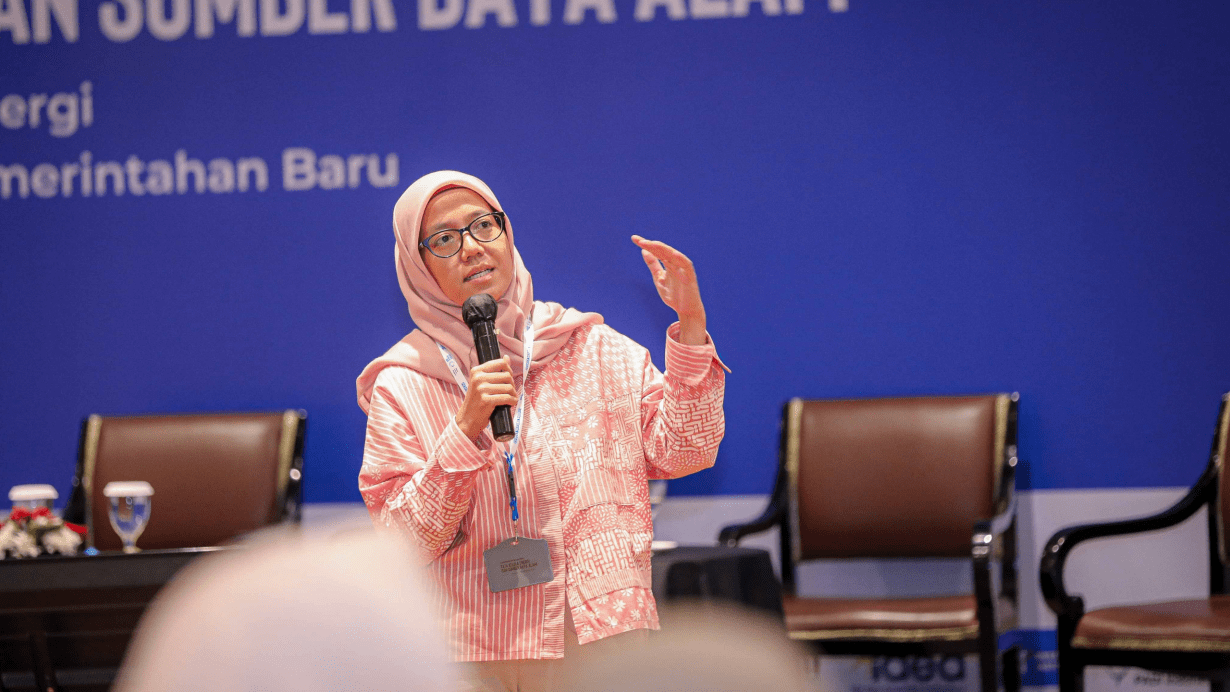
This article was developed from the author’s remarks at Sarasehan Warga: Community-Based Just and Inclusive Energy Transition, held as part of Open Government Week 2026 on 22 May 2026, and organized by Publish What You Pay (PWYP) Indonesia.

Written by:
Aryanto Nugroho
National Coordinator, PWYP Indonesia
Notes: This article was first published on Indonesiana under the title “Keterbukaan Pemerintah dan Transisi Energi yang Adil” and is available at: https://www.indonesiana.id/read/194853/keterbukaan-pemerintah-dan-transisi-energi-yang-adil