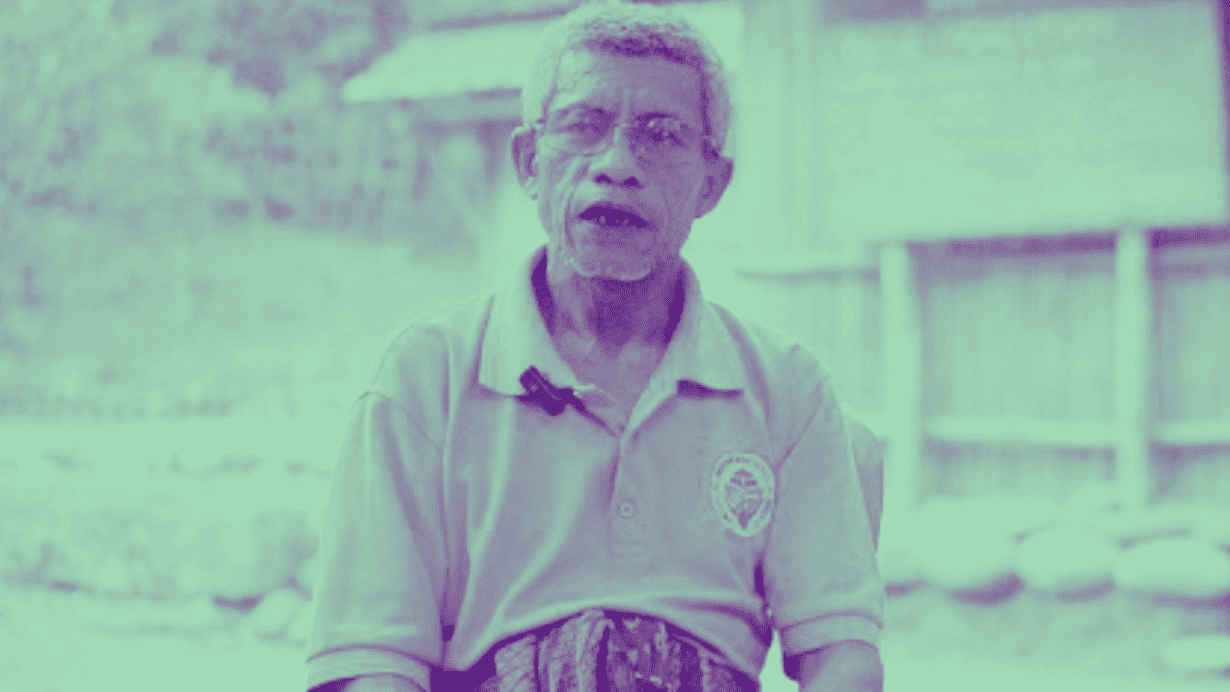



Petrus Tamelab walks down the steps through the back door of his home. It is just after 3 a.m., and the temperature has dropped to around 9 degrees Celsius. Alone, he makes his way through the cold mist toward the ume kbubu, located only a few steps from the house.
Using a flashlight, Petrus enters the ume kbubu, or traditional round house in the Dawan language spoken by many communities in West Timor, East Nusa Tenggara. The structure is approximately five metres in diameter, with a cone-shaped roof covered in thatched grass extending close to the ground.
He arranges firewood in the hearth and lights a fire. Moments later, he places a pot of water above the flames. As he warms himself beside the fire, he waits for the water to boil. For Timorese families, the ume kbubu serves as a kitchen as well as a place for storing and preserving food.
Once the water is ready, Petrus sets some aside for his family and makes himself a cup of coffee. The hot drink warms him against the mountain cold. He then leaves for the garden before continuing to the cattle shed, both located around two kilometres from his home in Mutis Village, Fatumnasi Sub-district, South Central Timor, East Nusa Tenggara.
Petrus lives on the slopes of Mount Mutis, the highest area on Timor Island. The village lies approximately 166 kilometres from Kupang. Reaching it requires travelling along steep and rocky roads, many of which remain completely unpaved. The final 13 kilometres pass through the dense forest of Mutis Timau National Park.
When Petrus leaves the house that morning, his wife and child are still asleep.
“Most husbands wake their wives and ask them to make coffee. I do not do that. Whatever I can do myself, I do. A husband and wife should support one another,” Petrus said.
Since getting married, Petrus has made it a habit to wake no later than 3.30 a.m. and begin the household work in the kitchen. He does it without an alarm, without being asked, and without complaint. When his wife wakes up, they complete the remaining tasks together.
Having learned to be independent from an early age, Petrus has always believed that supporting his wife in household responsibilities is important. This conviction grew stronger after he read an article estimating that the distance covered by a woman while completing daily household tasks could amount to around 15 kilometres.
“We should never assume that a wife’s work at home is easy. Imagine one person having to cook, clean the house, wash clothes, care for the children, and manage everything else. What would happen if husbands exchanged roles with their wives? It is difficult work,” he said.
Petrus’s daily practices remain unusual among many husbands, not only in Mutis Village but across communities where domestic responsibilities are still widely considered women’s work. Cooking, cleaning, caring for children, and serving a husband are often treated as the natural duties of a wife under deeply rooted patriarchal norms.
Petrus has chosen a different path.
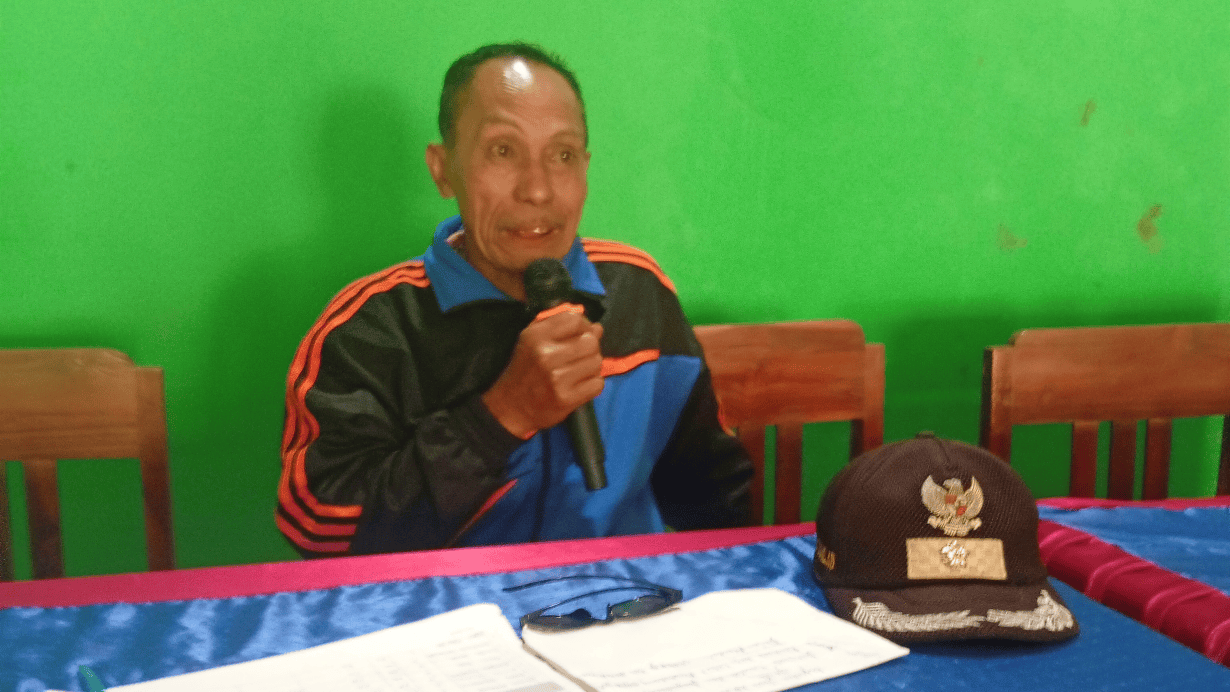
His example is particularly significant because he holds considerable social authority. He is not only the head of his household but also a customary leader of the Tamelab clan, one of the two largest clans in the village. He also serves as Head of Mutis Village, leading a community of 205 households and 623 residents.
Leading by Example
Petrus does not hide his involvement in household work. He demonstrates it openly, including when guests visit the house. When his wife is occupied, he serves drinks or walks to a nearby kiosk to buy coffee, sugar, or snacks.
His wife also supports him with work in the garden. Mutis is one of the region’s horticultural centres, supplying vegetables to Kupang and surrounding areas. Carrots, potatoes, beans, and other crops grow throughout the year in the cool mountain climate.
Petrus’s wife, Matelda Emi Banu, said her husband’s contribution to domestic work has made a significant difference in her life. Their relationship, she explained, is based on equality and mutual support. A wife is not a servant to her husband, and a husband is not a labourer for his wife. They complement one another.
Because Petrus helps with household responsibilities, Emi has more time for productive activities such as weaving and processing forest honey. Her products have been widely sold and were even showcased at an exhibition in Jakarta.
“He always works quietly, and I am able to do my work with joy,” Emi said.
Their partnership also provides an important lesson for their children. Petrus and Emi hope that when their children grow up and form their own families, they will follow the same example. As a customary leader and village head, Petrus also hopes other families in the community will see that sharing responsibilities is both possible and beneficial.
Building Peaceful Families and Communities
Helping his wife, farming, and raising cattle do not prevent Petrus from carrying out his responsibilities as village head.
Every morning before 7 a.m., he visits households to check whether water is available in their bathrooms and toilets, most of which are located separately from the main houses.
When he finds an empty water container, he places a leaf on the bathroom or toilet door. This is a sign understood by everyone in the village: the village head has visited and noticed that water needs to be refilled.
Residents appreciate his hands-on leadership.
Awareness of mutual support within families is also growing. According to community members, incidents of domestic violence are now rarely heard of in the village, while conflicts among residents have also become less frequent.
Petrus believes that peace within a community begins with harmony inside the home. Family harmony, in turn, depends greatly on the relationship between husband and wife. Sharing domestic responsibilities and supporting each other are essential foundations.
He applies the same principle of equality in village governance. Of the four heads of administrative affairs in the village government, one is a woman. Women also serve in leadership roles at the hamlet and neighbourhood levels.
The Impact of WE FOR JET
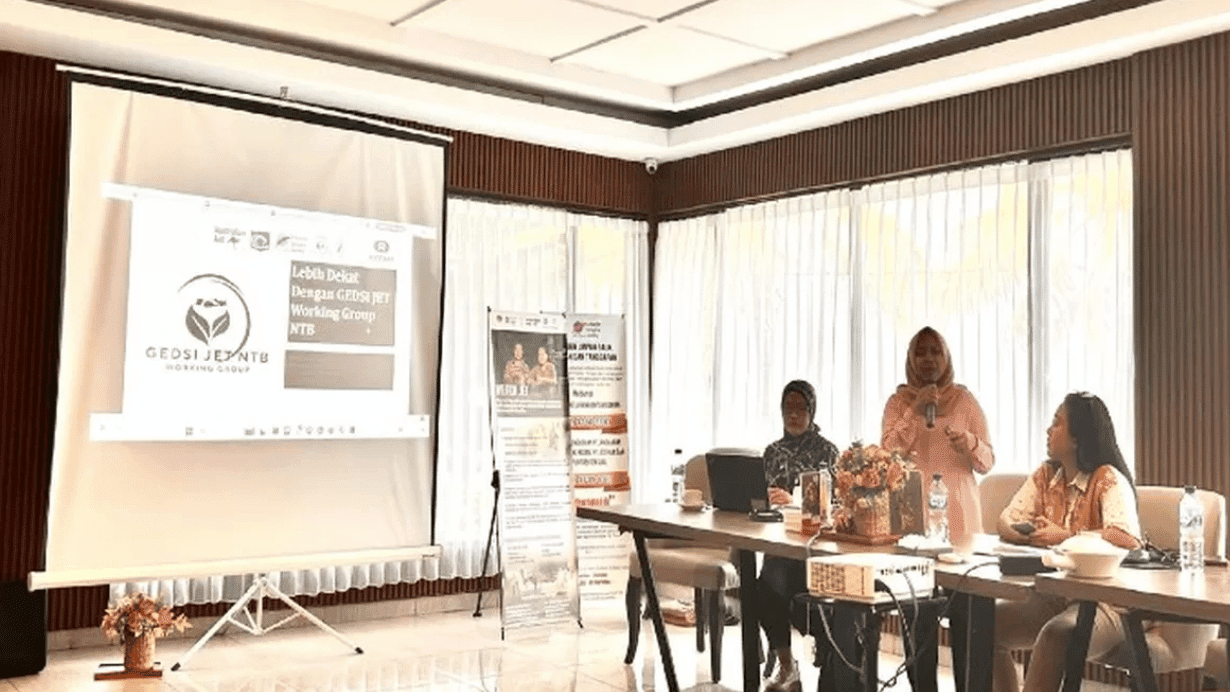
Haris A. C. H. Oematan, Director of the Circle of Imagine Society (CIS) Timor, explained that the organization works in Mutis Village to encourage men to share domestic responsibilities and support their wives.
Through the WE FOR JET programme, CIS Timor promotes equality between women and men both within households and in public life.
“Before WE FOR JET began working in Mutis Village, almost all domestic responsibilities were carried by women. They faced a heavy workload that included cooking, washing, and caring for children. There was a belief that it was inappropriate or even taboo for men to perform such work. The entire domestic burden rested on women’s shoulders,” Haris said.
The programme initially encountered significant resistance because it challenged practices that had long been normalized within a patriarchal culture.
However, continuous community engagement and collaboration with local churches gradually helped change attitudes. More men are now beginning to support their wives and take part in household work.
Petrus has become one of the central figures behind this change in Mutis Village.
Every morning, the example begins in his own home, inside the kitchen of the ume kbubu. From the rocky slopes of Mount Mutis, Petrus demonstrates that genuine equality is built through everyday actions, shared responsibilities, and the willingness to lead by example.