

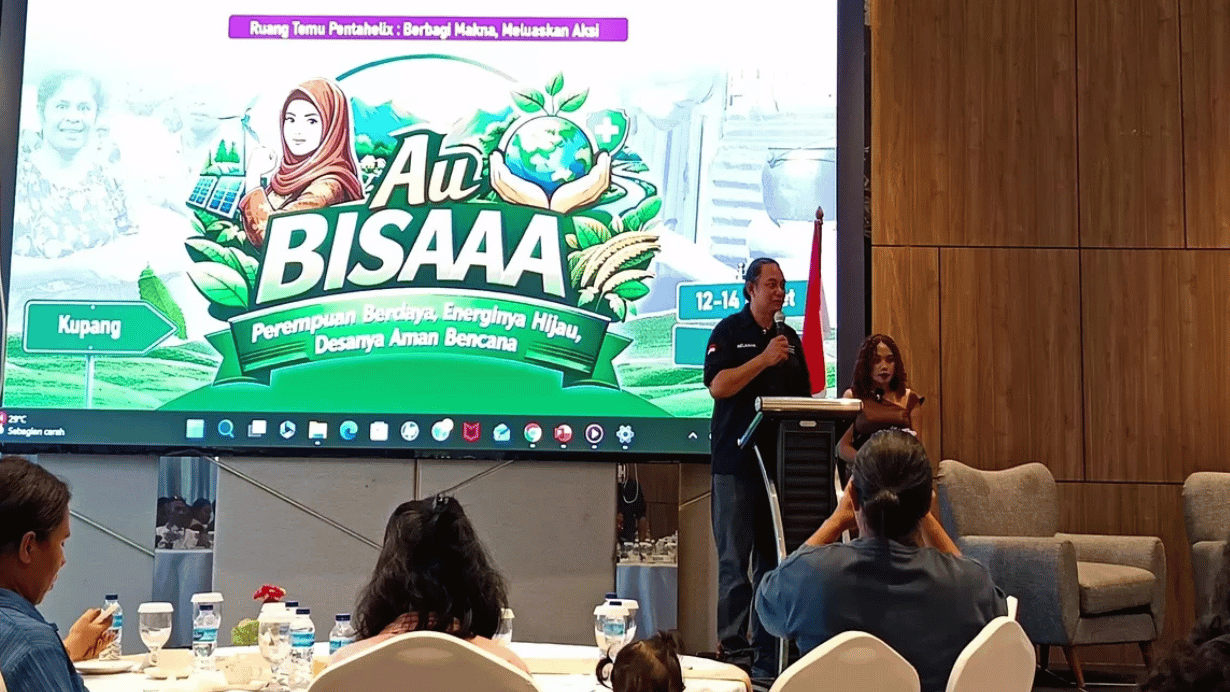
Kupang, Indonesia, March 13, 2026 — CIS Timor convened a two-day pentahelix forum in Kupang, East Nusa Tenggara, bringing together government officials, academics, civil society groups, women’s communities and disability organizations to strengthen women’s leadership in renewable energy and disaster-resilient village development.
The forum, titled “Pentahelix Forum: Sharing Meaning, Expanding Action,” was held on March 12–13 at Swiss-Belcourt Kupang. It carried the spirit of AU BISAA, an initiative focused on women’s leadership in green energy for adaptive and disaster-safe villages.
The event was part of the WE for JET program, implemented by CIS Timor with support from Penabulu Foundation and Oxfam Australia. The program aims to embed gender equality, disability and social inclusion, or GEDSI, into energy transition policies while expanding women’s economic opportunities through renewable energy.
In East Nusa Tenggara, the program seeks to ensure that women and vulnerable groups are not only represented in decision-making, but also benefit directly from a just energy transition.
CIS Timor Director Haris A. CH. Oematan said the forum was designed to challenge the perception that women’s roles are limited to the domestic sphere.
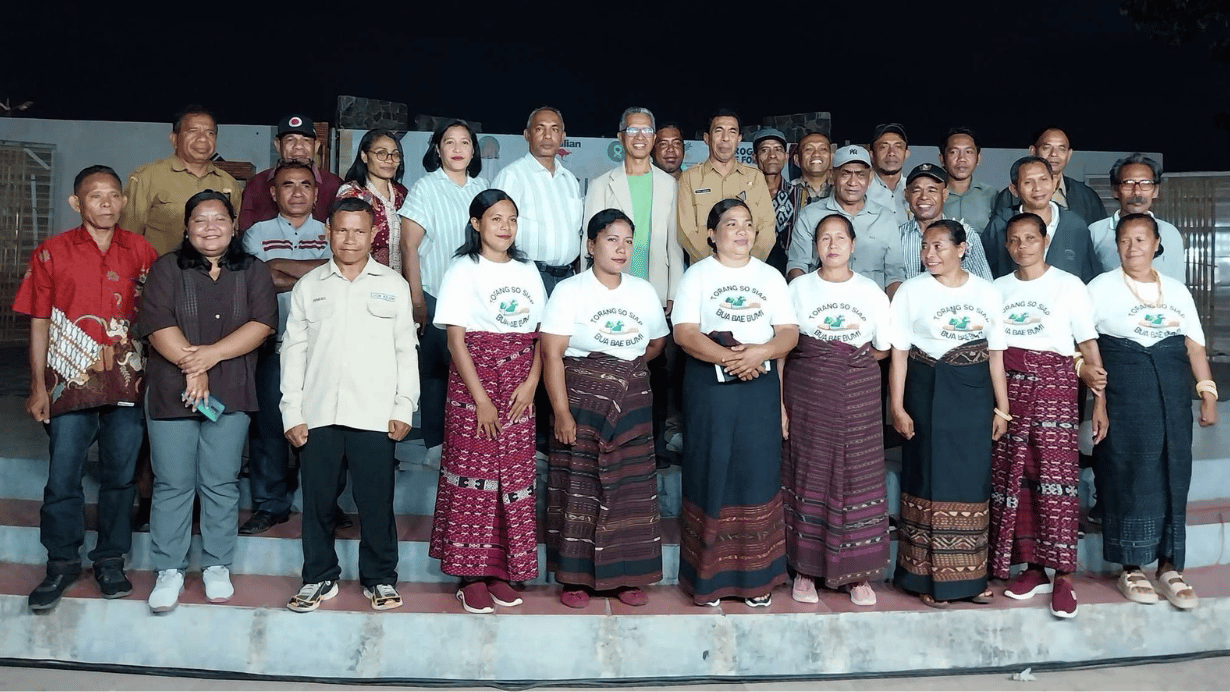
Women from several program areas, including South Central Timor, Southwest Sumba, East Flores and Kupang Regency, joined the forum as community champions. They shared stories of local leadership, presented community-based products and discussed knowledge developed to strengthen household and group economies.
“We want to promote an empowering spirit centered on women’s leadership,” Haris said. “We want to showcase women champions from different regions and how they are moving beyond domestic roles to contribute to community empowerment, including influencing policy and local decision-making.”
Haris said the forum reversed the usual format of stakeholder engagement. Instead of government agencies or institutions pitching programs to communities, women from the communities presented their own ideas, needs and potential directly to decision-makers and partners.
“Usually, it is the government or institutions that do the pitching. Today, women from the communities are the ones presenting their potential and ideas to different parties to open up opportunities for collaboration,” he said.
He added that renewable energy and sustainable environmental management are critical to climate mitigation, particularly because women are often among the most affected when disasters strike.
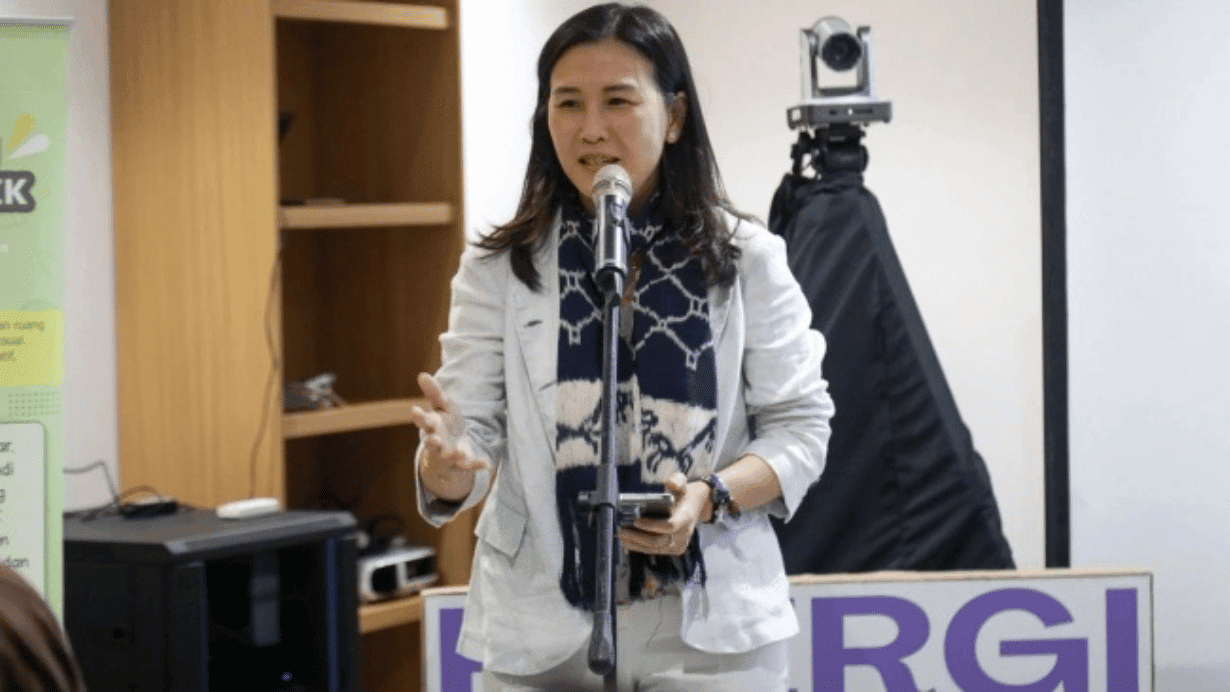
The forum was officially opened on behalf of the Governor of East Nusa Tenggara by Rosye Maria Hedwine, Head of the Provincial Energy and Mineral Resources Office.
Rosye said the meeting should be seen not as a ceremonial event, but as a platform to build connectivity and strengthen cross-sector collaboration.
“Development can no longer be carried out sector by sector,” she said. “It must be done together, with each party complementing and strengthening one another.”
She said energy and natural resource management in East Nusa Tenggara is undergoing a broader transformation. The government, she added, is looking beyond electrification numbers to the quality of life that energy access can bring.
According to PLN data cited by Rosye, East Nusa Tenggara’s electrification ratio reached 96.51 percent as of December 2025. But around 3.49 percent of households, or more than 49,000 families, still did not have access to electricity. About 115 villages in the province also remained without electricity.
“For this reason, renewable energy development is essential to expand access while reducing domestic workloads, especially for women in villages,” Rosye said.
East Nusa Tenggara has significant renewable energy potential, including solar, wind, hydro, biomass and geothermal resources. But Rosye said energy development must not be driven by technology and investment alone. It must put people’s welfare at the center, particularly women, children and persons with disabilities.
She said the provincial government continues to expand electricity access for low-income households, including through support for free installation of 450 VA electricity meters in disadvantaged, frontier and outermost areas.
In 2025, around 762 free electricity meters were distributed across six regencies. In 2026, the government plans to support 1,110 low-income households in 10 regencies across East Nusa Tenggara.
Rosye said the province’s energy and natural resource agenda should focus on three priorities: expanding fair and inclusive energy access, strengthening women’s leadership in village development, and building villages that are adaptive to climate change and safer from disasters.
“Women in East Nusa Tenggara are not merely beneficiaries of development,” she said. “They are agents of change who play an important role in protecting the environment and managing natural resources sustainably.”
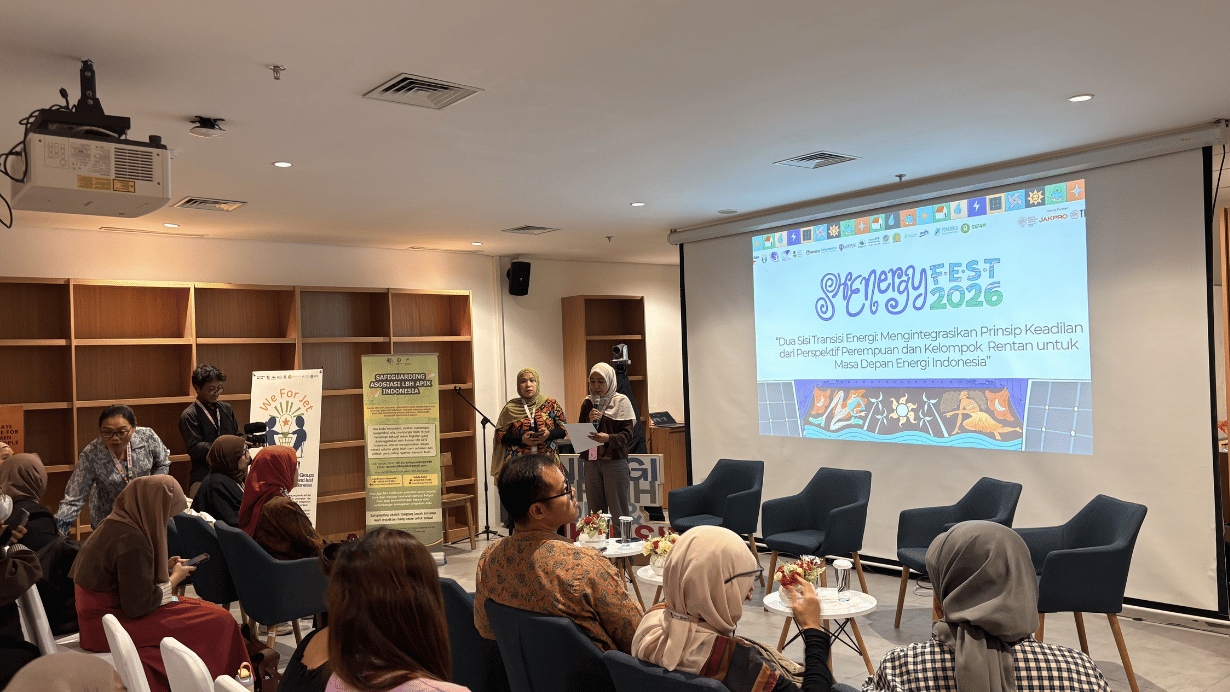
The forum also featured a talk show moderated by Sherley Wila Huky, Chair of Mitigation Analysis and the Energy Sector at the East Nusa Tenggara Climate Change Working Group.
Speakers included Prof. Gusti Budiana from Nusa Cendana University, who discussed how innovation and technology can support community economies through renewable and environmentally friendly energy. Gabriel Adu, representing East Nusa Tenggara’s Regional Development Planning, Research and Innovation Agency, presented on energy planning and budgeting policies in the province.
Darmina, from the Naifalo group of PAR CORRECT IV, shared community strategies for women’s economic development, disaster risk reduction and climate adaptation. CIS Timor’s Ningsih Bunga outlined mechanisms for multi-stakeholder cooperation to advance women’s leadership and renewable energy-based economic empowerment, while also reflecting on achievements and challenges in the field.
Organizers said the forum underscored a central message: a just energy transition cannot succeed without the active participation of women and vulnerable groups. By creating a platform for community voices to speak directly to decision-makers, CIS Timor said the initiative aimed to strengthen collaboration, expand women’s leadership and support renewable energy-based village development across East Nusa Tenggara.
Note: This article is adapted from Suara Merdeka NTT’s report, “Perkuat Peran Perempuan Dalam Energi Terbarukan, CIS Timor Gelar Ruang Temu Pentahelix di Kupang,” accessible here: https://ntt.suaramerdeka.com/news/103716857959/perkuat-peran-perempuan-dalam-energi-terbarukan-cis-timor-gelar-ruang-temu-pentahelix-di-kupang