

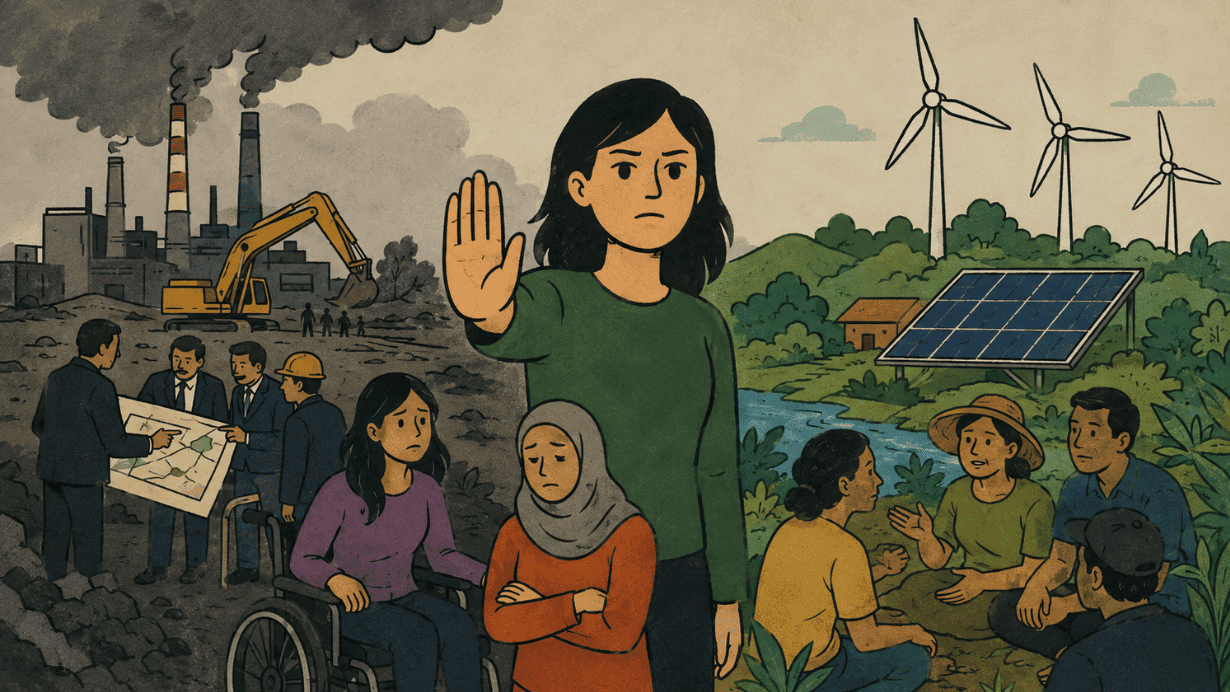

Behind the grand narrative of saving the planet, clean energy, and solutions to the climate crisis, there is one important question that is often overlooked: who is most affected by the energy transition, and are their voices truly being heard?
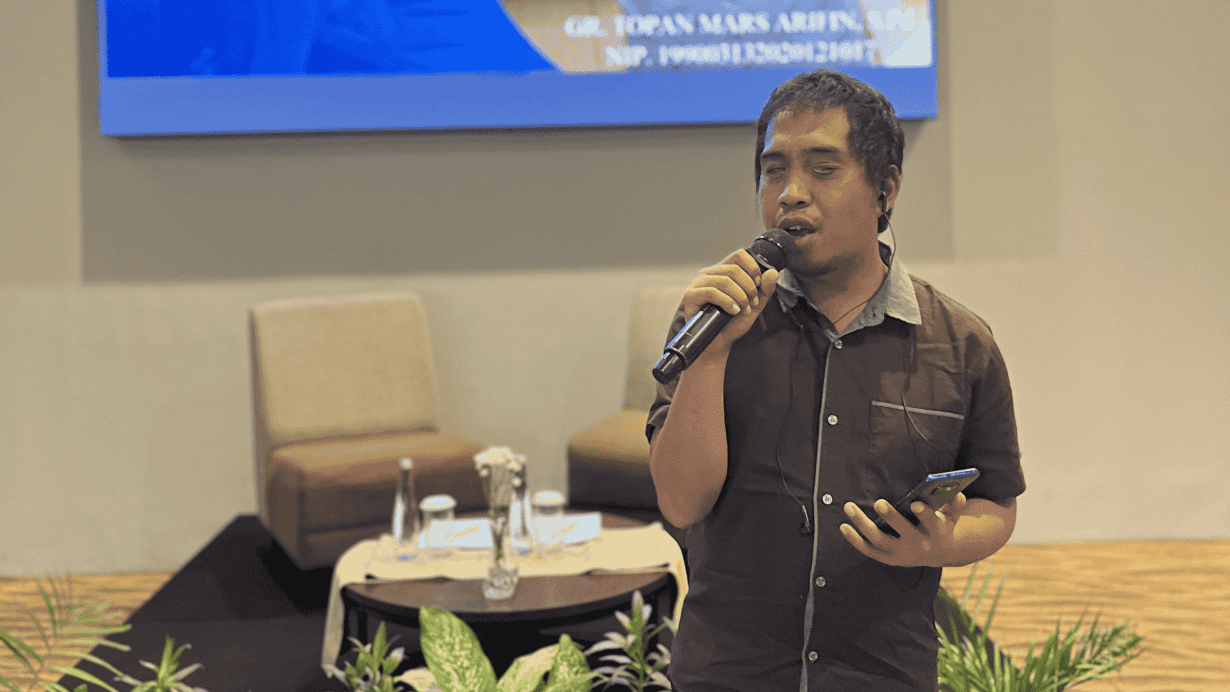
This question became a key point in a GEDSI JET NTB discussion, where journalist and Secretary of AJI Mataram, Susi Gustiana, highlighted another side of projects often labeled as “green.” According to her, the energy transition should not be understood merely as a technological shift toward low-carbon energy. More than that, the energy transition is about human rights, social justice, and standing with groups that have long been marginalized.
Energy is a basic right of every citizen. However, within social structures that are not yet equal, access to energy and the impacts of energy development are not experienced in the same way by everyone. Women, persons with disabilities, and other marginalized groups often carry a heavier burden, both as energy users in daily life and as residents living around development project sites, including National Strategic Projects.
Susi reminded participants that not every project carrying the “green” label automatically operates fairly. In some cases, clean energy projects can still carry old exploitative patterns, from extractive practices and power imbalances to the loss of community access to land and livelihoods. When the climate crisis is used to legitimize development, the lived experiences of directly affected communities are often pushed out of public conversation.
“Technocratic narratives in the media often exclude the experiences of women, persons with disabilities, and marginalized communities who are directly affected,” Susi said.
This is where the GEDSI perspective, which stands for Gender Equality, Disability, and Social Inclusion, becomes essential. GEDSI helps ensure that the principle of “no one left behind” does not stop as a slogan. It must be reflected in how policies are designed, how projects are implemented, and how stories about the energy transition are written and reported.
The media plays a major role in shaping how the public understands the energy transition. However, journalism can also reinforce inequality when it is not written from a fair and inclusive perspective. Susi pointed out that many news reports still contain bias, including source bias, language bias, and visual bias.
Source bias appears when news coverage only quotes government officials, companies, or men, without making space for women, persons with disabilities, survivors, and affected communities. Language bias appears through word choices that stigmatize, blame victims, or lack gender sensitivity. Visual bias can be seen when images are used merely to polish corporate reputations while erasing the realities of communities directly experiencing the impacts.
“If journalism carries a patriarchal perspective, it will only strengthen existing inequalities,” she emphasized.
For this reason, citizen journalism with a GEDSI perspective becomes an important space to bring forward voices that are often absent. Through more inclusive journalism, communities can write their own experiences, document changes in their surroundings, and share the impacts of development from a perspective that is closer to everyday life.
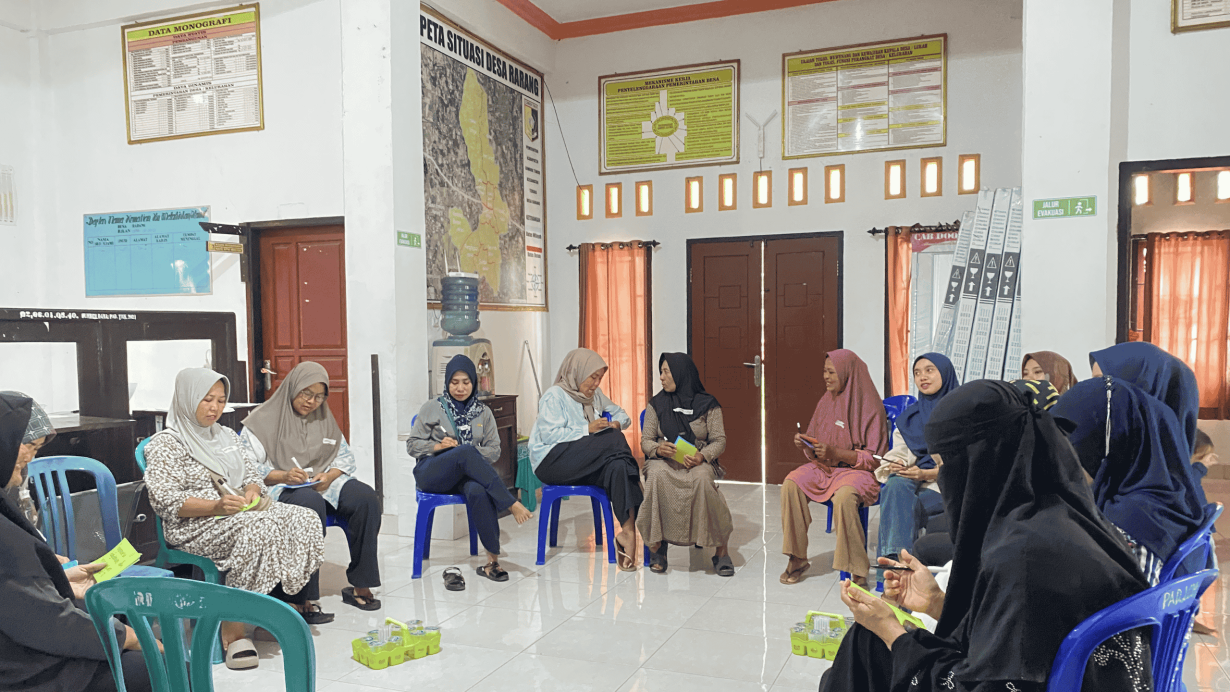
Amid these challenges, good practices are also emerging from communities. One example comes from Tetebatu Selatan Village in East Lombok. At the foot of Mount Rinjani, women are taking an important role in managing clean energy through the use of biogas.
The story of Inaq Rumisah from Lekong Pituk Deye Hamlet shows that women are not merely beneficiaries of the energy transition. Through the management of a biodigester that processes waste into cooking energy, women in this community prove that change can begin from the spaces closest to their lives: the kitchen, the home, and the surrounding environment.
Stories like this are important because they reveal another face of the energy transition. Transition does not always appear in the form of large-scale projects or technologies that feel distant from communities. It can also grow from local initiatives, everyday knowledge, collective work, and the courage of communities to manage resources independently.
In closing, Susi encouraged GEDSI JET NTB participants to write with empathy and conscience. In the issue of renewable energy, writing should not only present data and official statements. It must also bring forward human experiences, pay attention to power relations, and create space for those most affected.
The principles of WE for JET, which include human rights, gender equality, inclusivity, empowerment, and accountability, serve as an important foundation for building a more just narrative on the energy transition. With inclusive journalism, the energy transition is not only understood as a shift from fossil fuels to renewable energy. It also becomes an opportunity to transform social structures so they are more equal, dignified, and fair for all.
This article is adapted from “Membongkar Sisi Gelap Proyek ‘Hijau’: Mengapa Suara Perempuan dan Difabel Sering Terhapus dalam Transisi Energi?” published by LombokPost. Read the full article here: https://lombokpost.jawapos.com/ntb/2602180030/membongkar-sisi-gelap-proyek-hijau-mengapa-suara-perempuan-dan-difabel-sering-terhapus-dalam-transisi-energi