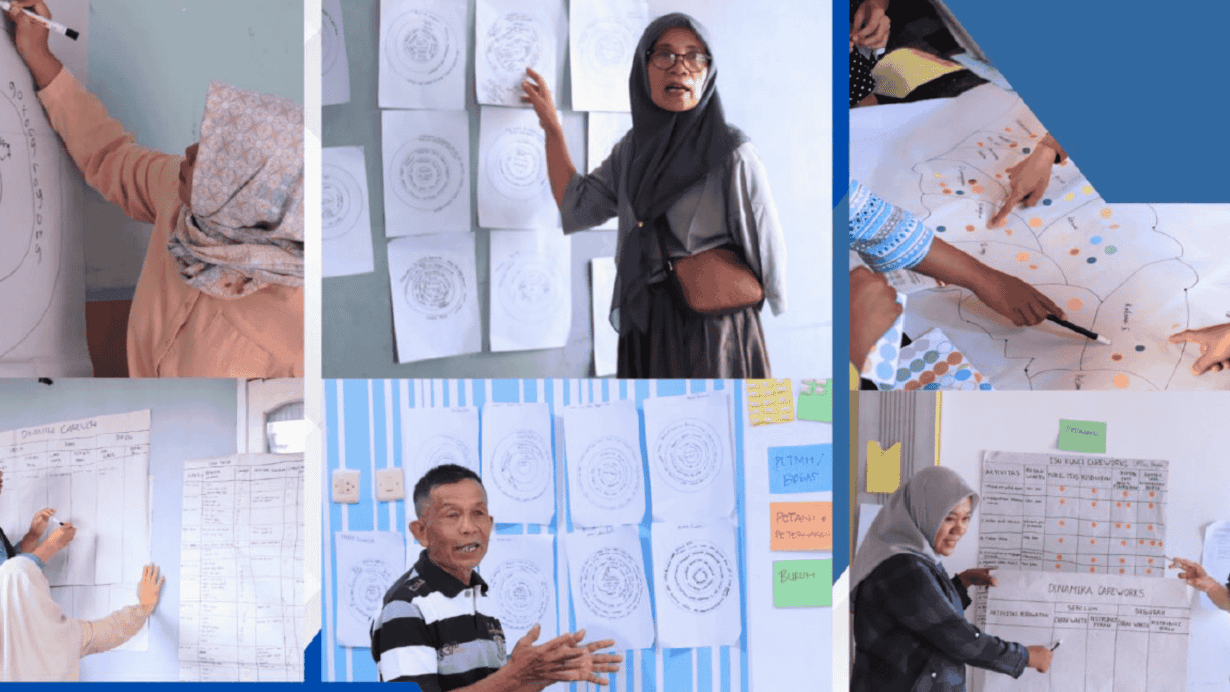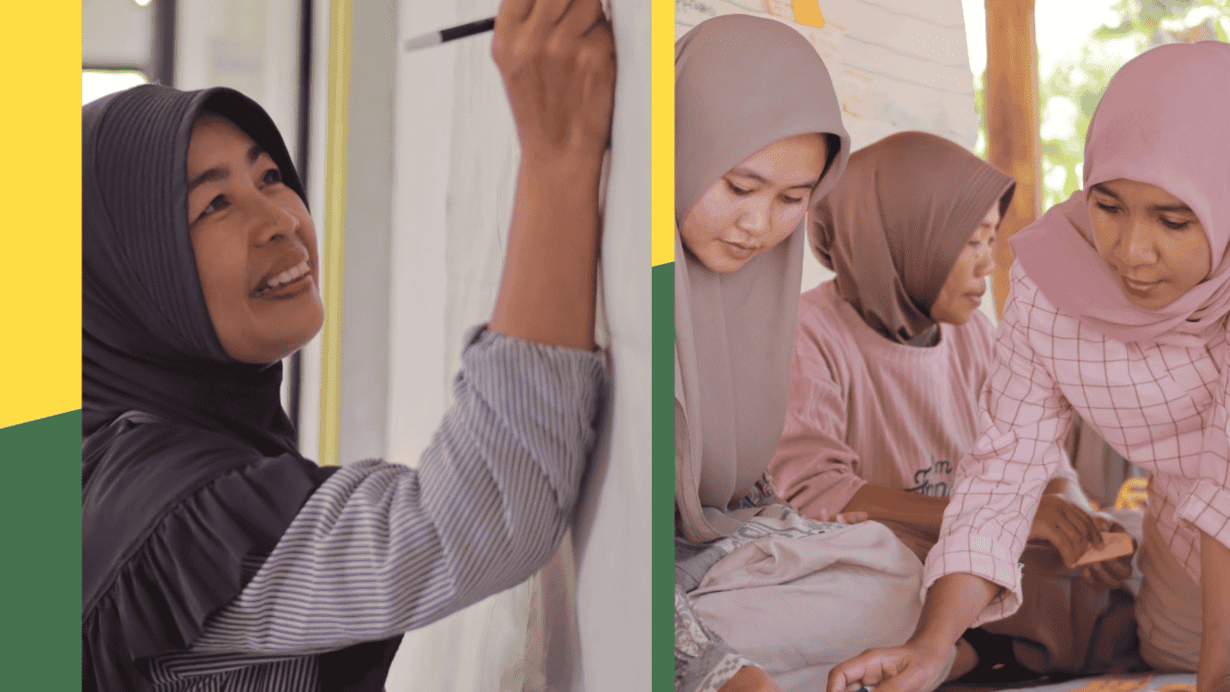


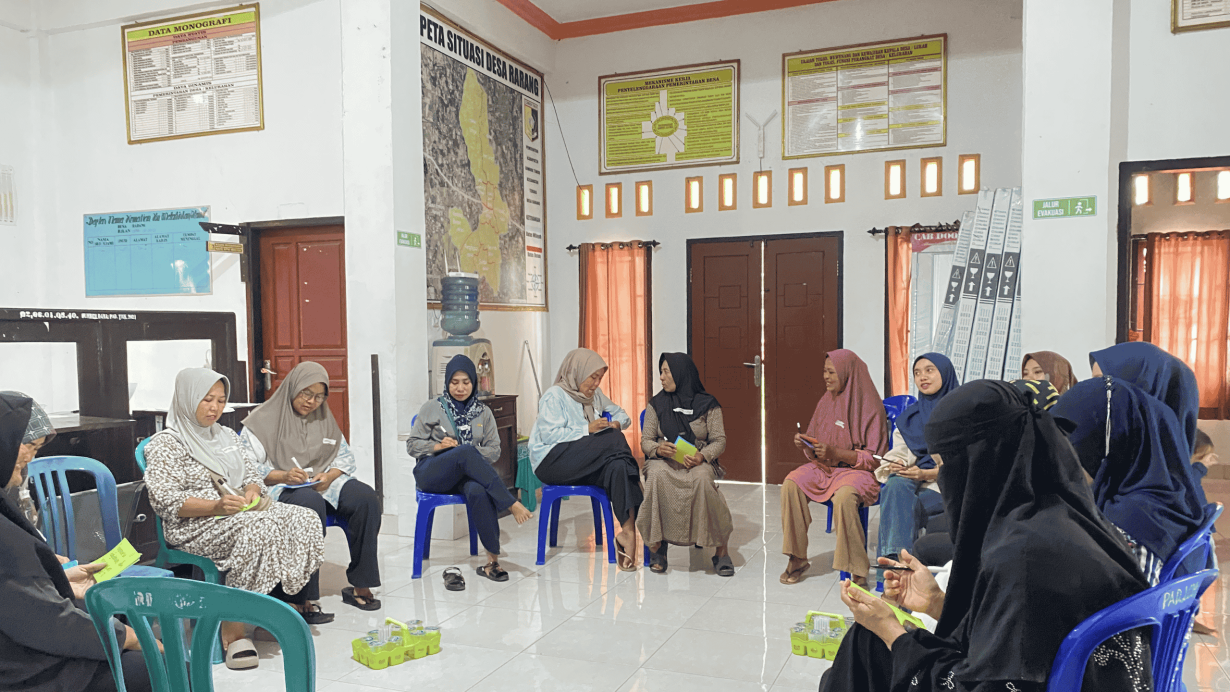

In West Nusa Tenggara, the energy transition does not begin with large scale projects or national policies. It grows from the village level, through Sekolah SETARA facilitated by Gema Alam as both a learning space and a movement space for women. Between July and December 2025, Gema Alam promoted an approach that places women as key actors in the process of change.
During this period, Gema Alam implemented at least 13 activities focused on community organizing, capacity strengthening, and advocacy across six partner villages. One of the approaches used was a cross village boot camp method that brought participants together in an intensive learning environment. This method proved effective in strengthening solidarity, accelerating learning, and building a shared sense of ownership over energy transition issues.
Through processes facilitated by Gema Alam, women who were previously positioned as beneficiaries began to transform into active agents. They not only developed an understanding of energy issues, but also began linking them to everyday life, including domestic work, access to water, and household economies. This shift became an important foundation for building a more sustainable movement.
In addition, Gema Alam’s organizing approach is grounded in lived experience. Discussions about energy are not treated as isolated topics, but are connected to environmental issues, climate change, and gender relations. This makes the learning process more contextual and easier to relate to for participants at the village level.
From Capacity to Action: Advocacy, Enterprise, and Decision Making Spaces
Capacity strengthening is a central focus of Gema Alam’s interventions. Various trainings were conducted, including group management, public communication, and community based advocacy. These activities engaged dozens of women from diverse backgrounds, including homemakers, farmers, traders, and village cadres.
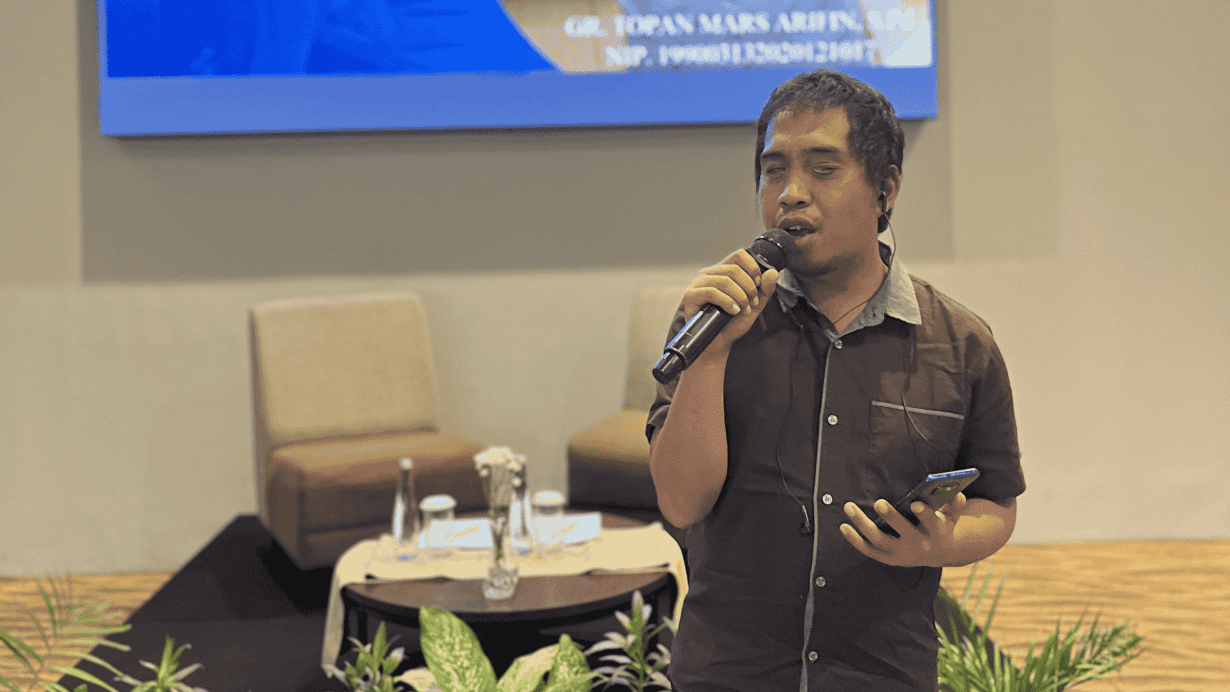
Public communication training became a key entry point in building participants’ confidence. Women in the villages began to speak in public spaces, develop narratives, and take part in advocacy simulations. These skills were then applied in various dialogue spaces, including engagement with village governments.
At the same time, Gema Alam also encouraged the involvement of men as part of social change. Through gender justice training, men began to understand the importance of sharing roles in domestic work and supporting women’s participation. These shifts in attitude helped create an enabling environment for women to take a more active role in decision making.
The program also supported the emergence of renewable energy based economic initiatives. Through village level potential mapping, a range of business ideas emerged, including chocolate processing, natural dye based weaving, liquid organic fertilizer production, and ecotourism. All of these initiatives are designed to connect with the use of renewable energy already available in the villages.
In addition, Gema Alam facilitated the participation of women and vulnerable groups in village planning processes. They developed recommendations for Musrenbangdes that include needs related to energy, environment, and domestic work. This involvement reflects increased access and influence of women in decision making at the village level.
From Learning to Systems: Challenges and Pathways to Sustainability
Behind these achievements, Gema Alam’s program implementation also faced several challenges. One of the main challenges is the varying capacity across villages in organizing groups. Some villages are able to move faster, while others still require strengthening in participation and member consolidation.
Geographical factors and environmental conditions also pose constraints. Remote locations and unpredictable weather affect the effectiveness of field activities. At the same time, these conditions create space for reflection on the connection between environmental realities and community life.
Another challenge lies in the limited functionality of village economic institutions. Many village owned enterprises and cooperatives are not yet operating effectively, which limits their role in driving energy based economic initiatives. This highlights the importance of a gradual approach that begins with strengthening basic capacities and institutional foundations.
Limited data and documentation systems are also a concern. Many good practices at the field level have not been systematically documented, which restricts opportunities for learning and replication in other areas.
However, these challenges are part of an ongoing learning process that Gema Alam continues to respond to. One key lesson is the importance of placing women’s leadership at the center of change. In addition, integrating domestic work issues into the energy agenda has proven to be an effective entry point for driving social transformation.
Overall, Gema Alam’s experience shows that a just energy transition can be built from the village level. An approach that combines capacity strengthening, shifts in social norms, and integration into village systems provides a strong foundation for sustainability. With this foundation, the movement facilitated by Gema Alam has the potential to grow into broader systemic change.