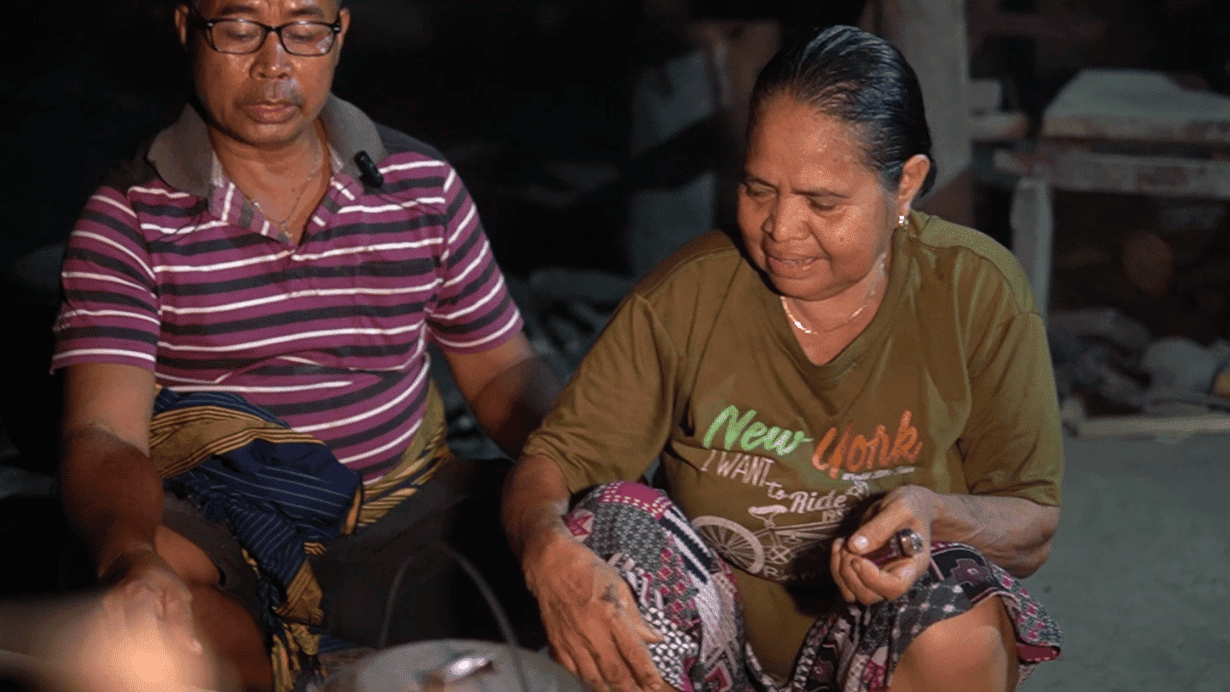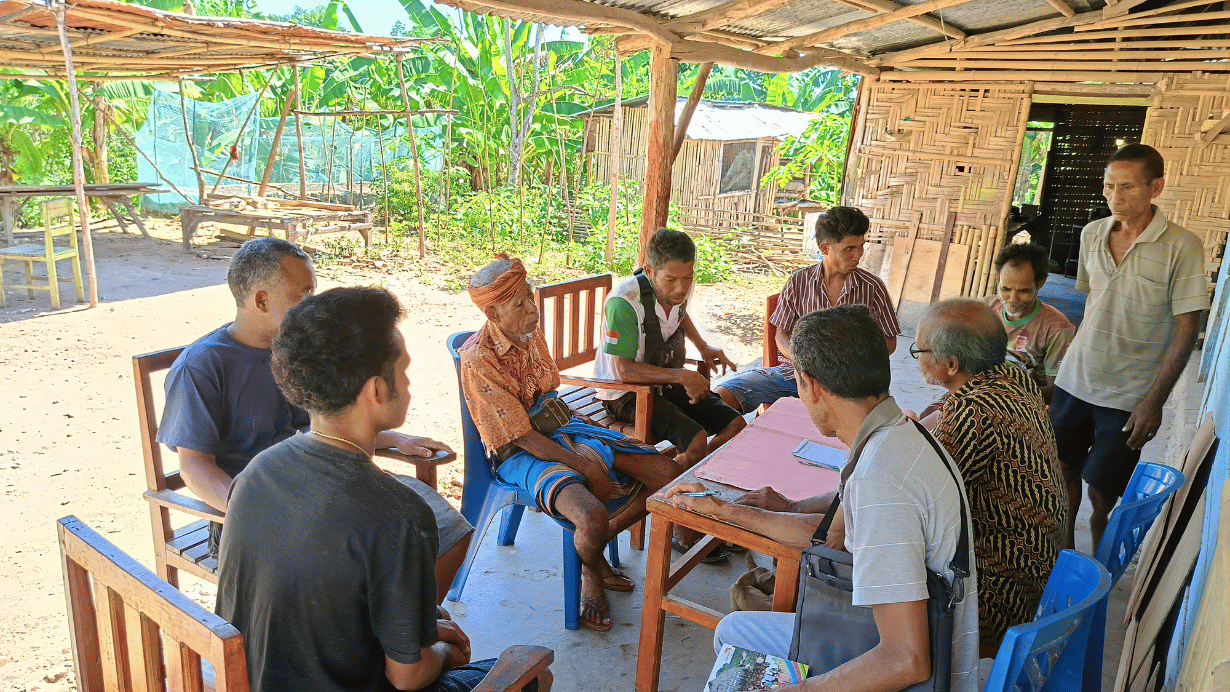


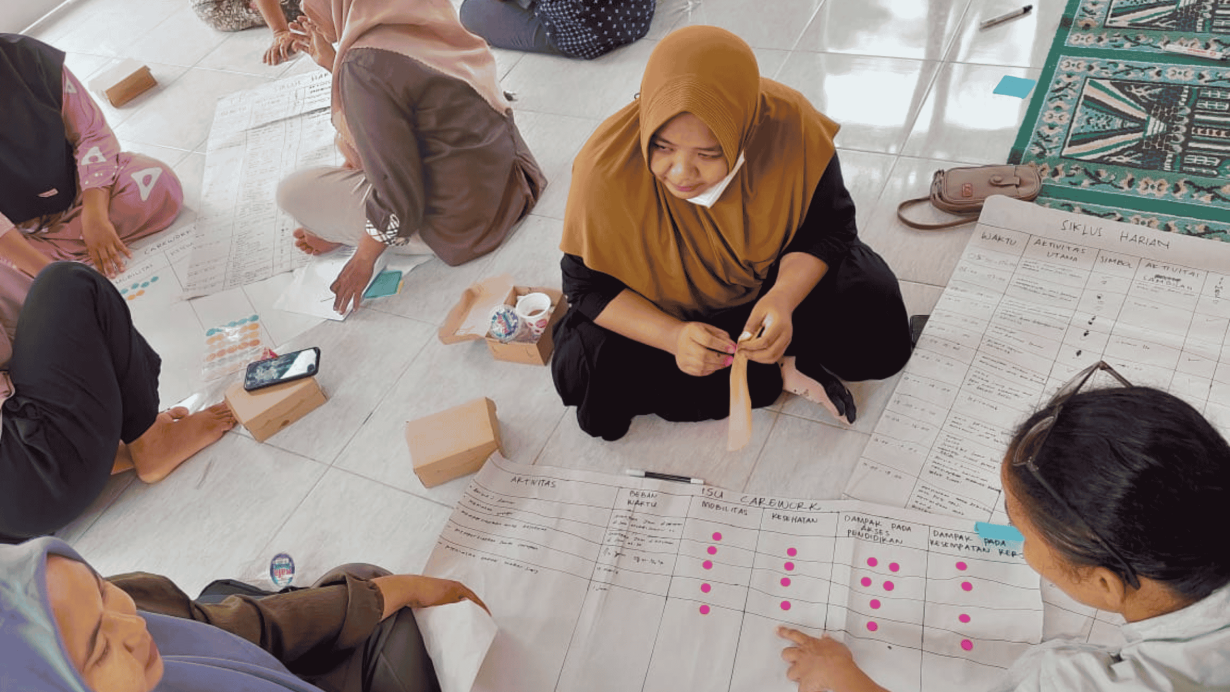

Climate change is often framed in technical and seemingly neutral terms such as emissions, deforestation, renewable energy, low-carbon transitions, and adaptation infrastructure. Yet in many villages across Lombok, the crisis does not arrive as something neutral or abstract. It is lived, embodied, and deeply shaped by gender.
It appears in the increasing distance to water sources. In the growing scarcity of firewood. In rising food prices. In children who fall sick more often. In waste that accumulates without proper systems. And in households that must keep functioning even as ecological conditions deteriorate.
These burdens are not shared equally. They are disproportionately carried by women.
The article “From the Kitchen to Climate Politics: A Feminist Political Ecology of Care Work, the Climate Crisis, and Just Energy Transition in Lombok, Indonesia” by Muhamad Juaini of Gema Alam NTB challenges dominant climate narratives by centering what is often invisible, namely unpaid care work. It invites us to see the climate crisis not from policy rooms, but from kitchens, wells, and household spaces where gendered labor sustains everyday life.
Based on research in six villages including Rarang, Tetebatu Selatan, Pandan Indah, Lantan, Dasan Geria, and Taman Ayu, the study uses Participatory Rural Appraisal, Rapid Care Analysis, group discussions, in-depth interviews, and direct observation. The findings make one thing clear. The climate crisis is shaped by gender inequality.
Women in these villages spend on average five to six hours per day on unpaid care work, while men spend around three to four hours. This gap reflects entrenched gender norms that assign responsibility for water collection, cooking, cleaning, and caregiving primarily to women. When environmental pressures intensify, these roles expand and so does the burden.
When water sources dry up, it is women who walk further. When food prices rise, it is women who stretch limited resources. When family members fall ill, it is women who provide care, often at the cost of their own health, mobility, education, and economic opportunities.
A woman from Pandan Indah described it clearly:
“We used to fetch water from a well near the house. Now, during the dry season, I have to go down the hill. What’s heavy is not just the physical effort, but worrying whether there will still be water tomorrow.”
Her words show that care work is not merely domestic. It is ecological labor. It is one of the first lines of response to the climate crisis. Yet it remains unrecognized, unpaid, and largely absent from climate policy frameworks that prioritize infrastructure over lived realities.
At the same time, the article does not position women only as victims. It shows how women are actively negotiating and transforming their roles. Through SEKRA or the SETARA School for Just Energy Transition, women are moving beyond domestic spaces into arenas of village decision-making.
They are not only participating. They are shaping priorities. They advocate for biogas systems that reduce dependence on firewood, solar-powered water pumps that shorten the distance to water, and community-based waste management that improves environmental health. These are not only technical solutions. They are grounded responses to the lived realities of care.
Across the six villages, these efforts have led to the allocation of Rp163,134,000 in village funds for clean energy and environmental initiatives. This shows that when women are given space, their everyday experiences related to water, food, waste, health, and household responsibilities can be transformed into concrete climate policy agendas.
The study also highlights overlapping inequalities. In the six villages, there are 394 persons with disabilities, many without assistive devices and with limited access to healthcare. The responsibility of care for these individuals again falls largely on women, reinforcing layered burdens shaped by gender, disability, and poverty.
A just energy transition cannot focus only on technology. It must address power relations. It must ask who carries the heaviest burdens, whose labor remains invisible, who is excluded from decisions, and whose knowledge is recognized.
From the kitchen, women are often the first to read the signs of ecological crisis. Through care work, they sustain life. And through spaces like SEKRA, they are beginning to bring this knowledge into village politics.
The climate crisis is not only about environmental change. It is also about the intensification of gendered labor, the persistence of inequality, and the urgent need to recognize care as central to climate justice.
This piece is adapted from the article “From the Kitchen to Climate Politics: A Feminist Political Ecology of Care Work, the Climate Crisis, and Just Energy Transition in Lombok, Indonesia.”
Read the full article at Gema Alam NTB:
https://gemaalamntb.org/2026/04/26/dari-dapur-ke-politik-iklim/