


Energy transition is often seen as a technical issue. Solar panels, power plants, and distribution networks. But in East Nusa Tenggara, the story is far more complex. It is not only about energy, but about who is involved, who benefits, and who is left behind.
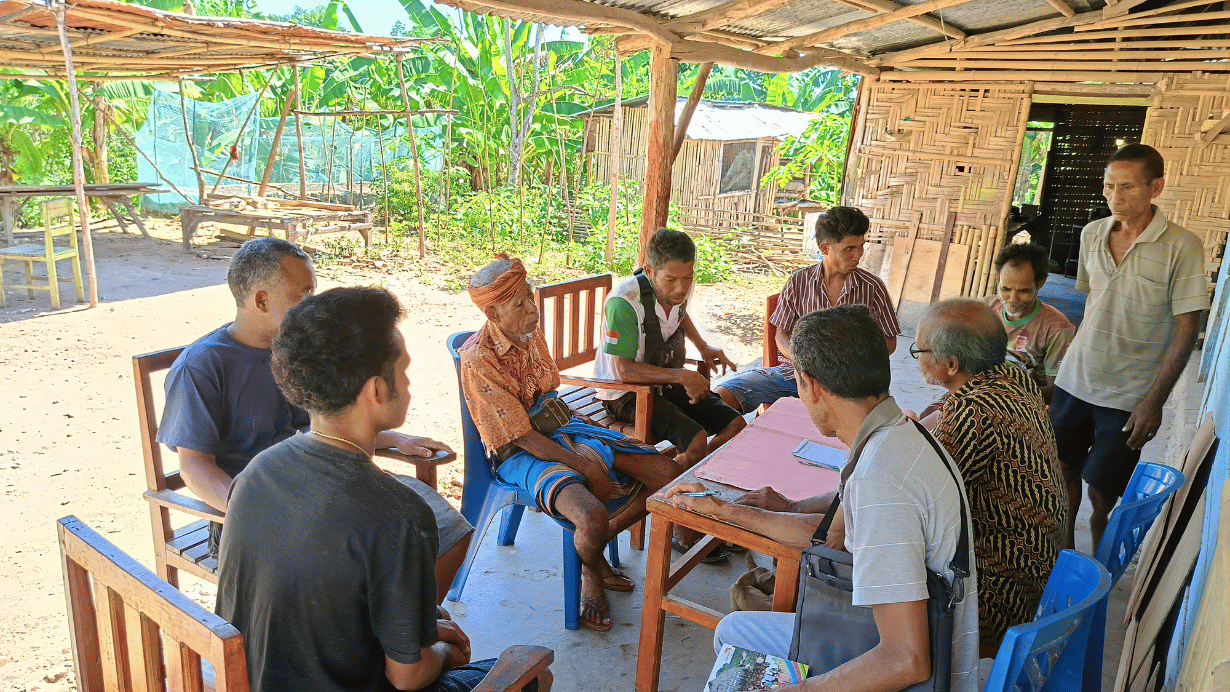
A study conducted by CIS Timor in collaboration with Oxfam Indonesia takes a closer look at this question. Through a Multi-Stakeholder Initiative mapping, the research highlights a critical point. A just energy transition cannot happen in isolation. It must be driven by many actors, working together in a connected system.
Energy in NTT: Between Demand and Inequality
Energy demand in NTT continues to grow, with households accounting for the largest share of electricity consumption. Yet access remains uneven. Tens of thousands of households still lack electricity, especially in remote areas with challenging geographic conditions.
At the same time, energy supply is still heavily dependent on fossil fuels. This makes it not only costly and difficult to access, but also environmentally harmful. The province’s renewable energy target is still far from reach. By 2025, the energy mix is expected to include 24 percent renewables, but current progress is falling short.
This is where the concept of a GEDSI-responsive energy transition becomes essential. Energy is no longer just a technical need. It is a right that must be accessible to everyone, including women, people with disabilities, and other vulnerable groups.
Who Are the Key Players?
One of the most important findings of this study is the mapping of actors involved in the energy transition. It goes beyond government and energy companies, revealing a broader ecosystem of stakeholders.
Using a pentahelix approach, five key groups are identified:
- Government, from village to provincial level, acting as regulator and policy driver;
- Private sector and investors, supporting energy supply and financing;
- Academia, contributing research and innovation;
- Civil society organizations, strengthening and supporting communities;
- Media, raising awareness and shaping public discourse.
The study also highlights the role of financial institutions, cooperatives, and professional associations as part of the supporting system.
These actors differ not only in their roles, but also in their level of influence. Local governments, state-owned enterprises, and civil society organizations hold the most strategic positions, as they combine both high influence and strong interest in advancing the transition.
The Core Challenge: Not a Lack of Actors, but a Lack of Connection
The research shows that the issue is not the absence of stakeholders. It is the lack of coordination among them.
Existing policy frameworks such as the Regional Energy Plan have identified some stakeholders. However, the mapping remains limited, focusing mainly on provincial-level institutions. The roles of district governments, villages, and local communities are not fully integrated, even though they are central to implementation on the ground.
As a result, many renewable energy initiatives struggle to sustain themselves. The technology may be available, but institutional systems and local governance are often weak.
The Way Forward: Building Real Collaboration
The findings point to one clear direction. Energy transition is not just about projects. It is about building an ecosystem.
CIS Timor recommends the establishment of formal, multi-stakeholder forums that operate across levels, from local communities to national platforms. These forums should function not only as discussion spaces, but as coordination mechanisms to align policies, address challenges, and ensure collective action.
Capacity strengthening is equally important. Many initiatives fail not because of technical limitations, but due to weak management and governance at the community level.
A Just Energy Transition Starts with Inclusion
Ultimately, this study reminds us that energy transition is not simply about changing energy sources. It is about building a system that is fair.
A system that ensures access, benefits, and decision-making power for all.
In NTT, this shift is already taking shape. Not just through technology, but through a growing awareness that energy is a shared responsibility.