


East Nusa Tenggara has strong potential to develop renewable energy. Yet potential alone is not enough. A just energy transition must answer more fundamental questions: who gets access, who takes part in decision-making, and who truly benefits?
These questions are at the heart of the policy study “Just Energy Transition (JET) with GEDSI Justice in NTT”, which analyzes the extent to which the Regional Energy Plan of East Nusa Tenggara Province 2019–2050 has integrated Gender, Disability, and Social Inclusion, or GEDSI. The study was conducted by CIS Timor with the support of Oxfam in Indonesia through the WE For JET program.
Energy Access Is Improving, but Gaps Remain
The study shows that energy demand in NTT continues to grow. The province’s electrification ratio increased from 89.01% in 2021 to 95.27% in 2023. However, around 60,588 households still had no access to electricity. NTT’s island geography, difficult topography, and scattered settlements make electricity provision more complex and costly.
The renewable energy mix also needs stronger acceleration. By 2022, NTT’s renewable energy mix reached 15.74%, while the Regional Energy Plan sets a target of at least 24% by 2025. This shows that NTT still has significant work to do to expand clean energy use.
But the energy transition cannot be treated only as a technical agenda. For people in remote areas, energy affects many parts of daily life: household lighting, children’s learning time, women’s safety, family income, and access to information. Without a justice-based approach, the energy transition risks becoming a technological shift without meaningful social change.
NTT’s Regional Energy Plan Remains GEDSI-Neutral
One of the study’s key findings is that the Regional Energy Plan of NTT already includes a vision of energy that is just, reliable, and environmentally sound. However, the document does not yet clearly explain how women, persons with disabilities, children, Indigenous Peoples, and other vulnerable groups will be involved and benefit equally.
The study assesses the policy as still being GEDSI-neutral. This means the policy recognizes energy as a need for everyone, but it does not yet strongly identify the different needs, barriers, and roles of different groups in society.
At the community level, these differences are very real. Women often play a key role in managing household energy use, but they are not always involved in decision-making. Persons with disabilities and other vulnerable groups are often positioned as beneficiaries, rather than as actors with voices in energy planning, implementation, and monitoring.
Key Challenges: Regulation, Technology, Governance, and Social Norms
The study identifies several major challenges in advancing a GEDSI-just energy transition in NTT.
First, technical guidelines are still limited. There is no strong operational guidance that directs the energy transition from planning and implementation to monitoring and evaluation. This makes it difficult for renewable energy initiatives at the village level to run consistently.
Second, renewable energy technology is still perceived as expensive and difficult to understand, especially by vulnerable groups. When systems break down, communities often lack the technical capacity to maintain or repair them.
Third, community-level governance remains weak. Some renewable energy infrastructure has stopped operating because there is no strong local institution, financing mechanism, or shared sense of ownership to sustain it.
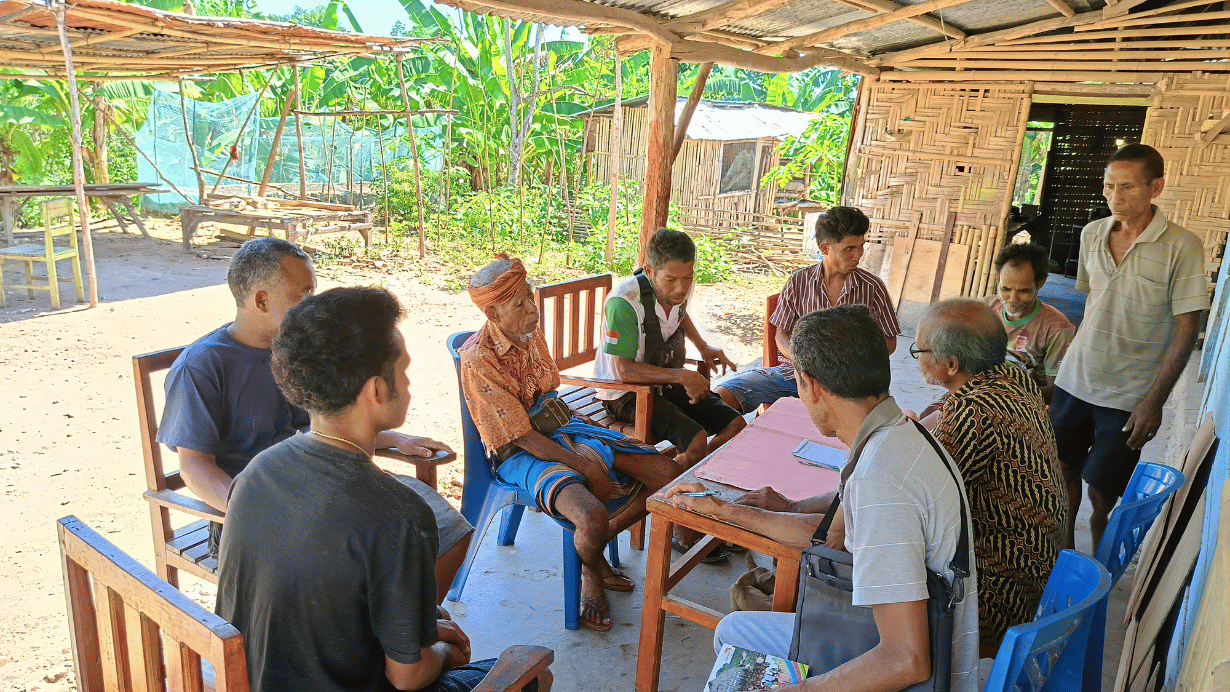
Fourth, social and cultural factors matter. In many contexts, women and persons with disabilities still do not have equal space to express their needs and take part in decisions. Participation is often understood as simply attending meetings, rather than being meaningfully involved in shaping policies and programs.
Recommendations: From Policy Commitment to Real Change
The study recommends several important steps.
First, education on renewable energy must be provided to vulnerable groups using accessible media and methods. Information about the energy transition must reach communities in language that is simple, relevant, and close to everyday life.
Second, the revision of regional energy policy must integrate GEDSI more explicitly. GEDSI should be included from problem mapping and vision setting to strategy development, program design, action planning, and budgeting.
Third, renewable energy technology must be user-friendly. Communities need mentoring, technical training, and governance support so that energy systems continue to operate after a project ends.
Fourth, NTT needs a multi-stakeholder forum that brings together government, village actors, the private sector, banks, academia, civil society organizations, professional associations, media, and local champions. This forum can help ensure that the energy transition does not move in silos, but becomes a coordinated collective agenda.
Clean Energy Must Also Be Just Energy
A GEDSI-just energy transition in NTT is not only about changing energy sources. It is also about expanding access, strengthening people’s voices, and ensuring that the benefits of energy reach those who have often been left behind.
When women can help decide where public lighting is placed, when persons with disabilities are involved in village planning, and when remote communities have reliable energy to study and work, the energy transition becomes more than a climate agenda. It becomes a pathway to social justice.
That is why NTT’s energy future must be built on one simple principle: clean energy must be accessible, manageable, and beneficial for everyone.
Download the full study “Just Energy Transition (JET) with GEDSI Justice in NTT” in Bahasa Indonesia here.