


Jakarta — As Indonesia strengthens its commitment to accelerate the transition towards cleaner energy, one question is becoming increasingly important: how can the energy transition reduce carbon emissions while also delivering justice for women, persons with disabilities, Indigenous Peoples, and other groups that are often excluded from development processes?
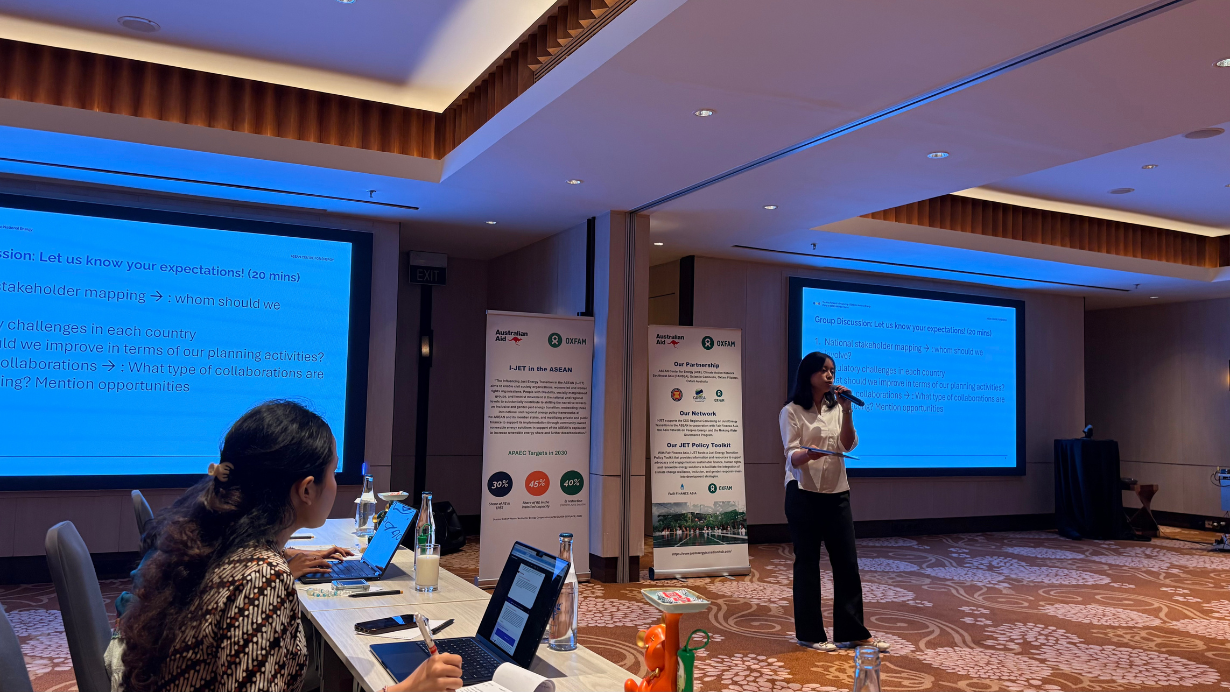
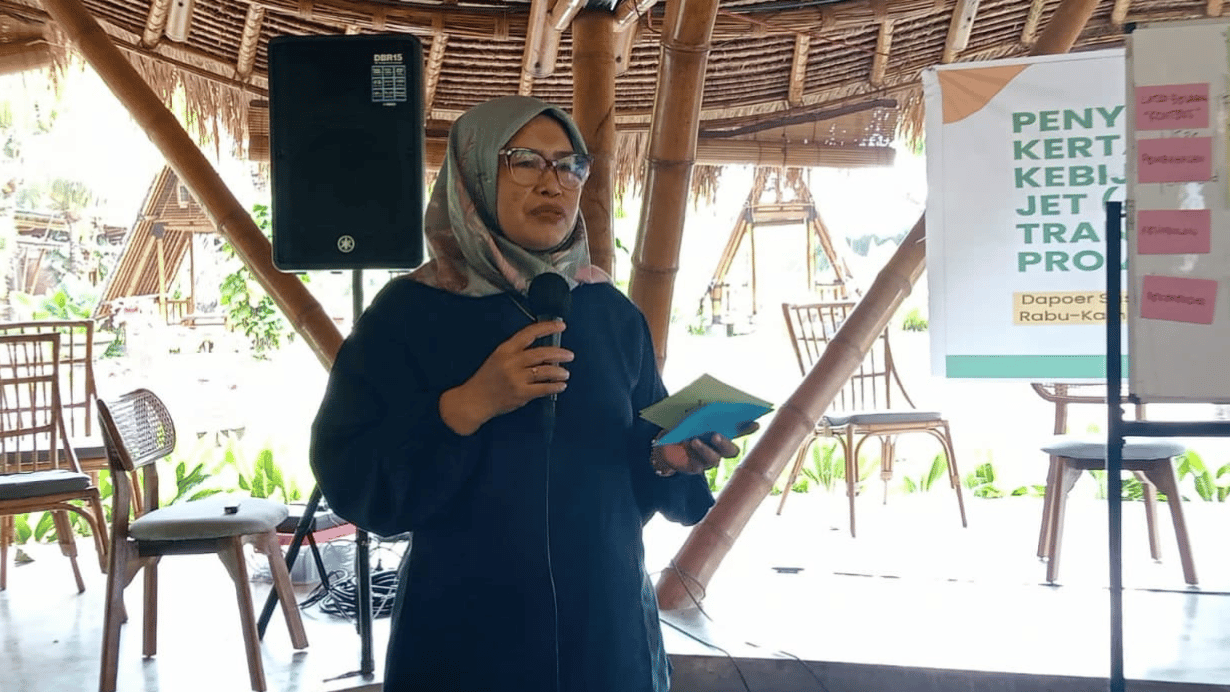
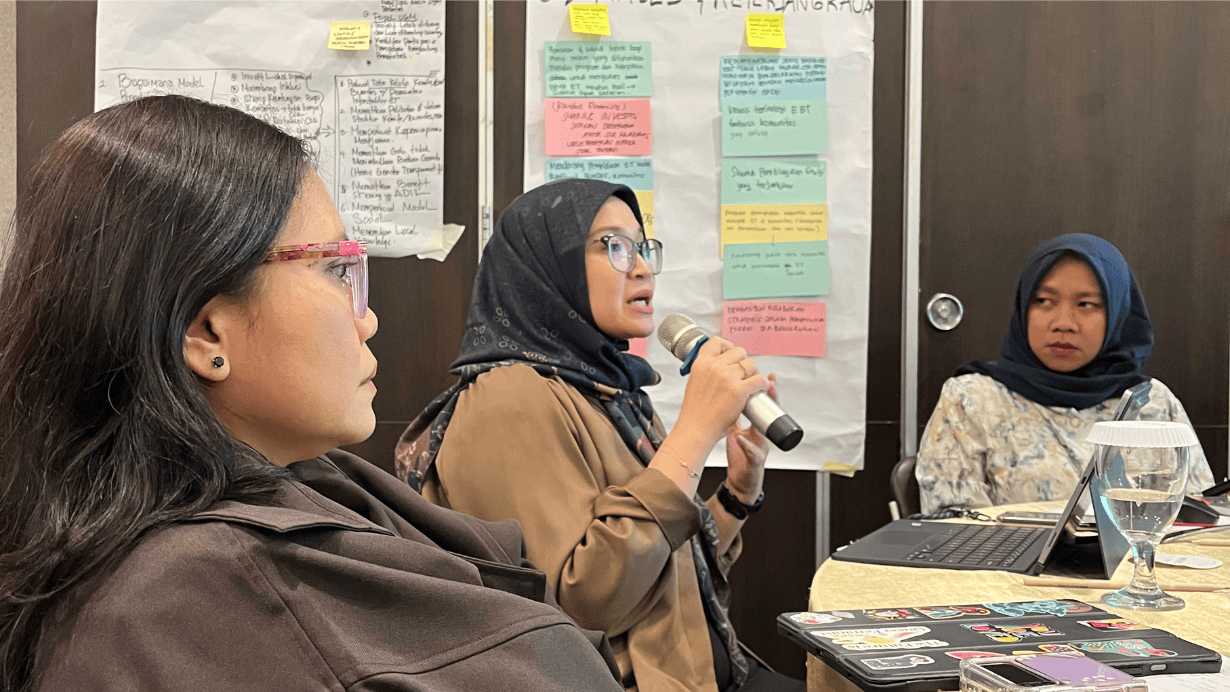
This question shaped the WE FOR JET Knowledge and Policy Forum, organised by Yayasan Penabulu in collaboration with Oxfam and supported by Australian Aid on 22–23 June 2026 in Jakarta. Over two days, representatives from national and subnational governments, civil society organisations, academic institutions, local communities, and renewable energy initiatives came together to consolidate learning from the field and identify collective actions to strengthen a more just and inclusive energy transition.
In his opening remarks, Sardi Winata of Yayasan Penabulu emphasised that the energy transition should not be treated merely as a sectoral agenda. The shift towards cleaner energy must also respond to the social challenges experienced by communities and ensure that no group is left behind in the process.
“Energy transition is not only a sectoral issue. It is a shared agenda, and its success should not be measured solely by the amount of emissions reduced, but also by whether the process delivers justice for society,” said Sardi Winata of Yayasan Penabulu.
This commitment was further reflected in a presentation on the progress and learning of the WE FOR JET programme by Deden Ramadani, Project Manager of WE FOR JET at Yayasan Penabulu. He explained that over the past three years, the programme has not only supported community-based renewable energy models, but has also sought to transform social relations by strengthening the leadership of women and vulnerable groups at the village, provincial, and national levels.
Through communal biogas initiatives in Lombok, solar drying houses in East Flores, energy-efficient cookstoves in Southwest Sumba, and advocacy networks at the national and subnational levels, WE FOR JET has demonstrated that energy transition is not simply about introducing new technologies. It is also about creating spaces in which communities can become decision-makers, innovators, and leaders of change.
“WE FOR JET does not only introduce energy solutions. It seeks to transform social systems so that women and vulnerable groups can participate, lead, and benefit equally from the energy transition,” said Deden Ramadani, Project Manager of WE FOR JET at Yayasan Penabulu.
GEDSI as a foundation, not an addition
A similar message was conveyed by Dr. Ir. Dadan Kusdiana, M.Sc., Secretary-General of Indonesia’s National Energy Council, who delivered the keynote address. He cautioned against treating Gender Equality, Disability, and Social Inclusion, or GEDSI, as an issue that only emerged because of the energy transition.
In his view, gender equality and social inclusion have long been essential development concerns and should not be positioned as optional additions to energy policy. Instead, they should be addressed as equally important objectives in their own right.
“GEDSI does not exist because of the energy transition. It must continue to be advanced whether or not the energy transition is taking place, because it is equally important,” said Dr. Dadan Kusdiana, Secretary-General of the National Energy Council.
At the same time, he noted that a well-designed transition towards renewable energy could create new opportunities for women, vulnerable groups, and local communities to strengthen their skills, economic participation, and access to essential services.
His remarks became an important point of reflection throughout the forum. Participants repeatedly stressed that GEDSI should not be treated as an administrative indicator added at the end of a programme. It should serve as a lens that shapes the planning, implementation, monitoring, and evaluation of energy policies and programmes from the outset.
Women leading change from the village level
Some of the forum’s strongest lessons came directly from women and community leaders involved in renewable energy initiatives in their villages.
Erna Anita of SEKRA Tetebatu Selatan in East Lombok shared her journey from being a young woman who had rarely participated in village processes to becoming an active member of community discussions and decision-making spaces. Through the learning process facilitated by Gema Alam, she developed her confidence, learned about gender equality and women’s leadership, and began to advocate for greater recognition of women’s roles in village development.
“I want to change how I see myself and how the community sees women. In my village, there is still a strong belief that women should only work at home, but through SEKRA I learned about equality, leadership, and how to express our aspirations,” said Erna Anita of SEKRA Tetebatu Selatan.
The changes that followed were not limited to individual confidence. SEKRA successfully advocated for village funding to support biogas development, women-led microenterprises, renewable energy awareness, and other community initiatives. Women associated with the group also became involved in the village-owned enterprise, the Smart Village team, and the Village Consultative Body.
These achievements show that renewable energy initiatives can become an entry point for broader changes in local leadership and decision-making. When women are provided with space, knowledge, organisational support, and legitimacy, their participation can influence both village policy and the allocation of public resources.
Renewable energy as a pathway to community livelihoods
Another experience came from Katarina Tulit Bala of the Kakarindu Renewable Energy Group in Adobala Village, East Flores. The initiative began by recognising the economic potential of coconuts, one of the area’s main commodities, while responding to the limited use of coconut shells and husks.
With support from YPPS, the community developed white copra, coconut-shell briquettes, charcoal, and solar drying technology. These productive activities were strengthened through Savings and Internal Lending Communities, or SILC, which enabled community members, particularly women, to save regularly, access small-scale business capital, improve financial management, and participate more actively in economic decisions.
The initiative generated multiple benefits. Household incomes increased through the production of copra, briquettes, and charcoal, while spending on cooking fuel fell by an average of approximately 50 per cent. Women became more involved in productive activities and group leadership, and community members planted 3,739 coconut trees in 2025 to sustain the natural resource base on which their livelihoods depended.
The East Flores experience demonstrates that renewable energy initiatives can deliver more than environmental benefits. When linked with community finance, local commodities, market access, and women’s leadership, they can also strengthen household resilience and create more sustainable local economies.
However, the forum also acknowledged that such initiatives continue to face significant constraints. Markets for green products remain limited and unstable, financing institutions rarely prioritise community-scale renewable energy businesses, and many groups still rely on simple production technologies. Long-term mentoring and stronger support from local government and market actors will therefore be essential.
Bringing community innovation into the energy system
Alongside these examples of progress, the forum created space for participants to examine the structural barriers that prevent community-based renewable energy initiatives from growing.
Mohamad Juaini highlighted the gap between local innovation and the formal energy system. Many communities have developed small-scale solutions that respond directly to local needs, but these initiatives often remain outside mainstream energy planning, financing, and regulation.
“I dream of communities having light, but not through coal or geothermal projects that take away their living spaces. I want community initiatives to be recognised and incorporated into our energy system,” said Mohamad Juaini.
His reflection pointed to a broader challenge: the current energy transition is still frequently dominated by large-scale infrastructure projects, while small-scale community solutions receive limited policy recognition and financial support.
Lilis Setyowati, the forum facilitator, similarly reminded participants that energy discussions often concentrate on infrastructure and technology while overlooking the people whose lives will be affected by the transition.
“When we talk about the energy transition, we must also talk about people. This is what is often missing. Once energy affects people, GEDSI must become an integrated lens rather than a separate issue,” said Lilis Setyowati, facilitator of the WE FOR JET Knowledge and Policy Forum.
Participants agreed that recognising community innovation requires more than documenting successful practices. It also requires policies that allow community initiatives to become part of local and national energy planning, financing mechanisms that are accessible to women and vulnerable groups, and institutional arrangements that support long-term management and maintenance.
Ensuring that policy reflects local realities
Policy discussions during the forum focused strongly on the National Energy General Plan and the Regional Energy General Plans, known respectively as RUEN and RUED.
Representatives from West Nusa Tenggara and East Nusa Tenggara shared the progress and challenges of integrating GEDSI into regional energy planning. In East Nusa Tenggara, efforts have been made to introduce sex-disaggregated data, disability-related information, and gender-responsive indicators into the revision of the provincial energy plan. This includes monitoring who uses renewable energy technologies, the types of vulnerability experienced by users, and whether women and persons with disabilities are receiving meaningful benefits.
The discussion also revealed continuing gaps between policy commitments and implementation. GEDSI integration is often still symbolic, social and participatory data remain limited, and energy infrastructure is not consistently designed to accommodate persons with disabilities. Participants also noted that subnational governments face shrinking fiscal space, while village budgets are increasingly constrained by competing national priorities.
These conditions make collaboration across government, civil society, communities, financial institutions, and the private sector even more important. Without coordinated support, local renewable energy initiatives risk being treated as temporary projects rather than long-term components of regional development.
Mobilising resources without creating new burdens
The forum also examined how community-based energy initiatives could mobilise financial, technical, institutional, and social resources after project support ends.
Participants identified a range of potential financing sources, including community savings, village budgets, national and regional government funding, soft loans, corporate social responsibility funds, philanthropy, donor support, and community enterprises. However, they emphasised that access to finance must be accompanied by transparent governance, inclusive procedures, and business models that prevent unpaid community work from becoming an additional burden, particularly for women.
One recurring concern was that financing requirements are often biased against women. Some women are unable to access loans without their husband’s approval, while others lack assets registered in their own names that could be used as collateral. Participants therefore called for financing mechanisms that reflect the actual conditions of women-led enterprises and community groups rather than requiring them to conform to conventional banking standards.
The discussions also underlined the importance of conducting care-work assessments and ensuring a fair division of household responsibilities. A renewable energy programme may reduce time spent collecting fuel or cooking, but it can also add new responsibilities if women are expected to manage technologies, finances, and businesses without a redistribution of domestic work.
A just transition must therefore be assessed not only by whether women participate, but also by whether they have greater control over resources, decisions, benefits, and their own time.
From a learning space to a shared movement
At the end of the two-day forum, participants developed recommendations across four interconnected areas: financing and investment, social justice and inclusion, policy and governance, and technology transfer and capacity development.
The recommendations included strengthening community business models, improving access to inclusive finance, recognising community-scale renewable energy innovation, developing accessible technical manuals, creating renewable energy facilitators from disability communities, improving disaggregated data, expanding cross-learning, and strengthening joint advocacy for inclusive RUEN and RUED processes.
The learning and recommendations generated during the forum will be consolidated into a policy brief intended to support evidence-based energy policy. Rather than relying only on national targets or technical projections, the policy brief will draw on experiences from communities that are already testing what a just and inclusive energy transition can look like in practice.
In his closing remarks, Deden Ramadani emphasised that the greatest resource available to the energy justice movement is not only funding or technology, but the network of people and organisations willing to share knowledge, opportunities, and institutional support.
“This forum was created so that we can connect with and strengthen one another. Resource mobilisation becomes possible when we are willing to remove the barriers between us and openly share whatever resources we have for a clean, just, and inclusive energy transition,” said Deden Ramadani, Project Manager of WE FOR JET at Yayasan Penabulu.
The WE FOR JET Knowledge and Policy Forum delivered a clear message: a just energy transition will not emerge from infrastructure and investment alone. It will require decision-makers to listen to communities, recognise the knowledge and leadership of women and vulnerable groups, and translate local experience into public policy.
By connecting community innovation, inclusive financing, institutional capacity, and policy reform, the energy transition can become more than a strategy to reduce emissions. It can become a pathway towards a fairer, more inclusive, and more sustainable future for all.