


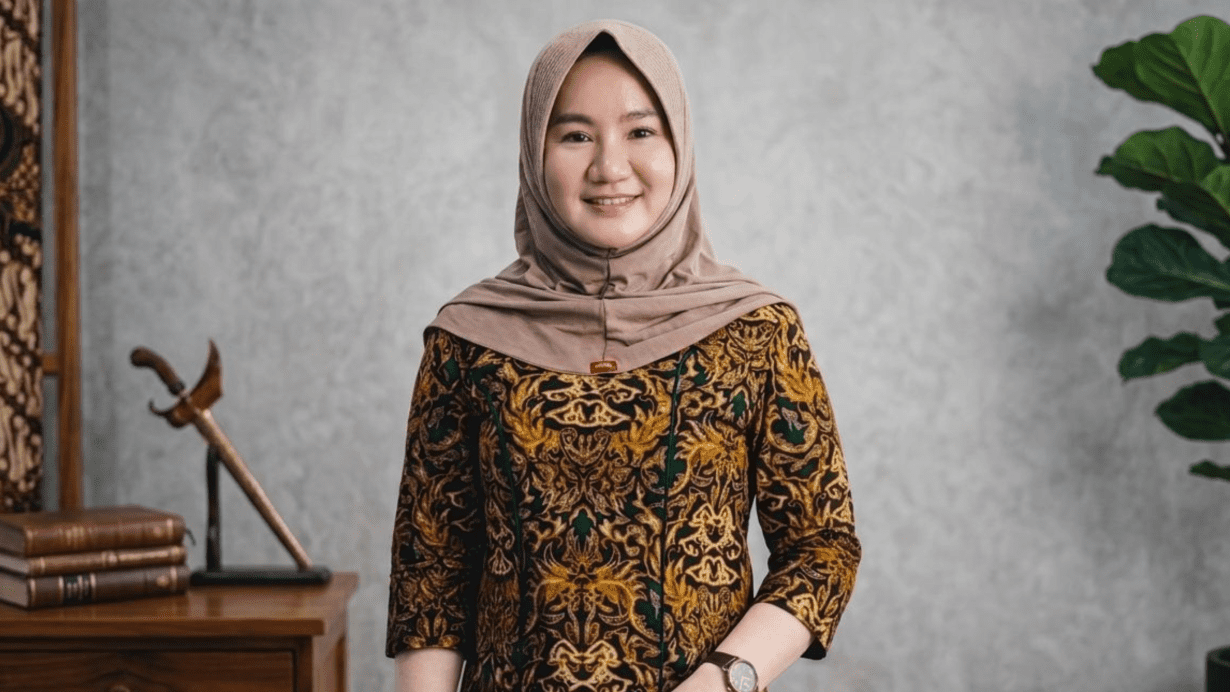

Niken Arumdati is one of the key figures behind the development of a more inclusive green energy approach in West Nusa Tenggara. Born in Dompu, she began her journey as an electrical engineer after graduating from the University of Mataram in 2005. She later pursued a master’s degree in the Netherlands through the StuNed scholarship and returned to NTB in 2008 with a clear path in mind, becoming a civil servant as her parents had hoped.
Her first placement at the Energy and Mineral Resources Office brought her into an unexpected experience. She was assigned to support micro hydropower development in remote villages in collaboration with GIZ. Villages such as Lantan, Tetebatu, and Bayan became her early learning spaces. There, she not only learned about energy systems, but also about working closely with communities. She was introduced to participatory approaches such as PRA and PLA, which place communities at the center of every stage of development.
This experience shaped her perspective. With her engineering background that values precision, she began to understand that the success of a program is not determined by technology alone, but also by community engagement and a sense of ownership. During her three years of working with GIZ, she realized that energy development requires more than technical solutions.
Her desire to better understand policy led her to continue her studies from 2011 to 2013. After that, she became actively involved in shaping energy policies in NTB, including Regional Regulation No. 3 of 2019 on the Regional Energy Plan. She also continued to build her capacity through training programs in Australia and Denmark. For Niken, policy should not be rigid. It must grow from field experience and respond to real needs.
She also translated her practical experience into writing. She documented biogas development initiatives in collaboration with HIVOS and Yayasan Rumah Energi, and contributed to international publications. Her work consistently emphasizes the importance of community engagement. For Niken, the energy transition is not only about technology, but about awareness and participation.
A Shift in Perspective and the Emergence of More Inclusive Policy
Despite her long experience in the energy sector, there was a defining moment that reshaped Niken’s perspective. She was introduced to the GEDSI approach through her engagement with Yayasan Penabulu in the WE for JET program. This approach broadened her understanding of justice in the energy transition. She began to recognize that not everyone has equal access, opportunities, or positions to benefit from energy systems.
This new perspective sparked a critical reflection. Previously, inclusion had not been systematically integrated into the policies she helped develop. She began to ask important questions about who is involved in energy programs, who benefits, and who risks being left behind.
This shift in thinking was translated into concrete policy change. Governor Regulation No. 13 of 2024 on Green Energy Development in NTB became a key milestone. For the first time, GEDSI clauses were explicitly included in a provincial level energy policy.
This change did not happen overnight, but emerged through a process of dialogue and reflection. Niken herself acknowledged this turning point:
“Previously, I never considered including GEDSI clauses in Governor Regulation No. 13 of 2024 on Green Energy Development. That awareness came after discussions with Yayasan Penabulu through the WE for JET program. This regulation may be the first in Indonesia to explicitly include GEDSI.”
The policy has not remained as a document. The NTB Energy Office is currently developing technical guidelines for its implementation, involving various stakeholders including the GEDSI working group. This shows that change is moving from ideas into practice.
Continuing Change and Future Aspirations
Niken’s journey shows that change often begins with a shift in perspective. From a technology focused approach to one that places people at the center. From policy neutrality to policy that is consciously inclusive.
She is currently involved in developing resilient electricity system studies for small islands that are vulnerable to disasters. In this process, GEDSI perspectives are being integrated as part of the analysis. This indicates that inclusion is no longer limited to a single policy, but is shaping broader ways of working.
Niken believes that the future of the energy transition requires collective effort. Government, civil society, academia, and development partners must continue to collaborate. She also sees GEDSI as increasingly important, not only to ensure justice, but also to strengthen trust and attract investment in the renewable energy sector.
Her hope is to create continuous spaces for dialogue, where policies can be refined and adapted to realities on the ground. Spaces that ensure the energy transition is not only fast, but also fair.
This story shows that when GEDSI perspectives are introduced and internalized by key actors such as local government, policies and practices can evolve to become more inclusive. Ultimately, this transformation opens the path toward an energy transition that is not only driven by technology, but also by people.




Terus berbuat ….wanita hebat dan kuat