


In Umbungedo Village, Southwest Sumba Regency (Kabupaten Sumba Barat Daya), women’s lives had followed an almost unchanged pattern for many years. Women were expected to stay in the kitchen, care for children, cook, fetch water, collect firewood, and complete all domestic work that was seen as part of their “natural role” as women. Meanwhile, village decision-making spaces were mostly occupied by men.
This was also the reality experienced by Mama Silvia Guber Derita, known by local residents as the village mother figure (mama desa). In a society where patriarchal norms remain strong, women were rarely involved in village meetings, even when the discussions concerned needs that were closely connected to their daily lives.
Slowly, however, change has begun to take root in Umbungedo Village. The support provided by CIS Timor has opened new spaces for women to speak, be heard, and take part in shaping the direction of village development. This change is not only about women attending meetings. It is also about reducing women’s workload and advancing gender justice at the community level.
Women in Southwest Sumba Are Finding the Courage to Speak Up
In the past, women in Umbungedo Village were rarely involved in hamlet-level deliberations (musyawarah dusun) or strategic village meetings. Many decisions were made without listening to women’s experiences, even though women were among those most affected by daily challenges such as access to clean water, household energy, and domestic work.
Through CIS Timor’s support, community members have gained a better understanding of the importance of gender equality and women’s participation in village development.
“We are very grateful to CIS Timor for supporting us and giving us the opportunity to take part in meetings and speak up,” said Mama Silvia.
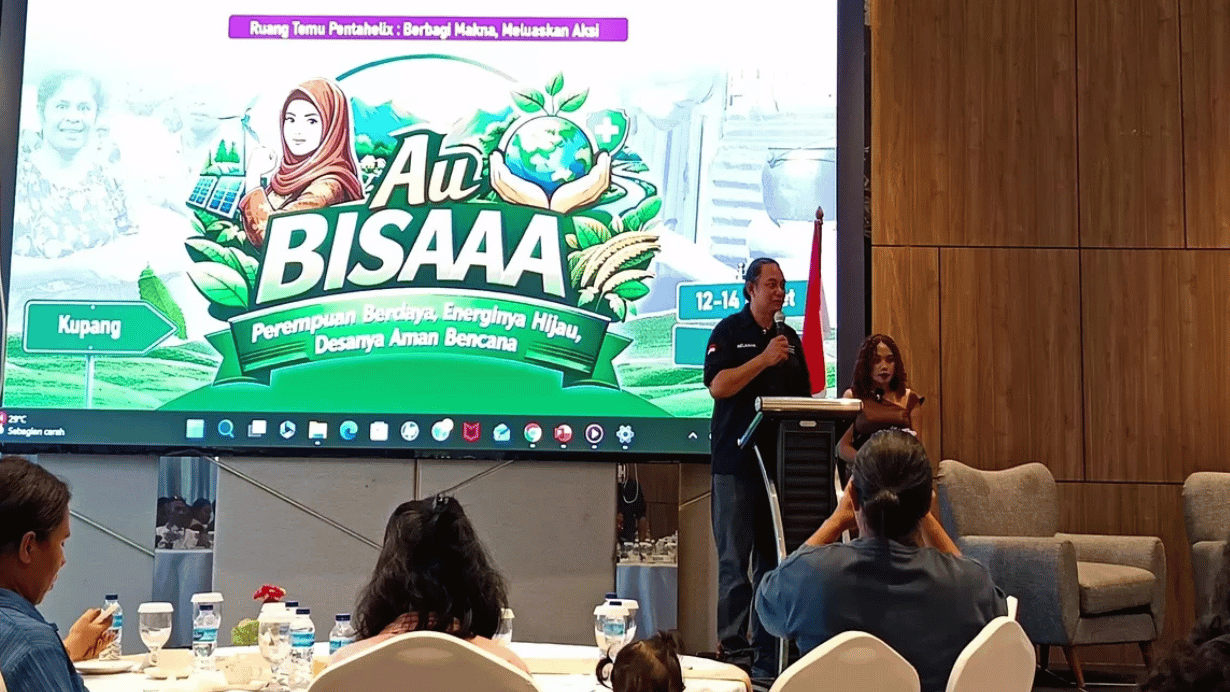
This change became visible when women began actively speaking in hamlet-level deliberations and village development planning meetings (Musrenbangdes). Women were not only present. Their voices also began to be considered and included in village planning.
One important proposal that was accepted was the community’s need for clean water.
“Thank God, we were not only given the chance to speak. Our voices were heard. Our proposal for clean water was accepted and will be realized,” she said.
For women in Umbungedo, access to clean water is not merely an additional facility. Clean water means reducing the daily workload that has long consumed women’s time and energy.
Access to Clean Water Reduces Women’s Workload
For many years, women had to walk long distances to the river to collect water. The distance was around four kilometers. They left in the morning and returned only in the afternoon, just to meet the household’s needs for cooking, bathing, and other daily activities.
Today, through the rainwater filtration system now being introduced in residents’ homes, women no longer depend entirely on distant water sources.
Mama Silvia has felt the impact directly. Time that was previously spent collecting water can now be used for other productive activities, including weaving and managing household-based enterprises.
From a gender justice perspective, clean water is not only an infrastructure issue. It is also an issue of unequal distribution of labor. When water is closer and easier to access, women have greater opportunities to rest, learn, and increase family income.
Energy-Efficient Stoves Help Women Work More Efficiently
In addition to clean water access, another change has come through the use of energy-efficient stoves (tungku hemat energi) and energy-saving lamps made from used cooking oil (lampu hemat energi berbahan minyak bekas).
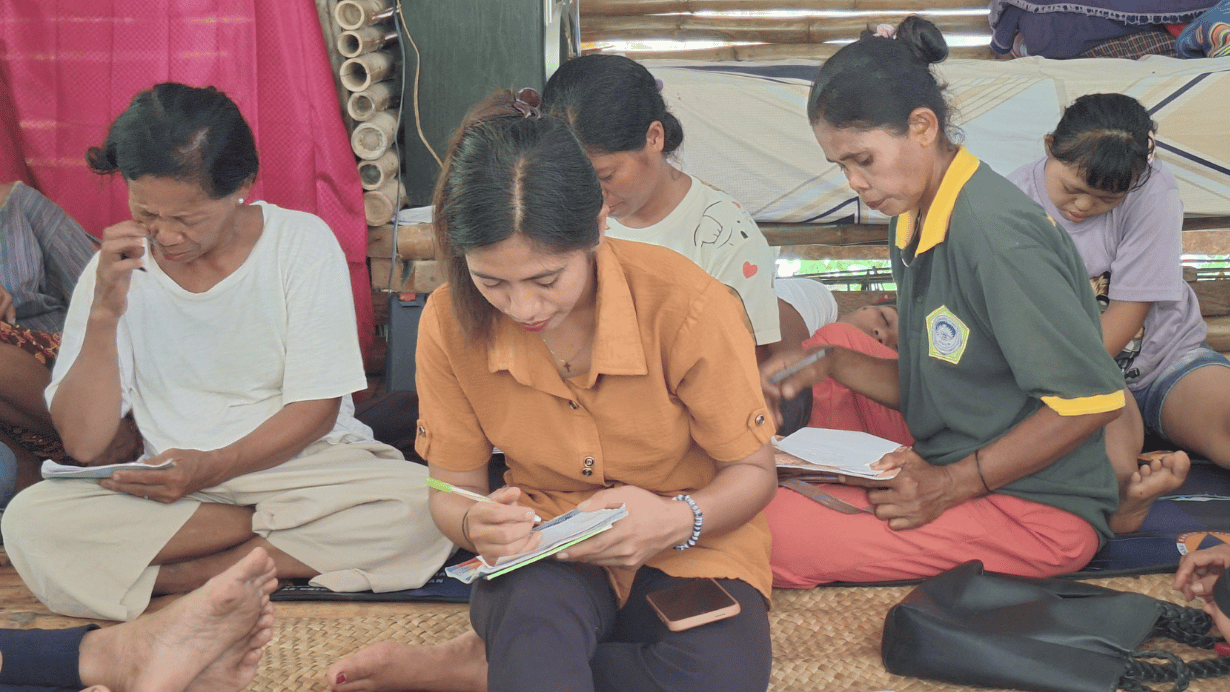
Within the Kareka Baca community, women gather to discuss the benefits of these simple technologies. They share experiences, find solutions to improve the tools, and strengthen the spirit of mutual cooperation (gotong royong) in the village.
The energy-efficient stove is one of the innovations that women feel has brought the most benefit. Previously, women had to collect firewood from forests located quite far from their homes, which took a great deal of time.
Now, firewood use has become far more efficient.
“We are grateful that our workload in collecting firewood has been reduced. Now, one trip to collect firewood can last up to one week. We can use the remaining time for other work,” said Mama Silvia.
Reducing the time spent collecting firewood has made a significant difference in women’s lives. They now have more time for economic activities, family care, and participation in village social activities.
Women’s Leadership Is Beginning to Grow in the Village
Change in Umbungedo has not stopped at women’s participation in village discussions. Women are now beginning to be trusted to take roles within the village government structure.
There is now a female section head (kaur perempuan) in the village administration structure. Women have also started taking part in exhibitions and other public activities. They speak confidently in front of visitors and explain the work produced by their community.
This marks an important step in strengthening women’s leadership at the grassroots level.
Still, the journey toward gender equality has not always been easy. Patriarchal values that have long shaped community life continue to create resistance from some groups.
Slowly, however, more men are beginning to accept these changes. Some have started taking part in domestic work, such as collecting firewood, carrying children, and washing their own clothes.
Awareness of a fairer distribution of household responsibilities is beginning to grow within families.
Mama Silvia shared that, in the past, women could work up to eighteen hours a day, while men worked around eight hours. For that reason, even small changes in the division of domestic roles can have a meaningful impact on women’s lives.
Small Changes That Bring Gender Justice Closer
The story of Mama Silvia Guber Derita shows that the transition toward a fairer life can begin with simple changes at the village level. Access to clean water, energy-efficient technology, and spaces for women’s participation can transform social relations within communities.
Women in Umbungedo Village are no longer seen only as those responsible for domestic work. They are beginning to become decision-makers, community leaders, and an important part of village development.
This change proves that gender justice is not merely a concept. It is a real process whose benefits can be felt directly by communities, especially women in rural areas.