

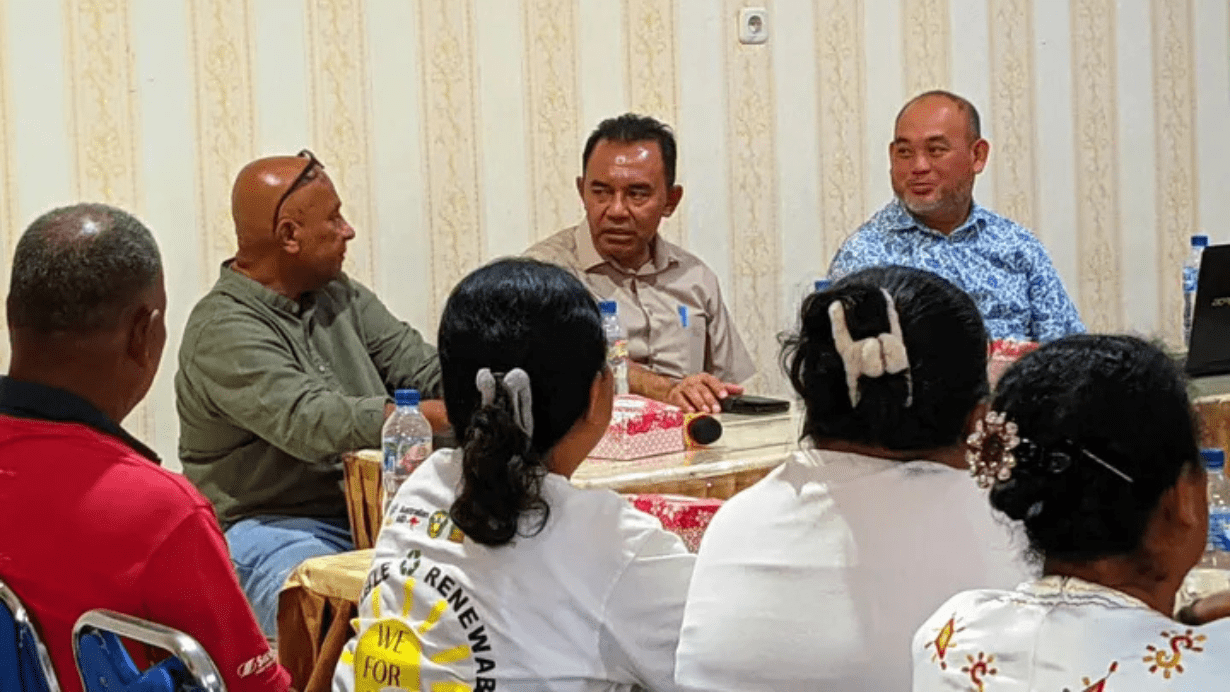

FLORES TERKINI – The economic potential of coconut in East Flores is now being developed more seriously. Beyond copra production, the East Flores District Government is exploring the processing of coconut husks and charcoal as a way to increase village income. This strategic initiative was discussed during a cocopeat business partnership meeting held at the Bapperida Hall in East Flores on Friday, 8 May 2026.
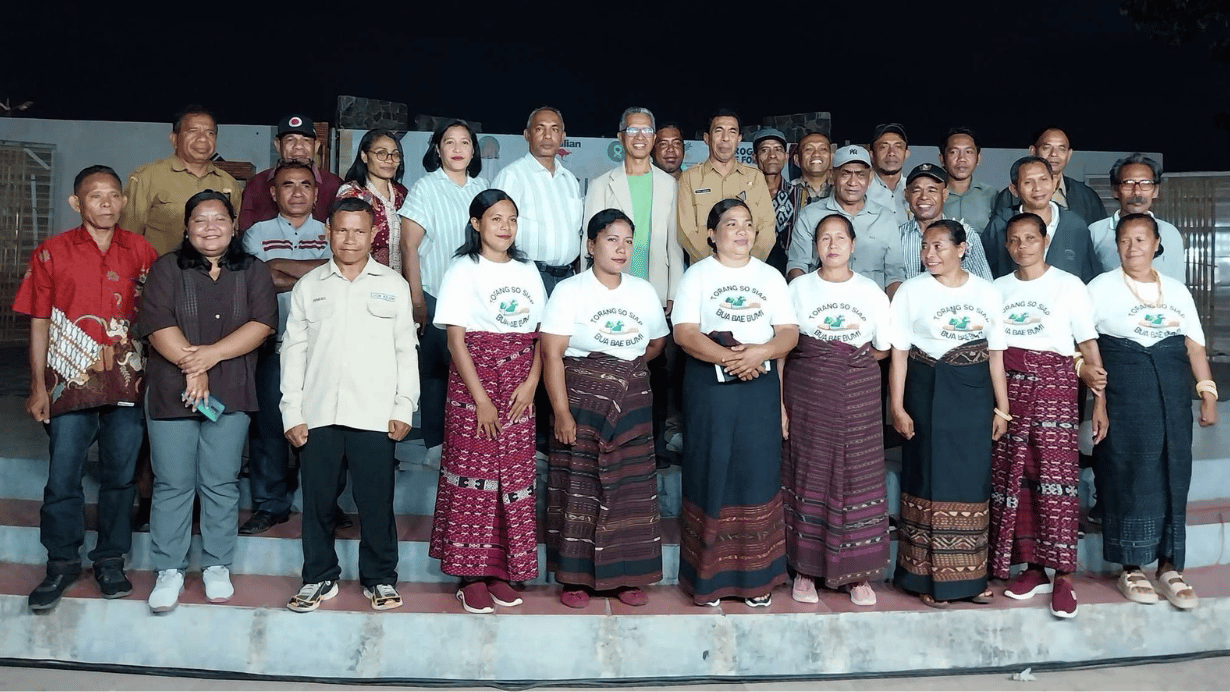
The meeting, which began at 1:00 p.m. Central Indonesia Time, was officially opened by the Regent of East Flores, Antonius Doni Dihen. It brought together representatives from the East Flores District Government, business actors, the Foundation for Social Assessment and Development (YPPS), and communities supported through the WE for JET program, which is supported by Penabulu Foundation and Oxfam.
In a press release received by Flores Terkini Pikiran Rakyat, YPPS stated that this initiative is an important step in strengthening downstream processing of local products. Regent Anton Doni Dihen emphasized that the district government is fully committed to creating space for communities to manage coconut resources more productively and sustainably.
“The East Flores District Government is opening the widest possible opportunities for communities to manage our local resources, especially coconut, in a more optimal way. We encourage young people in East Flores to be brave in starting businesses. The government’s commitment is clear, and I hope the initiative we are designing together can be realized soon,” said Anton Doni Dihen.
YPPS-supported villages have already been producing white copra using the Solar Energy House system, locally known as Rumah Energi Matahari (REM). However, coconut husks have often been left to pile up as waste.
Heri Tan, Director of PT Prima Coco Sejahtera, explained that the company is now focusing on processing coconut husks into cocopeat for the export market.
“What used to be seen as waste is now becoming a product with high economic value,” said Heri Tan.
Magda Rianghepat, representing YPPS, added that this scheme aims to strengthen a circular economy model at the village level.
“This is not only about creating a new business. It is about how villages can build their own circular economy. Every part of the coconut can be used and turned into added value for the community,” she said.
As an initial step, around 50 residents are being prepared to take part in an internship program at PT Prima Coco Sejahtera. The Regent also stated that he would personally accompany the participants during their departure.
“When the 50 young people leave for their internship, I will personally accompany them. This is not just a ceremony. I want to show that the local government is present, and I want them to inspire other young people in Lewotana to continue creating opportunities from the potential we already have,” the Regent said.
Agustina Masa Laot, Chair of the Ina Sayang Community in Lambunga Village, also expressed hope that this emerging industry would recognize and include women’s roles.
“Women have long been involved behind the scenes in coconut processing, but their contributions are often invisible. We hope these new business opportunities will also create space for young rural women to learn, lead, and grow as entrepreneurs,” said Agustina.
Current market data shows that the price of white copra in Waidoko has reached IDR 16,000 per kilogram. With the integration of coconut husk and charcoal processing, the village economic chain is expected to become much stronger than relying solely on the sale of whole coconuts.
Source: Article titled “Gandeng YPPS, Pemkab Flores Timur Sulap Sabut Kelapa Jadi Peluang Usaha Baru”, published by Flores Terkini Pikiran Rakyat: https://floresterkini.pikiran-rakyat.com/lokal/pr-2710196856/gandeng-ypps-pemkab-flores-timur-sulap-sabut-kelapa-jadi-peluang-usaha-baru?page=2