


Written by: Ullya Farah, MEAL & KM Officer, WE FOR JETWomen are taking part in village decision-making, community groups are developing renewable energy-based businesses, and governments are beginning to allocate resources to support these efforts. These developments marked the third year of WE FOR JET implementation, from 1 July 2025 to 30 June 2026. Training, mentoring, community organising, and advocacy efforts established in previous years are increasingly becoming connected to people’s everyday lives and decision-making processes.
Working alongside five implementing partners, Publish What You Pay Indonesia, LBH APIK, YPPS, CIS Timor, and Gema Alam, WE FOR JET reached 3,592 people, of whom 62.86% were women and approximately 3% were persons with disabilities. They participated directly in capacity strengthening, community organising, renewable energy-based enterprise development, advocacy, and policy dialogue.
These reach figures were consolidated from records maintained by all implementing partners and verified to eliminate double counting across activities and partners. Each individual was therefore counted only once during the reporting period.
This collective effort also engaged 103 civil society organisations, 51 women’s rights organisations, 25 organisations of persons with disabilities, 78 local and national media outlets, 33 universities, and 22 private sector actors. Throughout the reporting period, project activities and the issues they raised generated 104 media reports.
Beyond these figures lie important developments for a just energy transition: women are gaining opportunities to lead, communities are using energy to strengthen their livelihoods, and local organisations are becoming more self-reliant. The principles of Gender Equality, Disability and Social Inclusion (GEDSI) are also beginning to be translated into policies, data systems, and public resource allocations.
Women’s Leadership Gains Recognition at the Village Level
In previous years, WE FOR JET focused much of its support on creating opportunities for women to participate and express their views. The third year marked a further development, as women began gaining formal positions and recognition that enabled them to help shape local development priorities.
In West Nusa Tenggara (NTB), four women who participated in Sekolah SETARA were elected to the Village Consultative Bodies (Badan Permusyawaratan Desa, BPD). These positions provide opportunities for them to bring women’s experiences and priorities into village development discussions.
In addition, six village governments, Tetebatu Selatan, Rarang, Lantan, Pandan Indah, Taman Ayu, and Dasan Griya, formally recognised women’s groups through village decrees. These groups have begun participating in village development planning processes.
Similar developments were observed in East Nusa Tenggara (NTT). In South Central Timor and Southwest Sumba, 20 community organisers, including 14 women, shared their knowledge of GEDSI and just energy transition with 82 new community organisers. They independently organised these activities without relying on project funding.
In East Flores, women are leading savings and lending groups as well as renewable energy groups. They have also begun representing community interests in dialogues with district governments, legislative bodies, and private sector actors. These experiences demonstrate how knowledge gained through project activities is increasingly being shared and applied independently by communities.
Sharing Responsibilities Within Households
At the same time, changes in public participation have been accompanied by developments within households. Monitoring in South Central Timor and Southwest Sumba indicates growing acceptance of shared responsibilities for domestic work and caregiving. Men are becoming more involved in childcare and household decision-making, while support for women’s leadership is strengthening.
Traditional, religious, and community leaders have also incorporated messages of gender equality into social, religious, and cultural activities. This support is important because women’s opportunities to participate are closely linked to how time, responsibilities, and support are shared within their immediate environments.
Formal recognition at the village level and greater support within households create opportunities for women to exercise greater influence. The next step is to ensure that their participation meaningfully shapes decisions and resource allocation.
Renewable Energy Strengthens Community Economies
During the third year, renewable energy use became increasingly connected to productive activities within communities. Community groups are using renewable energy to support businesses and create livelihood opportunities, while developing relationships with markets and supporting institutions.
In NTB, women’s groups are using biogas to produce palm sugar and natural dyes for weaving. Solar-powered water pumps support seedling cultivation, while bio-slurry, a by-product of biogas production, is used in organic farming. Collaboration with universities, government institutions, and market actors has also supported product testing, promotion, and business development.
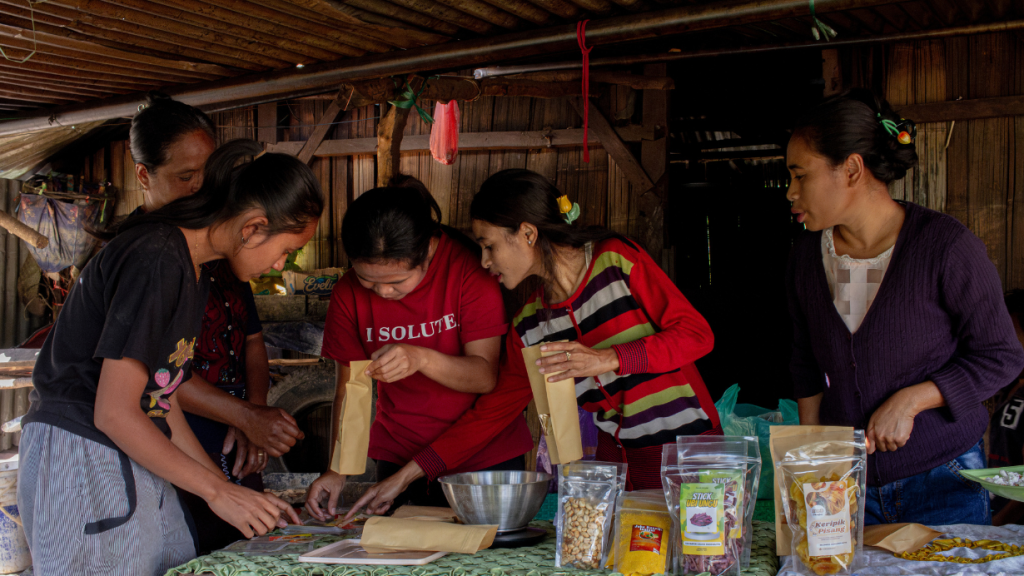
Photo: Yuniardo/Mandat
Meanwhile, in NTT, women-led enterprises are beginning to reach a wider range of buyers. Energy-efficient cookstoves have received orders from households, schools, churches, village governments, and government programmes. Other products developed by women’s groups are marketed through NTT Mart, festivals, government institutions, and local retailers. One enterprise has also received support as a partner of Bank Indonesia.
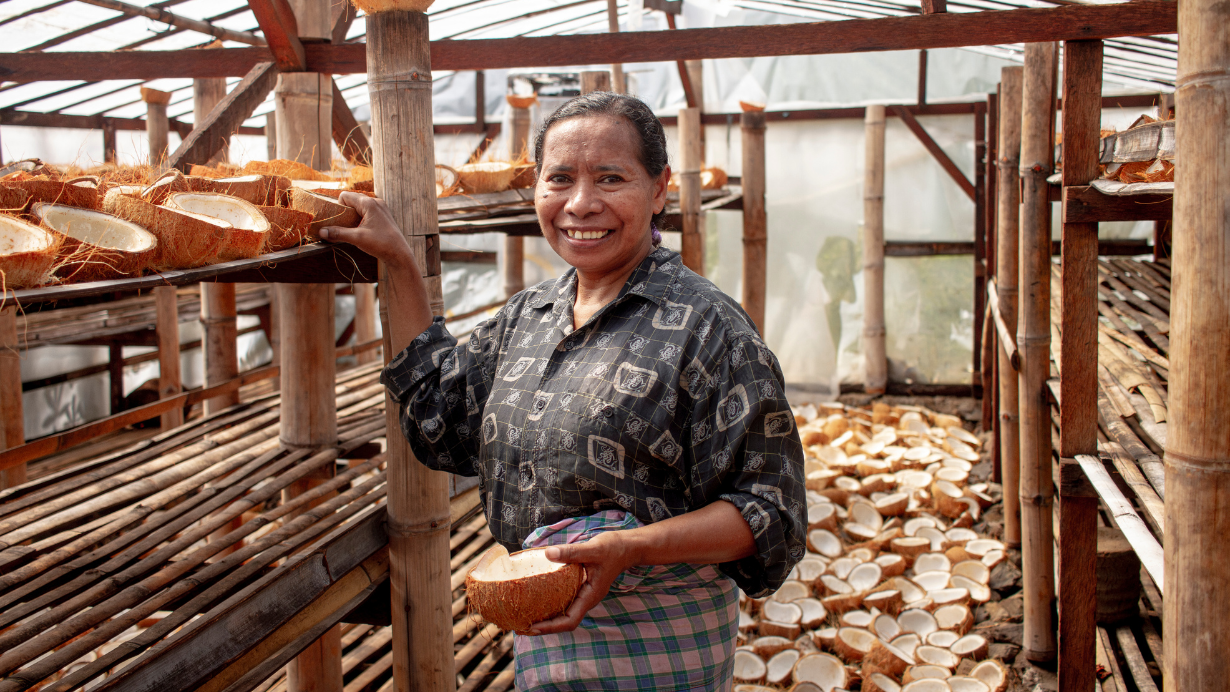
In East Flores, 88 households across six villages have adopted coconut-shell briquettes for cooking. Women-led renewable energy groups generated approximately IDR 31.93 million in revenue from producing white copra using Solar Drying Houses.
Meanwhile, Savings and Internal Lending Communities (SILC) groups across six villages completed their latest savings cycles with total assets of approximately IDR 351.5 million. These group assets are recorded separately from business revenue.
Overall, women-led enterprises supported by the project generated at least IDR 39.2 million in revenue from renewable energy-related products and services.
These experiences demonstrate the connections between energy access, business management, and women’s economic opportunities. The benefits of renewable energy for communities also depend on their ability to manage technologies, sustain production, and access markets. Strengthening enterprises and community group institutions therefore remains an important part of project support.
Local Networks Strengthen Movement Independence
Civil society organisations are also expanding their roles in advancing the just energy transition agenda. Capacity strengthening and network development have created opportunities for local organisations to manage activities and mobilise support more independently.
In NTB, the GEDSI JET network has evolved from an informal working group into a legally registered organisation. This development provides a stronger institutional foundation for programme management, partnership development, advocacy, and fundraising.
Several functions previously supported primarily by Penabulu are now being managed by the organisation itself. These include community feedback mechanisms, participant registration, media monitoring, and financial reporting. The transfer of these responsibilities represents an important step towards strengthening local institutional capacity.
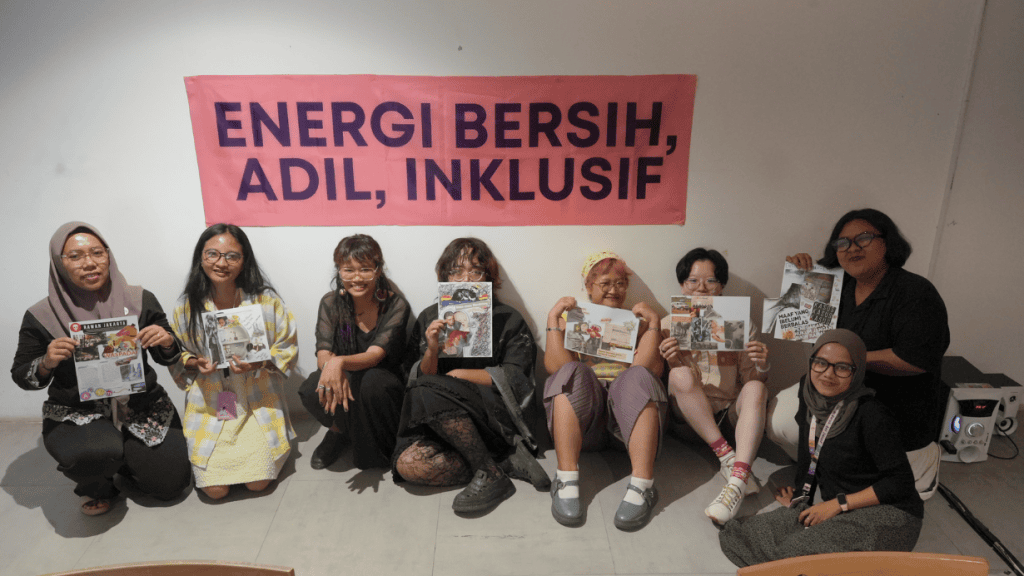
Photo: LBH APIK Jakarta Documentation
Beyond strengthening organisational capacity, the network has also responded to issues raised by communities. When some community members questioned the use of livestock manure-based biogas from a religious perspective, the involvement of Nahdlatul Ulama’s Bahtsul Masail institution helped provide religious guidance to address their concerns.
In public engagement activities, more than 400 people participated in just energy transition campaigns, while 182 people supported a petition calling for stronger GEDSI integration into the energy transition.
Women with disabilities also participated as speakers in public discussions, sharing their experiences of alternative energy, livelihoods, and women’s economic empowerment. Their participation broadened perspectives within energy discussions and created opportunities for them to contribute to agenda-setting.
These developments reflect the growing capacity of local networks to implement activities and respond to community needs. Sustaining this progress will require continued organisational strengthening, access to resources, and partnerships that can be maintained beyond the project’s direct support.
Integrating GEDSI into Energy Policies, Data, and Budgets
At the national level, civil society advocacy has contributed to increased attention to GEDSI within the Just Energy Transition Partnership (JETP) process. Compared with the 2023 Comprehensive Investment and Policy Plan (CIPP), the JETP Progress Report 2025 and the Just Transition Framework place greater emphasis on a people-centred transition, social justice, and meaningful participation.
This attention extends to women, young people, informal workers, and historically marginalised groups. These developments in policy documents provide a foundation for continued engagement to ensure their effective implementation.
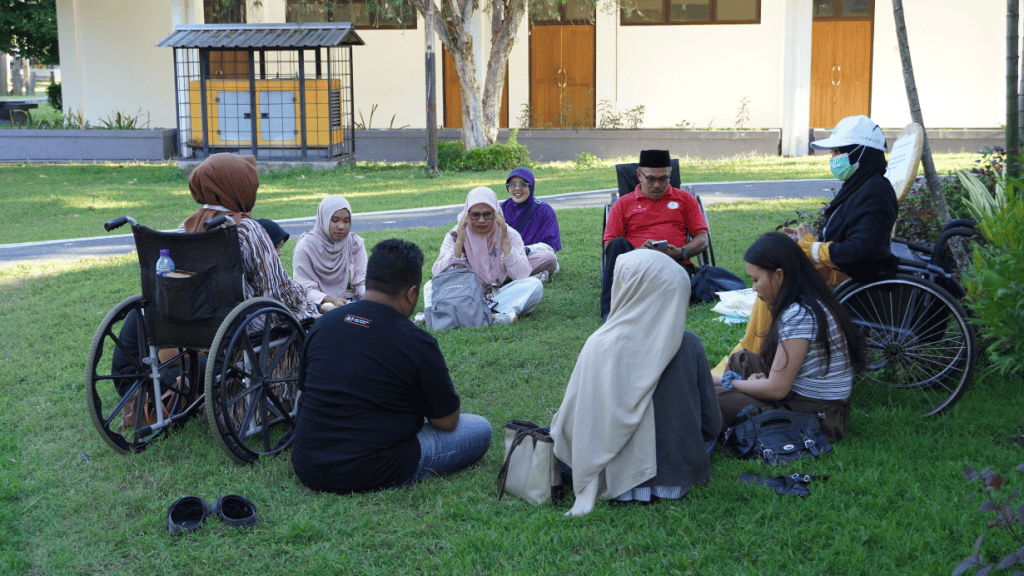
Photo: GEDSI JET Working Group Documentation
Women’s representation has also become part of advocacy efforts to strengthen national energy governance. During the selection process for stakeholder representatives to the National Energy Council (Dewan Energi Nasional, DEN), advocacy focused on transparency, public participation, and women’s representation.
Two women were included among the 16 final candidates, and one woman was subsequently elected to serve on the National Energy Council for the 2026–2030 term. During the previous selection period, no women had reached the parliamentary fit-and-proper test stage.
Strengthening Energy Data and Budget Allocations at the Local Level
In NTT, the Provincial Energy and Mineral Resources Office developed and piloted a data collection instrument disaggregated by gender, age, disability, vulnerability, and energy access. The instrument was linked to the indicator matrix for the revision of the Regional Energy General Plan (Rencana Umum Energi Daerah, RUED).
As part of this process, a proposal was introduced to allocate 5–10% of renewable energy assistance to female-headed households, persons with disabilities, and low-income families. This remains a proposal and should be distinguished from formally adopted policy. The next step is to pursue the integration of these data into NTT’s Satu Data Sasando information system.
Beyond data development, government support has also been reflected in budget allocations. The Southwest Sumba District Government allocated approximately IDR 35.04 million in 2025 and IDR 45 million in 2026 for training and the replication of energy-efficient cookstoves. This support resulted in the distribution of 142 cookstoves to community members, including social assistance recipients, older persons, female-headed households, and other vulnerable groups.
In NTB, advocacy by Penabulu and its partners also contributed to the provincial government’s budget allocation for community biogas development. Together, these developments demonstrate possible pathways for translating inclusion principles into data collection, planning, representation, and public financing.
Sustaining Change Beyond the Project
The third year of WE FOR JET demonstrated progress in women’s leadership, renewable energy management, local organisational capacity, and government support. Women are taking on roles as community group leaders, members of village institutions, enterprise managers, and speakers who bring community experiences into public discussions.
At the household level, shared domestic responsibilities are gaining greater acceptance. Local organisations are assuming responsibility for several programme management functions, while governments are developing data instruments and allocating budgets to support energy access.
These developments provide a foundation for advancing a just energy transition. However, formal recognition, access to technology, and policy commitments must be followed by consistent implementation.
The next priority is to ensure that women have meaningful influence over decisions, community enterprises remain viable, and government support reaches those who need it most. The sustainability of these changes will ultimately be measured by the ability of communities and local institutions to maintain, build upon, and further develop the achievements they have collectively established.